Didn’t find the necessary information? Make an appointment for a consultation with oral surgeon Ihor Oleksandrovych Osadchy.
Silicone dental prostheses
Modern dentistry offers a wide range of tools and materials for prosthetics. Very light and soft silicone dentures have replaced the outdated and heavy clasp prostheses. More and more clinics in Ukraine and Kyiv offer them to their patients. The popularity of silicone dentures is well-deserved, but they should not be considered the optimal solution for all cases.
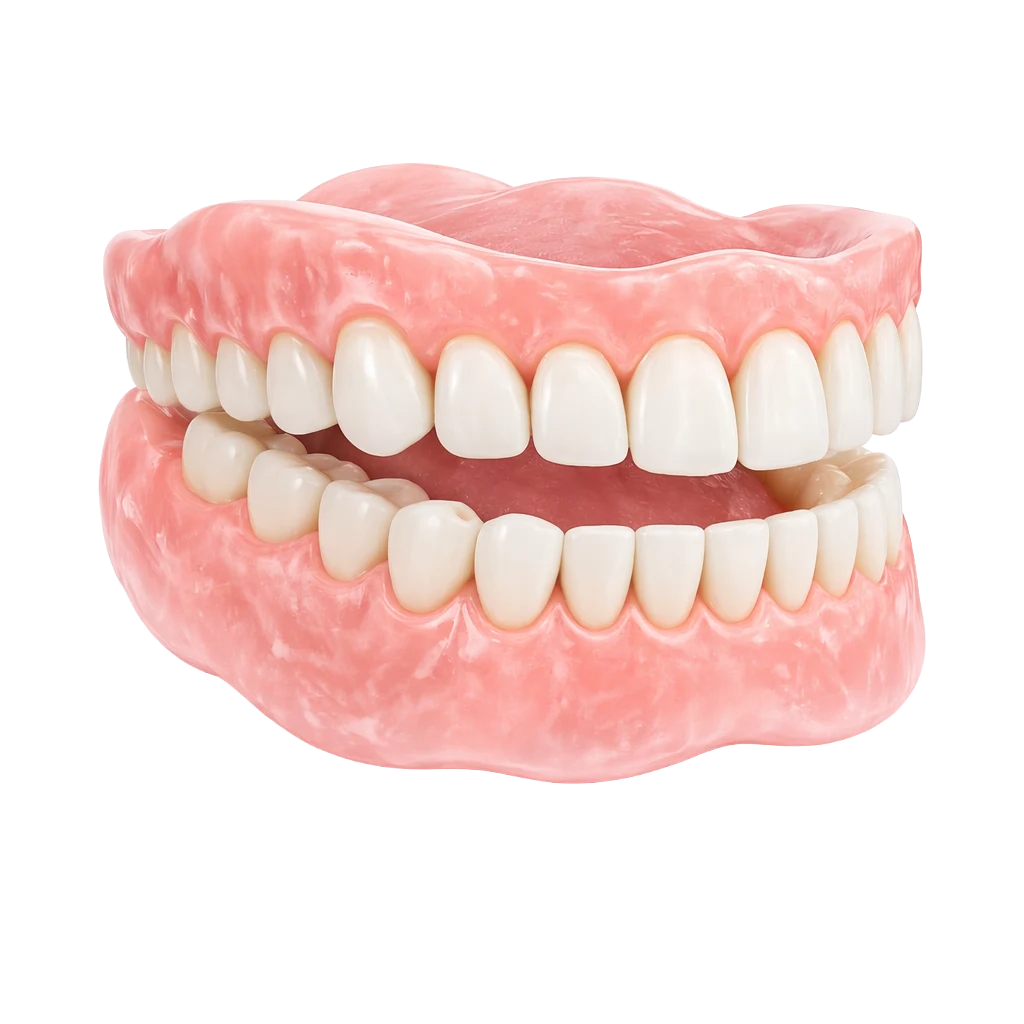

Silicone was invented in the mid-20th century, but only gained wide application in dentistry in the last few decades. Silicone prostheses became an alternative to outdated clasp prostheses and even acrylic ones. Soft and flexible silicone allows creating comfortable dental prostheses.
Medical silicone consists of:
- Silicone base: has high flexibility and elasticity.
- Pigments: necessary to achieve a specific color close to the color of the patient’s own teeth.
- Additives: used for stabilization and increasing the strength of prostheses.
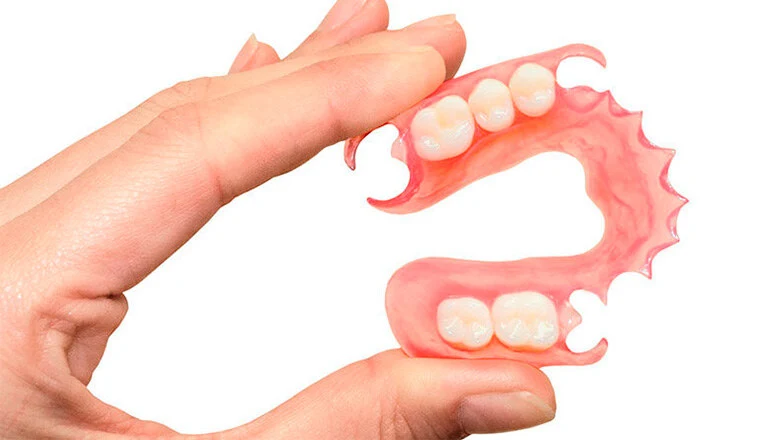
Silicone dental prostheses have found wide application in dentistry and, in particular, are often offered by doctors at various clinics in Kyiv. The popularity of this type of prosthetics is due to the wide variety of applications of silicone prostheses and their convenience for patients.
Silicone dental prostheses are divided into:
- full prostheses;
- partial prostheses.
| Purpose | Characteristics | Application |
| Full prosthetics |
|
Used to replace all lost teeth of the patient (on a toothless jaw) |
A silicone dental prosthesis can be made for both the upper and lower jaw. A full silicone prosthesis for the upper jaw can be with or without a palatal part. A prosthesis without a palate is fixed by vacuum that forms between the mucosa and the prosthesis.
But in some cases, such fixation proves insufficient for comfortable wearing of the prosthesis, and then the doctor may suggest using a prosthesis with a palate. The palatal part of the prosthesis can be made from silicone or another material.
| Purpose | Characteristics | Application |
| Partial prosthetics |
|
Used to replace one or several lost teeth of the patient |
Partial silicone dental prostheses require constant hygiene and care since the constructions are removable. Despite the softness and flexibility of the material, wearing removable prostheses still causes patients a lot of discomfort, not to mention the aesthetic aspect.
Silicone dental prostheses should be used to replace one or several lost teeth in cases where implantation is impossible. We recommend our patients to consider silicone dental prostheses as a temporary measure. Only prosthetics on implants will allow you to get artificial teeth that will feel like your own, look even better than your own, and will not require such thorough care as when using removable prostheses.

Extensive experience
Стаж работы челюстно-лицевой хирурга 38 лет, из них 8 лет — работа дежурным врачом отделения острой травмы.

Number of surgeries
Over 2,000 successful surgeries in the field of maxillofacial surgery.

Quality of work
Thanks to a thorough approach in diagnostics and treatment planning for each clinical case, we achieve a minimal number of complications.
Silicone dental prosthetics by default involves the use of removable constructions that sometimes require additional fixation in the patient’s mouth.
A silicone dental prosthesis can be fixed by:
- Vacuum support
The basic method that resembles “suction.” A kind of vacuum forms between the prosthesis and the mucosa, holding the prosthesis in place. This fixation method is possible with edentulism (complete absence of teeth) and with partial tooth loss.
- Cling effect
Some types of dental silicones are able to adhere to the mucous membrane.
- Special denture adhesive
Adhesives are widely used as a means of additional fixation of prostheses, including silicone ones. They are most often needed with edentulism.
- Clasps
Partial silicone dental prostheses can be attached using special hooks, clasps, and locks to the patient’s remaining natural teeth or to implants.

- Allergy to acrylic and metal
Allergy to acrylic and metals used in dentistry is possible, though it affects a small percentage of patients. Usually, the allergy causes irritation, redness of the mucosa, and sometimes dermatitis. In such cases, replacing the prosthesis with a silicone one is indicated.
- Increased sensitivity and diseases of the mucous membrane
Patients with increased gum sensitivity usually prefer silicone prostheses due to the softness and flexibility of the material. Silicone dental prostheses may also be prescribed for patients with mucosal diseases (gingivitis, mild periodontal diseases).
- General diseases
Silicone-based dental prostheses are indicated for people with cardiovascular diseases, upper respiratory tract diseases (including bronchial asthma), and diabetes mellitus.
- Temporary prosthetics
Silicone dental prostheses are excellent for temporary prosthetics. They are comfortable, do not provoke rapidly developing ischemia, and do not require prolonged adaptation. Therefore, they are well suited for use during the healing period of implant abutments.
- Softness
- Flexibility
- Lightness
- Low strength;
- Insufficient wear resistance;
- Less precise fit;
- Ability of the material to absorb pigments and change color
A silicone dental prosthesis cannot be used if:
- The patient has an allergy to silicone.
- Periodontosis of the 3rd or 4th degree is observed (with bone destruction).
- There are signs of alveolar ridge atrophy.
Comparing silicone dental prostheses, it should be noted that their use is less harmful to the mucosa and bone. The low weight of the construction allows minimizing pressure on the mucosa and, as a result, thinning of the bones of both jaws. However, despite a significant number of advantages, there are also a number of disadvantages both in aesthetics and functionality. The specialists of “Dr. Osadchiy’s Dental Clinic” insist on their position: silicone dental prosthetics is not a panacea, but an excellent temporary measure. Light removable constructions can be used during prosthetics on implants.
Silicone prostheses are sensitive to high temperatures. Therefore, tea and other hot drinks should be consumed warm, preferably brought to almost room temperature. This will help avoid deformation of the prosthesis.
The need to remove silicone prostheses at night is not felt as acutely by patients as when using clasp prostheses. However, primarily for hygiene reasons, even silicone prostheses are recommended to be removed at night. This will help avoid the development of bacteria in the oral cavity and prevent mucosal diseases.
The average lifespan of silicone prostheses is 3 years. With good hygiene and regular visits to the dentist, the service life of the prosthesis can be extended to 5 years. But in any case, removable dental prostheses require replacement. Only implants can truly serve for a long time — at our clinic, we provide a lifetime guarantee on implantation.
Hygiene rules when using removable dental prostheses, regardless of the material and construction features, remain unchanged:
- daily cleaning and rinsing.
To remove food residue and prevent bacterial growth, silicone prostheses should be cleaned after every meal;
- use of cleaning solutions.
Once a day, the prosthesis should be placed in a special cleaning and disinfecting solution;
- storage in a special solution.
Removable prostheses are taken out at night and stored in a special solution. This will help prevent drying out and deformation.
Special considerations:
- abrasive cleaning materials and brushes should not be used;
- the prosthesis should not be rinsed in very hot water.
Manufacturing silicone prostheses requires creating more complex models, and high-quality dental silicone is a rather expensive material. Therefore, the price of silicone dental prostheses in most clinics in Kyiv is slightly higher than for similar acrylic prostheses.
A silicone partial prosthesis for one tooth (microprosthesis) in the capital’s clinics costs about 5,000 hryvnias, while the price of a silicone removable dental prosthesis for one jaw reaches 10–14 thousand hryvnias. The total cost of installing silicone dental prostheses will be significantly higher: preliminary treatment and sanitation will need to be performed.


 Reviews

Ой ,як добре ! Зуби як в молодого! Щиро дякую та бажаю більше вдячних клієнтів. Імплантами задоволений на 100%, а лікуванням зубів ще більше.
Дай бог Вам процвітання а Ігорю Олександровичу довгії літа і мою повагу.
Володимир.
Read more

Добрий день. Хочу поділитися своїми враженнями про стоматологію. Пролікувалися всією родиною, залишилися дуже задоволені! Хороше сучасне обладнання та технології. Лікарі дуже ввічливі, знають свою роботу на всі 100 процентів. Дуже уважний, професійний лікар Шляховий Олексій Анатолійович, завдяки йому не так страшно йти до стоматолога))). Дякуємо за якісне та безболісне лікування! Рекомендую всім!
Read more

Дуже комфортна та професійна клініка! Вперше звернувсч до пані Костенко Наталії Миколаївні 12 років тому, і протягом усього часу жодного разу не пошкодував. Задоволений професіоналізмом лікаря, якістю послуги та вмінням знайти індивідуальний підхід до кожного клієнта. Послугами клініки користується вся наша родина. Тому із задоволенням рекомендую! А лікарям клініки бажаю успіхів, розвитку та усміхнених клієнтів!
Read more

Дякую за Вашу роботу! Гарна і охайна клініка, ввічливий персонал. Звернулась до лікаря Катерини Олександрівної для встановлення імпланта. Перед цим мені запропонували зробити чистку і вилікувати карієс. Роботою дуже задоволена, буду звертатись у майбутньому і рекомендувати друзям і знайомим!
Read more

Щойно повернулася з прийому в стоматології – і я під враженням! 🙌
Все пройшло супер комфортно: привітні адміністратори, сучасне обладнання та головне — уважний лікар, який пояснив і зробив акуратно і без болю.
Пішла з усмішкою, і тепер точно знаю, куди повернуся наступного разу. Дякую вам за турботу та атмосферу! 💙🦷
Read more

Відвідуємо стоматологію всією родиною.
Ключовий фактор це компетентність спеціалістів.Шляховий Анатолій Олексійович допоміг вирішити проблему, яка дошкуляла не один рік. Щиро дякуємо!
Катерині Олександрівній, своїм підходом до роботи з пацієнтом позбавила страху стоматологів))
Професіоналізм та сервіс заслуговують найвищої оцінки❤️
Read more

Я залишилась дуже задоволена! Атмосфера приємна, все чисто й затишно. Процедура пройшла швидко та максимально комфортно. Особливо дякую Осадчому Ігорю, все робить акуратно й професійно, а ще підтримує теплу розмову — час пролітає непомітно 😊
Read more

Завжди лікусь лише у Самокіної Катерини Олександрівни, дуже рекомендую, чудовий лікар + зручна локація клініки, все подобається.
Read more

Дуже хороша клініка, зокрема лікар Наталія Миколаївна 🤍 проходила у неї лікування брекетами, і досі настільки задоволена результатом, що і тепер чоловік теж проходить тут лікування. Завжди приємне ставлення 🫶🏼
Read more

Дякую Катерині Олександрівні за чудову роботу! Справжній професіонал з “золотими руками”. Навіть найскладніші процедури проходили абсолютно безболісно – у неї дуже легка рука.
Read more

Про лікаря Ігоря Олександровича дізналися завдяки YouTube, і це було найкраще рішення звернутися саме до нього. Він проводить установку імплантів без синус-ліфтингу – складну роботу, за яку більшість лікарів не беруться.
Щиро вдячні за його професіоналізм, уважність і людяність. Весь процес проходив комфортно та безболісно. Атмосфера в клініці дуже приємна, персонал доброзичливий, відчувається турбота й щире бажання допомогти.
Завдяки досвіду та сучасному підходу лікаря отримали чудовий результат без зайвих процедур.
Відтепер із упевненістю довіряємо здоров’я зубів саме Ігорю Олександровичу!
Окрема подяка ❤️ керівнику клініки Діані! За оперативне реагування на нашу проблему та бажання допомогти!
Ви команда професіоналів!
Read more

Рекомендую 100%
Скористалась лише однією послугою – панорамний знімок щелепи, але вже можу оцінити ставлення до клієнта та сервіс в загальному. Люди працюють на високому рівні це точно.
Read more

Клініка дуже гарна. Дизайн розслабляє та знімає напругу перед та після відвідування лікаря. Персонал клініки попереджувальний та уважний, з перших хвилин відчуваєш, що ти їм дорогий, вони раді тебе обслужити. Про лікарів можу сказати, що перший раз у свої 67 років, на прийомі навіть трохи подрімала. Це ж нонсен … але це так. Рекомендую
Read more

Вже не вперше звертаюся до цієї клініки – все завжди дуже швидко та якісно. Окрема подяка Осадчому Ігорю за професіоналізм і уважне ставлення: видалення зубів пройшло швидко, безболісно та комфортно!
Read more

Дуже рекомендую!
Робив повний цикл: лікування зубів, видалення мудрих, установка брекетсистеми, потім відбіл. Чудово!
Дружина видаляла відразу 4 зуби мудрості під наркозом – все було супер та швидке відновлення!
Доньці зубки теж лікували ⭐️👍
Read more

Нам дуже сподобалося. ПРИЙНЯЛИ дитину без запису попереднього адже болів зуб. Дякую🫶🏻Сервіс на вищому рівні, працюють професіонали своєї справи.
Read more