Didn’t find the necessary information? Make an appointment for a consultation with oral surgeon Ihor Oleksandrovych Osadchy.
Dental Mouthguards
Dental mouthguards, along with braces, are becoming increasingly popular. Today, it is quite common to see both young people and adults who choose to treat their teeth with mouthguards and wear, for example, aligners without embarrassment. Clinics in Ukraine, and especially in Kyiv, offer a wide range of mouthguards for various purposes. It is important to understand that mouthguards are not only needed for achieving a beautiful smile – their timely use can prevent the development of complex and serious diseases.
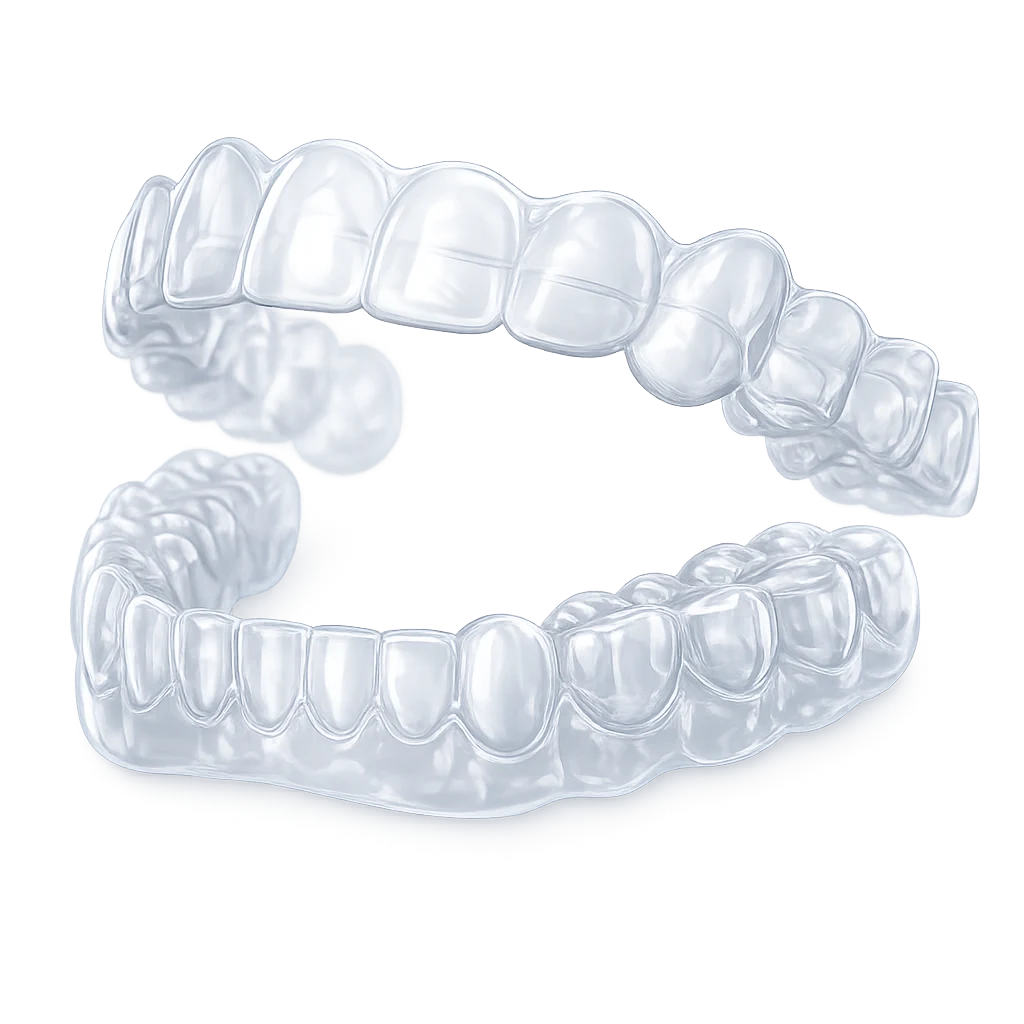

The dental mouthguard is one of the few tools in modern dentistry with a long history. Interestingly, wax mouthguards for tooth protection were used in ancient times, and there are mentions of leather or fabric mouthguards used in the Middle Ages. However, the current technological development of dental mouthguards only began in the early 20th century. Modern dentistry uses mouthguards that vary in purpose and materials.
| Classification criterion | Types |
| By manufacturing method |
|
| By materials |
|
| By wearing duration |
|
| By purpose |
|
Teeth alignment with mouthguards works by using pressure created by specially designed mouthguards on the teeth and bite.
Types of mouthguards for teeth alignment:
1. Bracket mouthguards
These are structures that combine mouthguards with built-in metal brackets. They are used both for teeth alignment and for correcting various bite abnormalities.
There are also bracket mouthguards with ceramic rather than metal built-in components. Additionally, lingual mouthguards have brackets placed on the inner (lingual) side of the teeth, making them virtually invisible.
2. Invisalign mouthguards, or aligners
These are transparent mouthguards that fit tightly against the teeth and gently apply pressure. Teeth correction with aligners involves periodic replacement: the patient wears the first set for 1–2 weeks, then as slight changes occur, a new set is needed. In total, teeth straightening with mouthguards involves at least 12 pairs. In cases of significant defects, 18–24 pairs of aligners may be required.
To straighten teeth with Invisalign mouthguards, aligners should be worn 20–22 hours per day, removing them only while eating. The cost of Invisalign teeth alignment is quite high, and the treatment period is long, requiring regular visits to the doctor. In Kyiv, the price of Invisalign treatment reaches 80,000–120,000 hryvnias.
3. Mouthguards with activators
Dentistry also widely uses teeth alignment mouthguards with activators. Such orthodontic mouthguards are structures with built-in activators – elements that create pressure aimed at correcting specific orthodontic problems.
The price of teeth alignment mouthguards in Kyiv varies and largely depends on the type of mouthguards, clinical picture, and treatment period. On average, it is around 40,000 hryvnias.

Dental mouthguards for alignment can be used for the following medical indications:
- minor teeth misalignment – mouthguards can be effective in cases requiring small corrections to tooth positioning;
- maintaining orthodontic treatment results – some types of mouthguards can be used after completing the active phase of orthodontic treatment to maintain the new position of teeth and prevent relapse;
- preventing the return of defects – mouthguards may be recommended to prevent the recurrence of certain defects.
Alignment with mouthguards is not possible in cases of:
- severe orthodontic problems;
- alignment in conditions of insufficient space for correction;
- presence of dental and mucosal diseases;
- need for surgical correction;
- patient’s inability to follow recommendations;
- allergy to materials;
- systemic diseases (cardiovascular, endocrine, autoimmune, bone and neuromuscular disorders, genetic syndromes).

Extensive experience
Стаж работы челюстно-лицевой хирурга 38 лет, из них 8 лет — работа дежурным врачом отделения острой травмы.

Number of surgeries
Over 2,000 successful surgeries in the field of maxillofacial surgery.

Quality of work
Thanks to a thorough approach in diagnostics and treatment planning for each clinical case, we achieve a minimal number of complications.
An orthodontic dental mouthguard can be used for teeth alignment or for bite modification. The processes are similar and interconnected, but teeth alignment addresses cosmetic defects such as uneven tooth distribution, diastemas, and tremas. Bite correction, on the other hand, involves not only correcting tooth positioning but also changing the jaw position.
Mouthguards for bite correction can be of different types:
1. Activators
Orthodontic appliances that include activators for influencing muscles, teeth, and jaw bone tissues and stimulating their restructuring. They are typically used for correcting deep and open bites.
2. Retention mouthguards
Removable orthodontic appliances used after completing the active treatment phase to retain teeth in their new position.
3. Bite fixation mouthguards
Used to stabilize results after active orthodontic treatment and prevent teeth from returning to their original position.
4. Splinting mouthguards
Plates and splinting mouthguards are removable orthodontic appliances that are often used to fix the results of orthodontic treatment, including bite correction. These appliances not only maintain the results of previous treatment but can also make corrective changes.
5. Elastic mouthguards
Rubber bands or other elastic elements aimed at providing additional pressure during bite correction.
The cost of bite correction with mouthguards varies depending on the complexity of the case and the type of mouthguards the doctor decides to use. In Kyiv dental clinics, prices for dental mouthguards for bite correction start from 3,000 hryvnias.
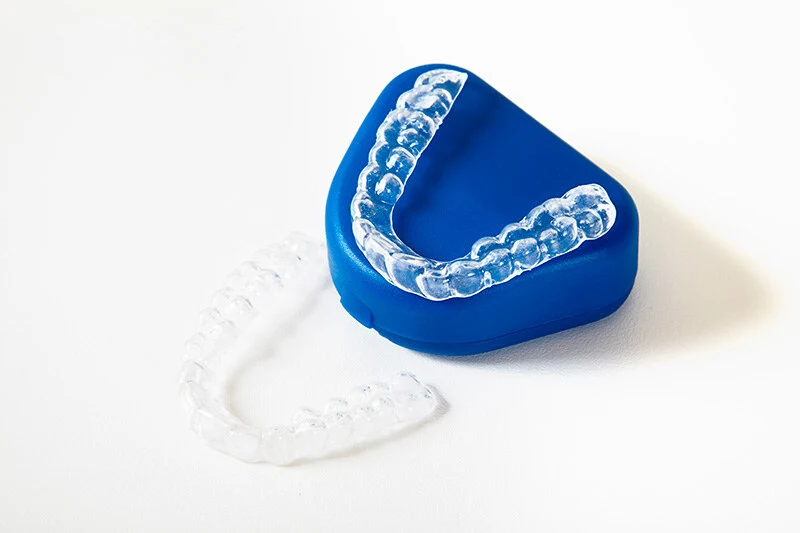
A bite correction mouthguard can be used in the following cases:
- mild and moderate bite abnormalities;
- retention after active treatment;
- correction of minor bite defects;
- aesthetic improvement.
Contraindications for using mouthguards in bite correction:
- complex cases of bite deformity and/or facial skull deformity;
- need for occlusion correction (teeth contact in closed position);
- need for multi-plane correction (when influencing several complex bite parameters is required);
- mucosal diseases.
In each individual case, the doctor’s recommendation may be different. General practice shows that fixing the results of orthodontic treatment may require wearing retention mouthguards at night (for the first few months after braces removal). Later, the wearing time can be reduced to several nights per week.
You should not choose bruxism guards or protective mouthguards on your own or use standard mouthguards. The best solution is to visit a dentist, take impressions for custom mouthguards, and plan comprehensive treatment.
At Osadchiy’s Dental Clinic, we prefer to answer such questions this way: the best option is one that matches medical indications. Generally speaking, braces can solve a wider range of orthodontic problems and have a more intensive effect. Using mouthguards requires a high level of self-discipline from the patient (the mouthguard must be worn at least 22 hours a day, otherwise it is difficult to achieve the desired result).
If referring to the gag reflex, then yes, during the first few days of wearing mouthguards, the patient may experience discomfort, gag reflexes, and even slight speech impairment. But over time, all unpleasant sensations disappear and the patient gets used to the mouthguards.
Dentists, like general practitioners, recommend quitting smoking. However, if the patient cannot give up the bad habit, it is necessary to refuse dental treatment with mouthguards, as smoking can increase the risk of problems with orthodontic mouthguards: discoloration, deformation, bad breath, etc.
Bruxism is involuntary grinding or clenching of teeth, most often during sleep. Bruxism causes enamel erosion, jaw pain, headaches, and even gastrointestinal problems. In cases of bruxism, patients are most often recommended a nighttime dental mouthguard that performs several protective functions simultaneously.
Functions of mouthguards for bruxism:
| Functions | Description |
| Shock absorption and tooth protection | Create a barrier between the upper and lower jaw teeth, and also absorb impacts that may occur during strong teeth clenching |
| Jaw muscle relaxation | Reduce jaw muscle tension and prevent excessive teeth clenching |
| Prevention of wear and damage | Reduce the risk of cracks, chips, and other tooth damage |
| Prevention of tooth displacement | With prolonged bruxism, teeth may start shifting due to constant pressure. Mouthguards help prevent such changes |
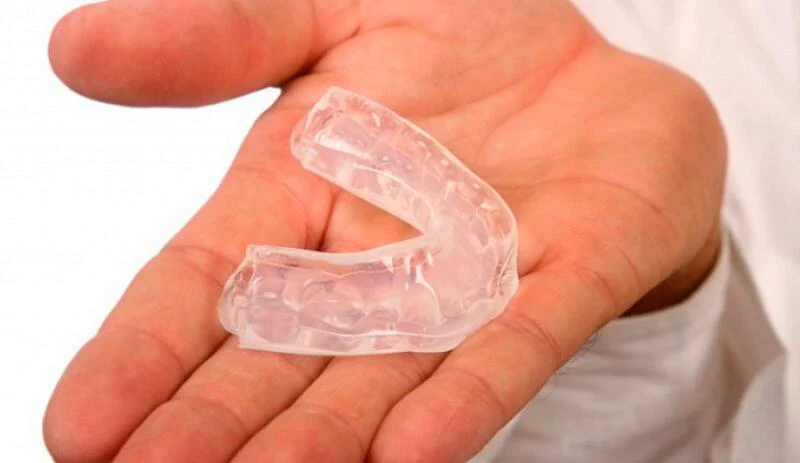
| Material | Purpose | Features |
| Bruxism guards | ||
| Made of transparent plastic | Necessary for preventing strong teeth clenching | Custom-fitted to the shape of teeth and jaw for comfort |
| Soft splints | ||
| Made of elastomers or gels | Necessary for providing shock absorption during teeth clenching | Comfortable for patients due to the softness of materials |
| Hard splints | ||
| Made of durable materials such as acrylic | Necessary for rigid fixation and preventing grinding | Especially effective in severe bruxism |
| Biometric mouthguards | ||
| The design includes electronic components and sensors | Necessary for preventing enamel erosion and excessive pressure | Allow recording bruxism data for further analysis |
Contraindications for using mouthguards in bruxism:
- structural dental diseases (cavities, enamel damage, etc.) require preliminary treatment, and only then can a dental mouthguard be used;
- allergy to materials;
- gum diseases (using mouthguards can lead to progression of gum diseases).
The cost of mouthguards for bruxism in various Kyiv clinics ranges from 10,000 to 45,000 hryvnias.
Another type of mouthguards that perform protective and shock-absorbing functions are sports mouthguards. They are designed to protect teeth and jaws from injuries that occur during sports.
Advantages:
- tooth protection (preventing damage to teeth and jaws from impacts or injuries);
- soft tissue protection (reducing the risk of damage to lips, tongue, and mucosa);
- shock absorption (the flexible material of sports mouthguards can serve as a shock absorber, softening the impact and reducing the effect).
Sports mouthguards can be made from:
- ethylene-vinyl acetate (EVA – a soft and flexible material that provides excellent shock absorption);
- polyurethane (PU has good elasticity and durability, making it effective for protecting teeth from impacts);
- silicone (soft and elastic silicone can be used to make custom sports mouthguards that better fit the patient’s teeth);
- thermoplastic polymer (a plastic material that becomes soft and moldable when heated. It allows creating custom mouthguards that take the shape of teeth after heating);
- latex (less common due to possible allergic reactions).
Additionally, there are double-layer sports mouthguards: the inner layer is softer and fits against the teeth, while the outer layer provides additional protection.
Sports mouthguards can be standard or custom-made from dental impressions for better fit and protection. The price of sports mouthguards varies depending on the type, material, and purpose. The cost of a standard sports mouthguard starts from 500 hryvnias. The cost of making a custom sports mouthguard in Kyiv is 4,000–6,000 hryvnias.
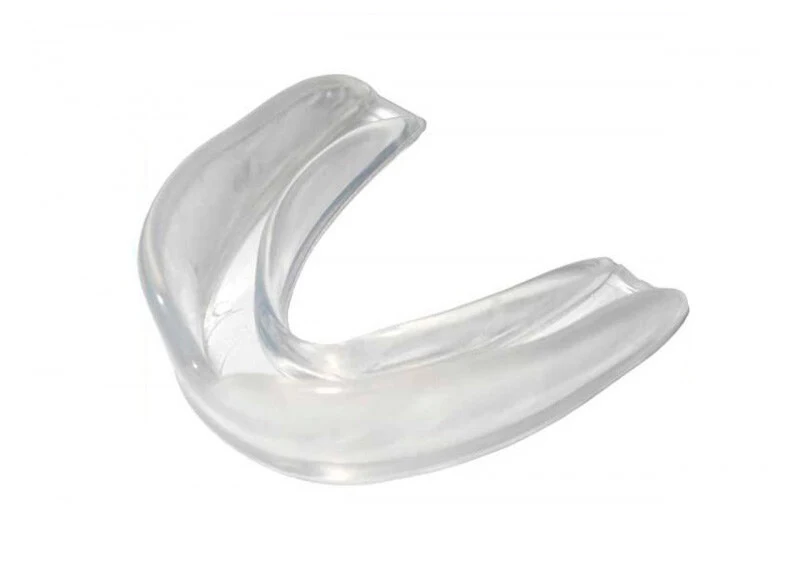
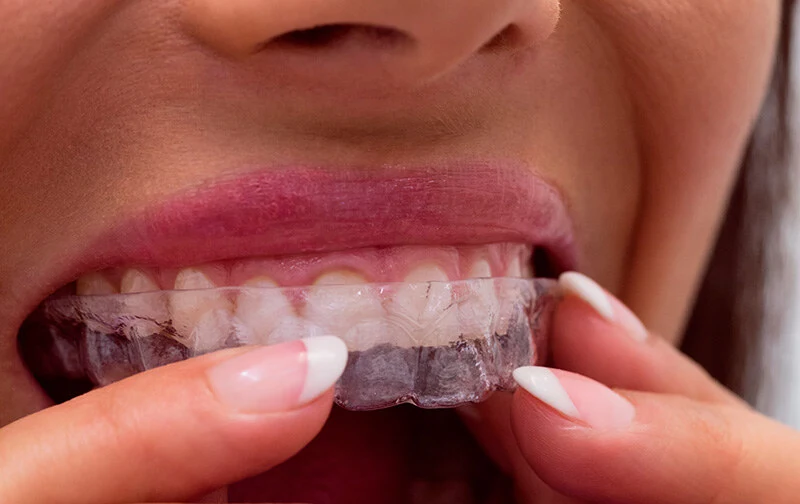
Teeth whitening mouthguards can be either standard or custom-made for the patient. The price of mouthguards made from individual impressions will be higher than the price of standard whitening mouthguards that can be bought at a pharmacy. However, standard mouthguards will be significantly inferior in terms of comfort and whitening effectiveness.
The general principle of whitening mouthguards is that they are filled with a special gel and fixed on the teeth. To achieve the effect, the mouthguards should be worn for several hours over several days.
The advantages of whitening mouthguards include:
- convenience;
- even distribution of the whitening gel;
- minimal gel impact on the gums.
Patients should remember that a whitening dental mouthguard is not a cure-all, and the whitening process itself negatively affects dental health.
Contraindications to teeth whitening:
- pregnancy and breastfeeding;
- allergy to gel components;
- temporomandibular joint diseases;
- gum diseases;
- enamel hyperesthesia;
- presence of piercings.
For our patients who still decide to undergo teeth whitening, we recommend considering a number of important and mandatory rules:
- Only whiten healthy (treated) teeth.
- Perform whitening after professional cleaning.
- After whitening, perform enamel remineralization.
- To maintain the effect after whitening, refrain from smoking and consuming coloring products (tea, coffee, red wine, beets, etc.).
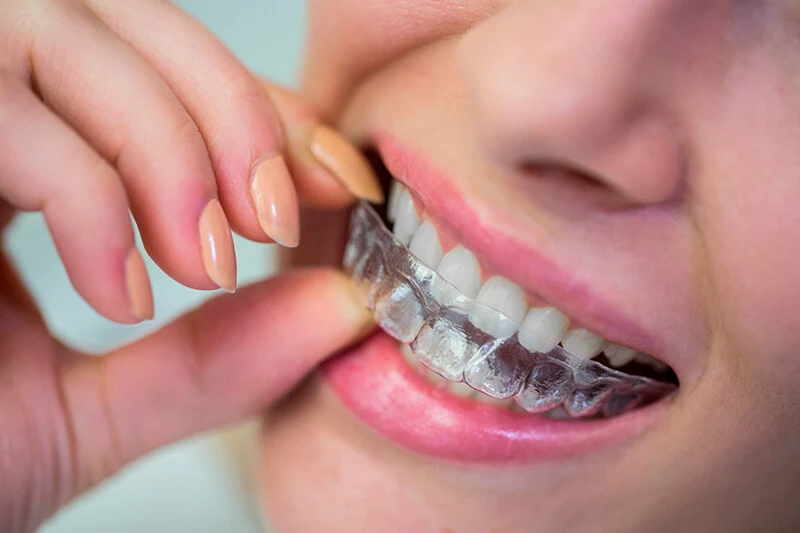
Mouthguards that help saturate teeth with beneficial microelements may be needed by patients both after whitening and during treatment. All enriching mouthguards work on the same principle – the same as whitening mouthguards.
Types of enriching dental mouthguards:
- with calcium (used to strengthen tooth enamel and saturate it with calcium);
- with fluoride (used to reduce enamel sensitivity and prevent cavities);
- with arginine and calcium (used to create a protective layer around teeth and strengthen enamel);
- with ceramides (ceramides are components that promote enamel restoration and protection);
- with arginine, calcium, and fluoride;
- with arginine and calcium salts.



 Reviews

Ой ,як добре ! Зуби як в молодого! Щиро дякую та бажаю більше вдячних клієнтів. Імплантами задоволений на 100%, а лікуванням зубів ще більше.
Дай бог Вам процвітання а Ігорю Олександровичу довгії літа і мою повагу.
Володимир.
Read more

Добрий день. Хочу поділитися своїми враженнями про стоматологію. Пролікувалися всією родиною, залишилися дуже задоволені! Хороше сучасне обладнання та технології. Лікарі дуже ввічливі, знають свою роботу на всі 100 процентів. Дуже уважний, професійний лікар Шляховий Олексій Анатолійович, завдяки йому не так страшно йти до стоматолога))). Дякуємо за якісне та безболісне лікування! Рекомендую всім!
Read more

Дуже комфортна та професійна клініка! Вперше звернувсч до пані Костенко Наталії Миколаївні 12 років тому, і протягом усього часу жодного разу не пошкодував. Задоволений професіоналізмом лікаря, якістю послуги та вмінням знайти індивідуальний підхід до кожного клієнта. Послугами клініки користується вся наша родина. Тому із задоволенням рекомендую! А лікарям клініки бажаю успіхів, розвитку та усміхнених клієнтів!
Read more

Дякую за Вашу роботу! Гарна і охайна клініка, ввічливий персонал. Звернулась до лікаря Катерини Олександрівної для встановлення імпланта. Перед цим мені запропонували зробити чистку і вилікувати карієс. Роботою дуже задоволена, буду звертатись у майбутньому і рекомендувати друзям і знайомим!
Read more

Щойно повернулася з прийому в стоматології – і я під враженням! 🙌
Все пройшло супер комфортно: привітні адміністратори, сучасне обладнання та головне — уважний лікар, який пояснив і зробив акуратно і без болю.
Пішла з усмішкою, і тепер точно знаю, куди повернуся наступного разу. Дякую вам за турботу та атмосферу! 💙🦷
Read more

Відвідуємо стоматологію всією родиною.
Ключовий фактор це компетентність спеціалістів.Шляховий Анатолій Олексійович допоміг вирішити проблему, яка дошкуляла не один рік. Щиро дякуємо!
Катерині Олександрівній, своїм підходом до роботи з пацієнтом позбавила страху стоматологів))
Професіоналізм та сервіс заслуговують найвищої оцінки❤️
Read more

Я залишилась дуже задоволена! Атмосфера приємна, все чисто й затишно. Процедура пройшла швидко та максимально комфортно. Особливо дякую Осадчому Ігорю, все робить акуратно й професійно, а ще підтримує теплу розмову — час пролітає непомітно 😊
Read more

Завжди лікусь лише у Самокіної Катерини Олександрівни, дуже рекомендую, чудовий лікар + зручна локація клініки, все подобається.
Read more

Дуже хороша клініка, зокрема лікар Наталія Миколаївна 🤍 проходила у неї лікування брекетами, і досі настільки задоволена результатом, що і тепер чоловік теж проходить тут лікування. Завжди приємне ставлення 🫶🏼
Read more

Дякую Катерині Олександрівні за чудову роботу! Справжній професіонал з “золотими руками”. Навіть найскладніші процедури проходили абсолютно безболісно – у неї дуже легка рука.
Read more

Про лікаря Ігоря Олександровича дізналися завдяки YouTube, і це було найкраще рішення звернутися саме до нього. Він проводить установку імплантів без синус-ліфтингу – складну роботу, за яку більшість лікарів не беруться.
Щиро вдячні за його професіоналізм, уважність і людяність. Весь процес проходив комфортно та безболісно. Атмосфера в клініці дуже приємна, персонал доброзичливий, відчувається турбота й щире бажання допомогти.
Завдяки досвіду та сучасному підходу лікаря отримали чудовий результат без зайвих процедур.
Відтепер із упевненістю довіряємо здоров’я зубів саме Ігорю Олександровичу!
Окрема подяка ❤️ керівнику клініки Діані! За оперативне реагування на нашу проблему та бажання допомогти!
Ви команда професіоналів!
Read more

Рекомендую 100%
Скористалась лише однією послугою – панорамний знімок щелепи, але вже можу оцінити ставлення до клієнта та сервіс в загальному. Люди працюють на високому рівні це точно.
Read more

Клініка дуже гарна. Дизайн розслабляє та знімає напругу перед та після відвідування лікаря. Персонал клініки попереджувальний та уважний, з перших хвилин відчуваєш, що ти їм дорогий, вони раді тебе обслужити. Про лікарів можу сказати, що перший раз у свої 67 років, на прийомі навіть трохи подрімала. Це ж нонсен … але це так. Рекомендую
Read more

Вже не вперше звертаюся до цієї клініки – все завжди дуже швидко та якісно. Окрема подяка Осадчому Ігорю за професіоналізм і уважне ставлення: видалення зубів пройшло швидко, безболісно та комфортно!
Read more

Дуже рекомендую!
Робив повний цикл: лікування зубів, видалення мудрих, установка брекетсистеми, потім відбіл. Чудово!
Дружина видаляла відразу 4 зуби мудрості під наркозом – все було супер та швидке відновлення!
Доньці зубки теж лікували ⭐️👍
Read more

Нам дуже сподобалося. ПРИЙНЯЛИ дитину без запису попереднього адже болів зуб. Дякую🫶🏻Сервіс на вищому рівні, працюють професіонали своєї справи.
Read more