Didn’t find the necessary information? Make an appointment for a consultation with oral surgeon Ihor Oleksandrovych Osadchy.
Aligners
Aligners appeared in dentistry relatively recently but are rapidly gaining popularity. Many dental clinics in Kyiv already offer them as an alternative to braces. And indeed, this technology has proven itself very well. However, when a patient agrees to the dentist’s offer to get aligners, the cost and effort will only be justified with strong self-discipline. Determination is a basic condition, but not the only one…
Invisalign aligners are a relatively new tool in dentistry, developed by an American company in 1997. Aligners are a set of transparent trays that can be used both for bite correction and for maintaining results achieved by other orthodontic treatment methods.
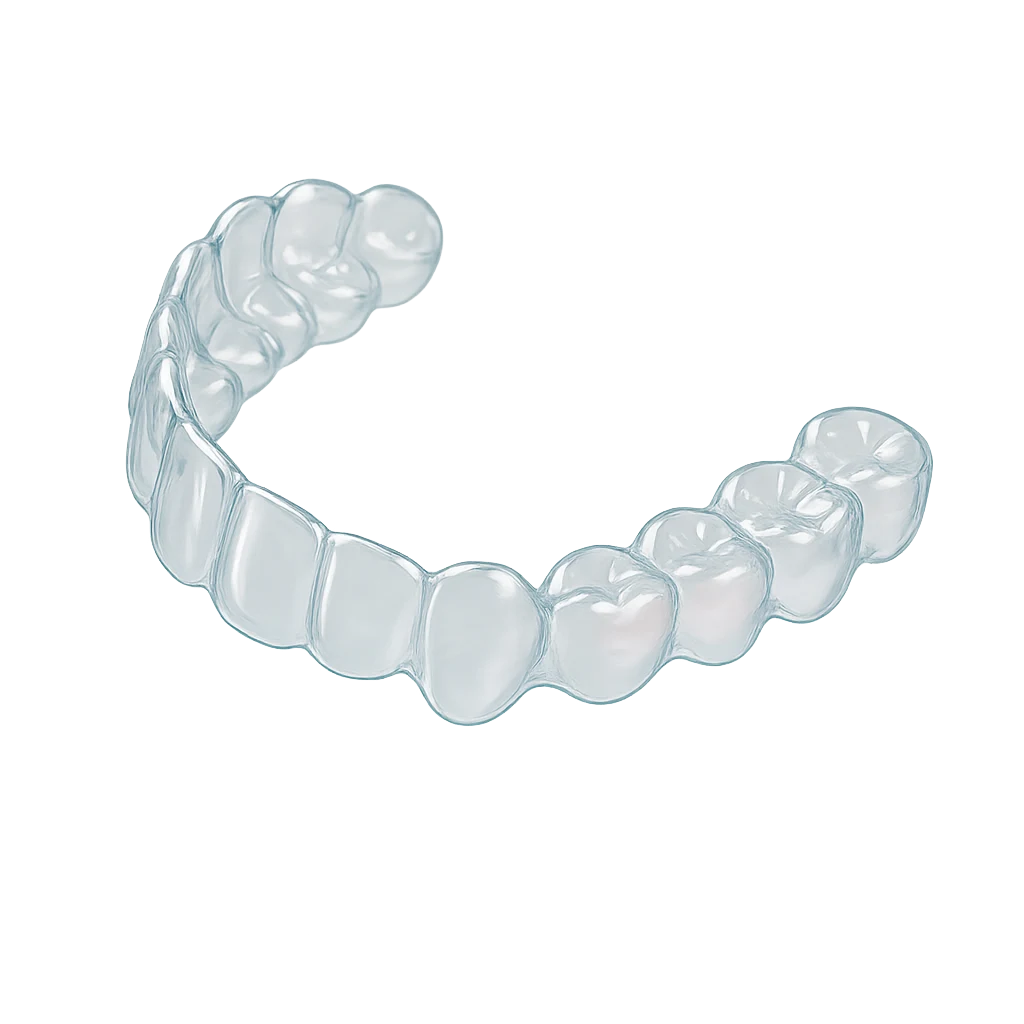

Depending on the material, aligners can be made from:
- polycaprolactone (medical plastic);
- polyurethane;
- polyethylene terephthalate;
- acrylic polymers.
Depending on the direction of impact, there are:
- retention aligners, used as an additional tool for maintaining orthodontic treatment results;
- active aligners, used for bite correction or teeth positioning.
Patients with orthodontic problems often have the option to use aligners before and after teeth straightening and bite correction. Sometimes, after bite correction with braces, it is necessary to maintain the achieved result — to prevent the bite or teeth from returning to their original position. In such cases, the orthodontist may prescribe wearing transparent trays — retainers. The duration of the treatment course depends on the clinical situation and can range from several months to several years. It is usually recommended to wear retainers for eight hours a day.
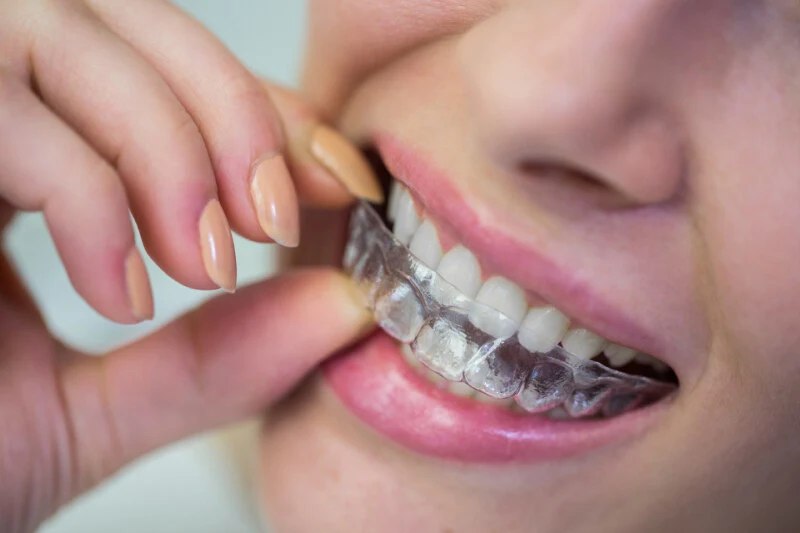
An aligner can be a worthy alternative to a brace system when it comes to the need to correct minor bite defects.
Key indications for using aligners:
- orthodontic treatment;
- metal allergy.
Aligner treatment can also be performed in cases where teeth are at a slight angle, too crowded, or conversely — there are large gaps between the patient’s teeth. However, in each individual case, the doctor makes a decision based on a thorough study and analysis of the clinical picture. There is no strict list of pathologies for which aligners are specifically indicated, and the best solution is to come for a consultation during which the doctor will perform the necessary calculations.
In a number of cases, the effect of aligners proves insufficient or the patient cannot use them. These include:
- complex orthodontic problems;
- bone tissue deficiency;
- mucosal diseases (periodontitis);
- untreated caries;
- presence of tartar;
- allergy to materials;
- mental health conditions.

Extensive experience
Стаж работы челюстно-лицевой хирурга 38 лет, из них 8 лет — работа дежурным врачом отделения острой травмы.

Number of surgeries
Over 2,000 successful surgeries in the field of maxillofacial surgery.

Quality of work
Thanks to a thorough approach in diagnostics and treatment planning for each clinical case, we achieve a minimal number of complications.
Bite correction with aligners is not a quick procedure. Depending on the clinical picture, trays will need to be worn for several months to several years. Much depends on self-discipline, as in the early stages trays should be worn 22 hours a day. That is, the aligner can only be removed during meals. Bad news for smokers — aligners also need to be removed during smoking breaks. For this reason, some doctors do not recommend them for people who are not ready to give up the bad habit.
Treatment stages:
1. Diagnostics
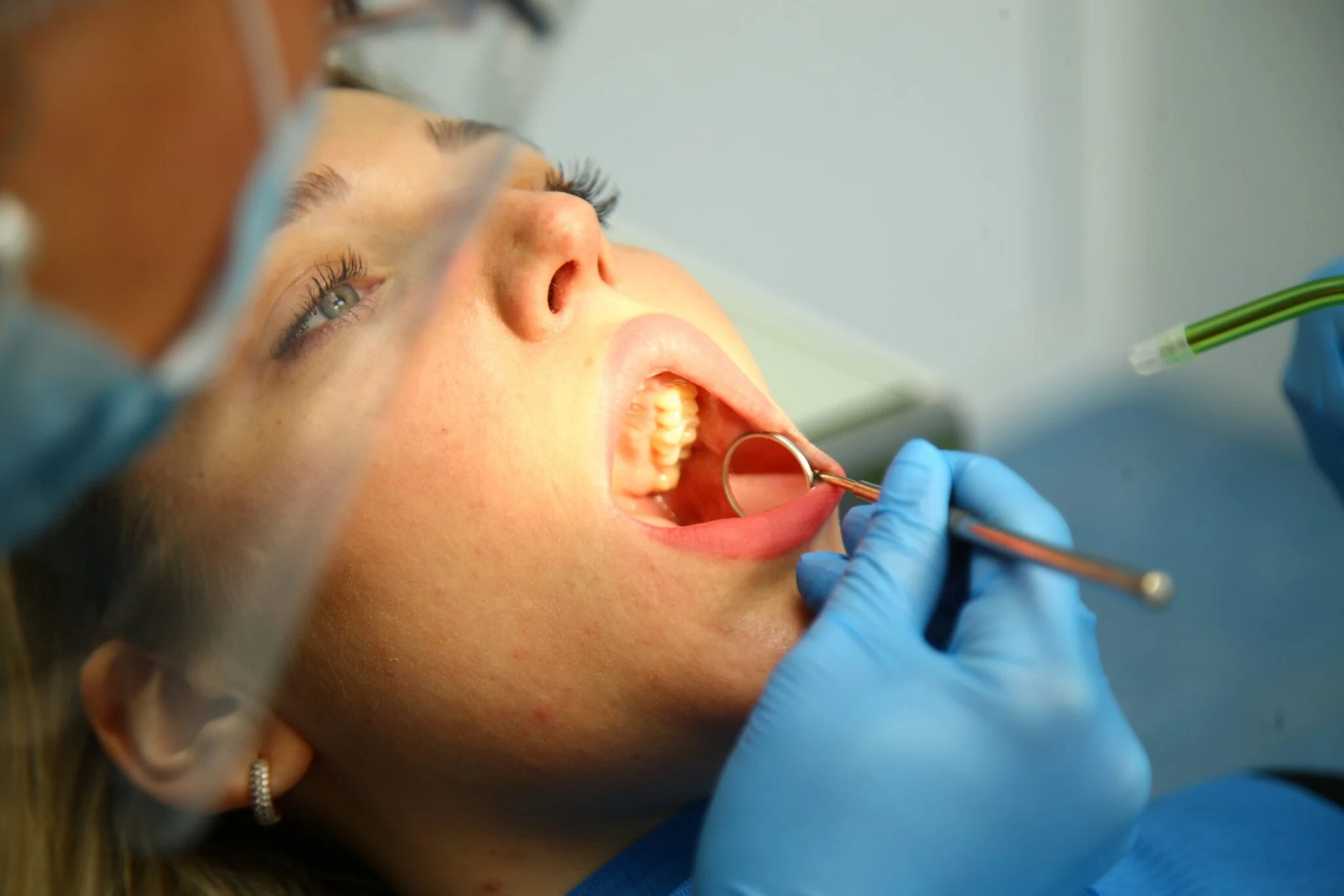
Aligner treatment, like any other, begins with diagnostics. The doctor examines the clinical picture, studies the X-ray and develops a treatment plan.
2. Manufacturing
Teeth straightening with aligners is a high-tech process: creating a set of trays requires not just a dental impression, but also a 3D jaw model and programming the production of individual trays.
3. Wearing
The longest period during which the patient must wear aligners — at least 22 hours a day. The process of bite and teeth position correction works as follows: the first pair of trays exerts pressure and causes slight teeth displacement, then the second pair is used, which also provokes displacement. And so on until the teeth and jaw reach the correct position. That is why when using active aligners, we are talking about a set of trays: on average 25 pairs (for lower and upper jaws). When correcting complex cases, more trays and additional attachments may be needed. Trays are changed on average every two weeks.
4. Monitoring
Changing trays and tracking the treatment process occur under the doctor’s supervision. That is why the patient needs to free up time in their schedule in advance for regular, ideally every two weeks, visits to the clinic.
5. Retention
After correction is complete, aligners for teeth straightening are replaced by retainers — trays for maintaining the result. They can be used both after orthodontic treatment with braces and after aligner treatment.
Many dental clinics in Ukraine and Kyiv position aligners as an advanced technique, which is well deserved. However, there is no panacea in medicine: any technology has both its advantages and disadvantages. The choice in each clinical case depends on indications. But in general terms, the pros and cons of aligners can be highlighted.
Advantages:
- discreteness (invisibility);
- distalization and full impact (aligners surround the tooth from all sides — they affect the entire tooth surface, unlike braces; additionally, aligners are capable of distalizing, moving teeth backward);
- comfort (aligners are smooth, they irritate the mucosa less and for many patients prove more comfortable to wear than braces);
- removability (partly an advantage that allows comfortable eating and teeth brushing, but also a disadvantage since many patients significantly complicate the correction process by not wearing trays the required number of hours);
- hygiene (trays are easy to clean, do not interfere with regular teeth brushing and do not provoke excessive plaque buildup on teeth);
- gradualness (aligner straightening does not involve a drastic change — correction happens imperceptibly).
Disadvantages:
- selective application (ineffective in correcting complex orthodontic problems such as significant teeth overlap, deep bite, or large gaps between teeth);
- adherence to regimen and self-discipline (treatment implies a lifestyle change: quitting smoking, certain food habits, etc.; additionally, strict adherence to the wearing schedule and good self-discipline are required, especially in the early stages before adaptation occurs);
- cost (aligners are more expensive than most types of braces).
Buying aligners for teeth straightening and not using them — this is the most common patient problem. Effective aligner treatment requires tremendous self-discipline: if you don’t wear the trays 22 hours a day, miracles unfortunately won’t happen. That is why, by agreeing to buy aligners for teeth, the patient automatically agrees to a lifestyle change.
The good news is that over time a person gets used to everything, especially to relatively comfortable trays that, unlike braces, do not irritate or injure the oral mucosa. An important addition to patient motivation is not only the desire for a beautiful smile but also the cost of aligners — invested money should be used as effectively as possible.
What you can do while wearing trays:
- sleep;
- kiss;
- exercise;
- visit saunas, pools, beauty salons, etc.
What you cannot do while wearing trays:
- eat;
- smoke;
- drink wine and other staining beverages;
- brush teeth.
When brushing teeth, aligners must be removed and also cleaned. No additional devices or products are needed: a toothbrush and toothpaste are sufficient.
The cost of the service is formed based on the price of aligners and the doctor’s fee. It is impossible to state the exact cost of aligners since the number of tray pairs depends on the clinical picture: in some cases 22 pairs are sufficient, while in others 50 pairs are needed.
The price of dental aligners also depends on the material or manufacturer. For instance, Invisalign by Align Technology can cost the patient several thousand dollars. In Kyiv, you can buy aligners (one pair) on average for 4–6 thousand hryvnias. However, a full course of treatment will cost much more: taking into account consultations, the preparatory period, treatment planning and the price of aligners, it comes to about 80 thousand hryvnias in the simplest cases. Complex cases requiring prolonged tray wearing are estimated by Kyiv clinics at 100–200 thousand hryvnias.
You do not need to remove aligners while drinking beverages that do not contain dyes or sugar. You can also keep the trays on when drinking cooled or warm beverages. When consuming hot tea, coffee, etc., the trays should be removed to avoid deformation.
Aligners must be removed before eating. Then you should rinse your mouth, or better yet — brush your teeth, rinse the tray itself and put it back on. You cannot chew gum, eat lollipops, etc. while wearing trays.
Yes, speech disturbances when using aligners are possible. However, this is a temporary phenomenon. To speed up the adaptation process, you should talk more or read aloud.
Most aligners are made from transparent material that makes them virtually invisible while wearing. However, some aligners may be more noticeable, especially upon close examination.
 Reviews

Ой ,як добре ! Зуби як в молодого! Щиро дякую та бажаю більше вдячних клієнтів. Імплантами задоволений на 100%, а лікуванням зубів ще більше.
Дай бог Вам процвітання а Ігорю Олександровичу довгії літа і мою повагу.
Володимир.
Read more

Добрий день. Хочу поділитися своїми враженнями про стоматологію. Пролікувалися всією родиною, залишилися дуже задоволені! Хороше сучасне обладнання та технології. Лікарі дуже ввічливі, знають свою роботу на всі 100 процентів. Дуже уважний, професійний лікар Шляховий Олексій Анатолійович, завдяки йому не так страшно йти до стоматолога))). Дякуємо за якісне та безболісне лікування! Рекомендую всім!
Read more

Дуже комфортна та професійна клініка! Вперше звернувсч до пані Костенко Наталії Миколаївні 12 років тому, і протягом усього часу жодного разу не пошкодував. Задоволений професіоналізмом лікаря, якістю послуги та вмінням знайти індивідуальний підхід до кожного клієнта. Послугами клініки користується вся наша родина. Тому із задоволенням рекомендую! А лікарям клініки бажаю успіхів, розвитку та усміхнених клієнтів!
Read more

Дякую за Вашу роботу! Гарна і охайна клініка, ввічливий персонал. Звернулась до лікаря Катерини Олександрівної для встановлення імпланта. Перед цим мені запропонували зробити чистку і вилікувати карієс. Роботою дуже задоволена, буду звертатись у майбутньому і рекомендувати друзям і знайомим!
Read more

Щойно повернулася з прийому в стоматології – і я під враженням! 🙌
Все пройшло супер комфортно: привітні адміністратори, сучасне обладнання та головне — уважний лікар, який пояснив і зробив акуратно і без болю.
Пішла з усмішкою, і тепер точно знаю, куди повернуся наступного разу. Дякую вам за турботу та атмосферу! 💙🦷
Read more

Відвідуємо стоматологію всією родиною.
Ключовий фактор це компетентність спеціалістів.Шляховий Анатолій Олексійович допоміг вирішити проблему, яка дошкуляла не один рік. Щиро дякуємо!
Катерині Олександрівній, своїм підходом до роботи з пацієнтом позбавила страху стоматологів))
Професіоналізм та сервіс заслуговують найвищої оцінки❤️
Read more

Я залишилась дуже задоволена! Атмосфера приємна, все чисто й затишно. Процедура пройшла швидко та максимально комфортно. Особливо дякую Осадчому Ігорю, все робить акуратно й професійно, а ще підтримує теплу розмову — час пролітає непомітно 😊
Read more

Завжди лікусь лише у Самокіної Катерини Олександрівни, дуже рекомендую, чудовий лікар + зручна локація клініки, все подобається.
Read more

Дуже хороша клініка, зокрема лікар Наталія Миколаївна 🤍 проходила у неї лікування брекетами, і досі настільки задоволена результатом, що і тепер чоловік теж проходить тут лікування. Завжди приємне ставлення 🫶🏼
Read more

Дякую Катерині Олександрівні за чудову роботу! Справжній професіонал з “золотими руками”. Навіть найскладніші процедури проходили абсолютно безболісно – у неї дуже легка рука.
Read more

Про лікаря Ігоря Олександровича дізналися завдяки YouTube, і це було найкраще рішення звернутися саме до нього. Він проводить установку імплантів без синус-ліфтингу – складну роботу, за яку більшість лікарів не беруться.
Щиро вдячні за його професіоналізм, уважність і людяність. Весь процес проходив комфортно та безболісно. Атмосфера в клініці дуже приємна, персонал доброзичливий, відчувається турбота й щире бажання допомогти.
Завдяки досвіду та сучасному підходу лікаря отримали чудовий результат без зайвих процедур.
Відтепер із упевненістю довіряємо здоров’я зубів саме Ігорю Олександровичу!
Окрема подяка ❤️ керівнику клініки Діані! За оперативне реагування на нашу проблему та бажання допомогти!
Ви команда професіоналів!
Read more

Рекомендую 100%
Скористалась лише однією послугою – панорамний знімок щелепи, але вже можу оцінити ставлення до клієнта та сервіс в загальному. Люди працюють на високому рівні це точно.
Read more

Клініка дуже гарна. Дизайн розслабляє та знімає напругу перед та після відвідування лікаря. Персонал клініки попереджувальний та уважний, з перших хвилин відчуваєш, що ти їм дорогий, вони раді тебе обслужити. Про лікарів можу сказати, що перший раз у свої 67 років, на прийомі навіть трохи подрімала. Це ж нонсен … але це так. Рекомендую
Read more

Вже не вперше звертаюся до цієї клініки – все завжди дуже швидко та якісно. Окрема подяка Осадчому Ігорю за професіоналізм і уважне ставлення: видалення зубів пройшло швидко, безболісно та комфортно!
Read more

Дуже рекомендую!
Робив повний цикл: лікування зубів, видалення мудрих, установка брекетсистеми, потім відбіл. Чудово!
Дружина видаляла відразу 4 зуби мудрості під наркозом – все було супер та швидке відновлення!
Доньці зубки теж лікували ⭐️👍
Read more

Нам дуже сподобалося. ПРИЙНЯЛИ дитину без запису попереднього адже болів зуб. Дякую🫶🏻Сервіс на вищому рівні, працюють професіонали своєї справи.
Read more