Didn’t find the necessary information? Make an appointment for a consultation with oral surgeon Ihor Oleksandrovych Osadchy.
I-System implants
I-System is a Swiss dental implant brand that specializes in complex implantation cases with insufficient bone tissue. The main feature of the system is short Plateau implants, which make it possible to avoid bone grafting and sinus lifting. I-System implants are known for gentle placement, good integration and high stability. They provide reliable integration into bone and a natural esthetic result.
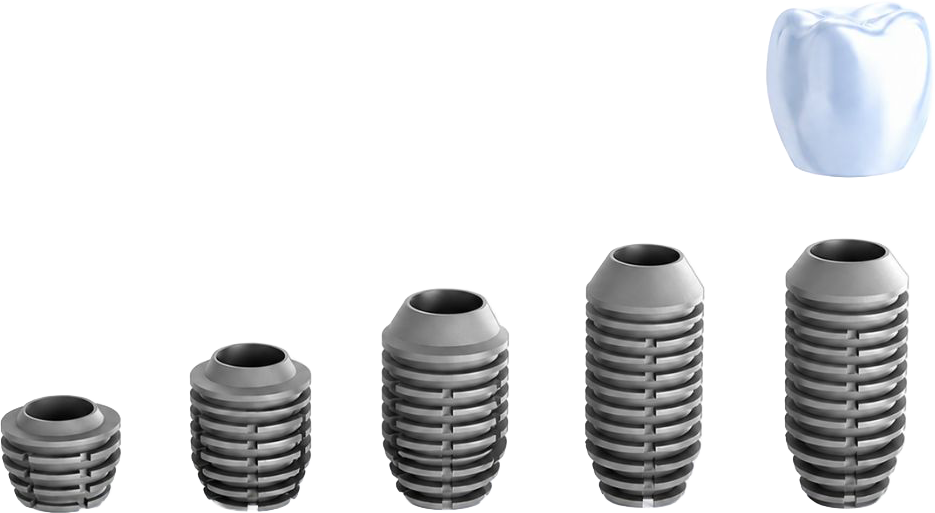

Modern dentistry uses different implants, both by design and by manufacturer. Patients often ask: “which implant should I choose?” But the truth is that implants are chosen not by patients, but by doctors, based on a whole range of factors and the clinical situation.
Still, for many patients it is important to know exactly which implant the doctor recommends and why. At Dr. Osadchiy’s Clinic, we often recommend I-System implants because of the unique qualities of these systems. Let’s look closely and in detail at what I-System implants are, where they are used and why.
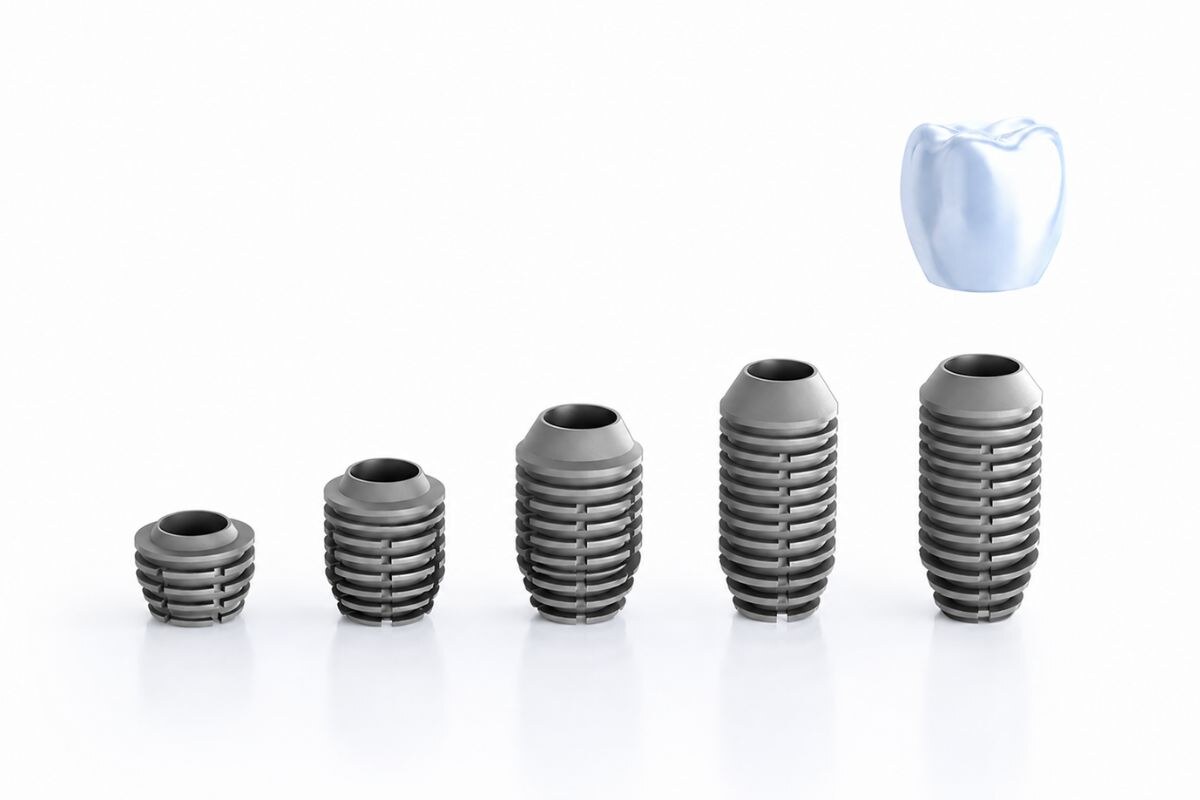
I-System is a Swiss dental implant brand. The manufacturer offers a wide range of implants that can be used in different clinical cases. But, as a rule, patients come for implantation when they have problems with bone availability. Simply put: the bone volume is insufficient for placement of a classic screw-type implant.
This is where I-System’s specialization becomes clear. Their developments are mainly aimed at such cases, and the most popular are I-System Plateau implants: not screw-type, but short implants that can be placed when bone availability is minimal.
In this sense, I-System implants cannot be called mass-market or widely popular; they are rather unique implants used in complex cases.
I-System implants by design
Screw-type implants
Classic implants that resemble a screw. Additional threads provide a larger contact area between the implant and the bone, which in turn increases the chances of osseointegration, meaning integration into bone.
These implants are often used in standard clinical cases when there is enough bone tissue and its condition does not cause concern.
I-System Plateau implants
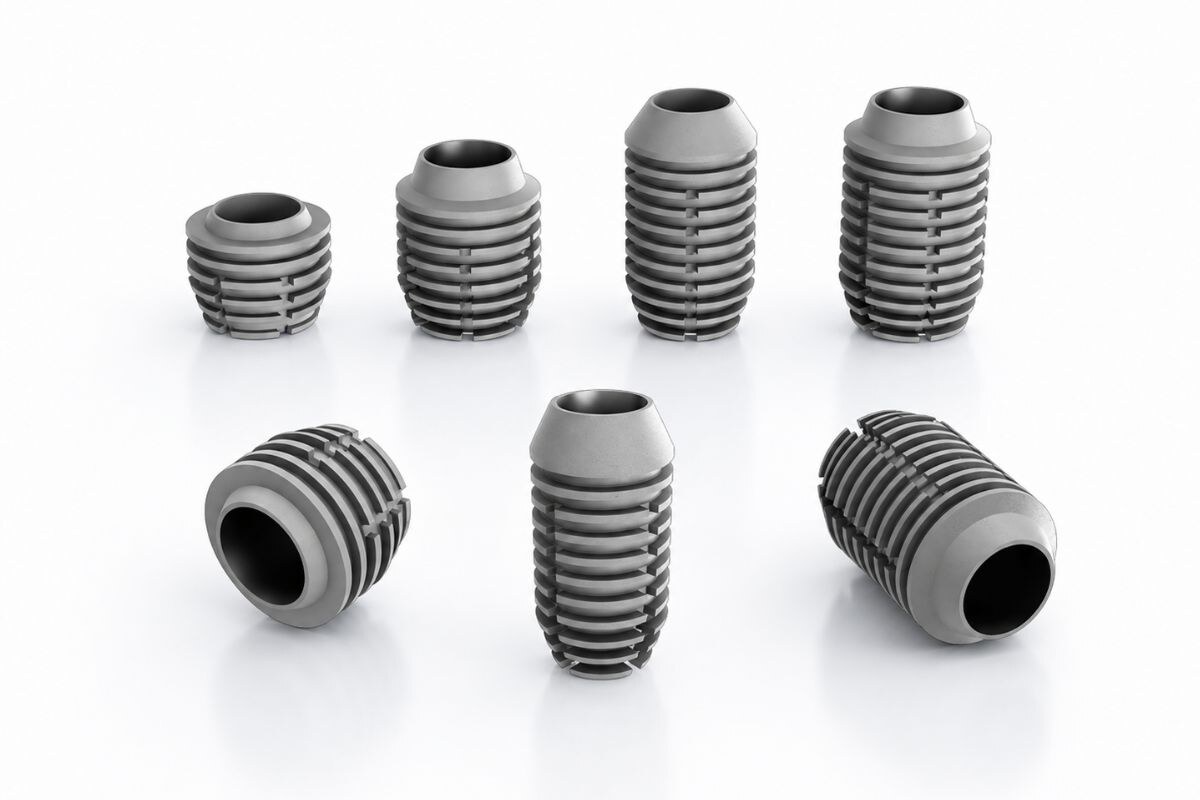
The key position in the I-System range is Plateau-system implants. Instead of classic threading, the implants have horizontal levels, or plateaus, between which zones of new bone tissue growth are formed.
Plateau-system implants have square fins that provide optimal load distribution on the jaw. In addition, they increase the contact area between the implant and bone, which is also very important for integration of the structure.
These implants have other design features as well: anti-rotational channels that prevent the implant from rotating and promote better blood supply, or vascularization, of the bone, which accelerates healing.
It is also worth noting the tightness of the connection between the implant and the abutment, the connector for the crown. I-System uses an ultra-precise 1.5° conical connection that creates a “cold welding” effect. This connection almost completely eliminates micro-mobility of the structure and bacterial penetration into the implant. For the patient, this is especially important because it reduces the risk of inflammation around the implant.
These implants are used in cases when bone availability is insufficient. In such cases, many doctors recommend bone grafting surgeries, often called “bone augmentation.” But it is important to remember that the implant must be fully placed in native, or the patient’s own, bone. It is impossible to obtain native bone with bone-grafting materials that fully matches the structure of the patient’s bone. In addition, procedures of this type can cause a number of complications.
In such cases, the solution at Dr. Osadchiy’s Clinic is I-System Plateau implants. They can be integrated even into thin bone; the additional plates provide a larger contact area with bone and good osseointegration. Without bone grafting or sinus lifting, the patient receives a stable implant and high-quality prosthetic restoration.
I-System implants by size
Short I-System implants
These are non-screw Plateau-system implants with a length of 4 to 7 mm. Thanks to the plate-like design, such implants integrate well into bone and can withstand chewing loads even with minimal bone availability. Today, short I-System implants are the shortest in the world; other manufacturers do not have implants like them.
Features of short I-System implants:
- possibility of use with bone deficiency
- possibility to avoid bone grafting
- possibility to work in anatomically complex areas
- less traumatic treatment and more gentle surgery
In addition, short I-System implants have a safe rounded apex: a flat rounded tip of the implant. This design makes placement significantly safer even in very thin bone and minimizes the risk of damaging anatomical structures, including nerves and maxillary sinus membranes.
Another feature is the beveled shoulder of the implant. This shape leaves more space for the patient’s own bone and soft tissue around the implant. This is especially important in esthetically significant areas because it helps preserve the natural gum contour and reduce the risk of its “recession” over time.
Standard I-System implants
These are used in so-called classic implantation when the patient has enough bone to integrate a longer implant. The I-System range includes implants from 8 to 13 mm in length.
Standard I-System implants can have either a screw-type or Plateau design, depending on the clinical task.
Features of standard I-System implants:
- high primary stability
- possibility to work with bone of different density
- compatibility with different prosthetic solutions
Narrow I-System implants
Narrow implants are used when the space between teeth is limited or when the width of bone tissue is insufficient. Implant diameters range from 3 to 3.5 mm.
The main task of narrow implants is to make implantation possible with minimal trauma and preservation of surrounding tissues.
Features of narrow I-System implants:
- more delicate placement
- minimal intervention in bone tissue
- preservation of soft tissue
- possibility to work in limited space
- high esthetics in the smile zone
The I-System is fully integrated into the digital CAD-CAM protocol. This makes it possible to manufacture abutments and crowns individually from the patient’s 3D scans. It ensures a more precise fit of the structure to the soft tissue, better esthetics and the most natural appearance of the future tooth.
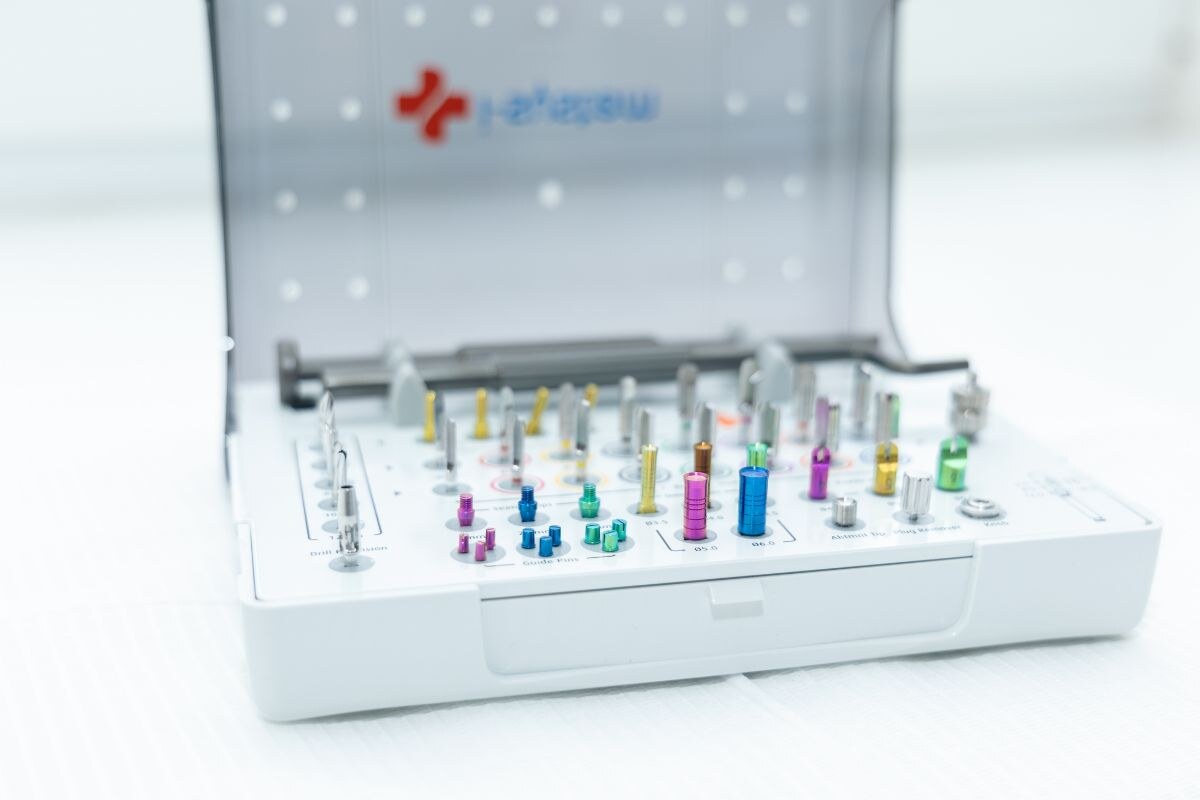
Main material in I-System implants
In most cases, implants are made of titanium, although other options are possible. For medical titanium, the strength grade matters. Grade 4 or Grade 5 titanium is used for implant production.
I-System modified the strongest Grade 5 titanium and uses an improved medical version: Titanium Grade 23. It contains fewer impurities, which makes it possible to achieve greater strength under load.
This is important because the manufacturer specializes in implants for complex implantations. There can be no compromise on strength here, especially when short or narrow implants are involved.
I-System implant surface treatment
The implant must “take” in the bone, meaning osseointegration must occur. Here, not only the implant material, bioinert titanium, matters, but also the way the structure’s surface is treated.
The surface of I-System implants is not smooth; it has microroughness that promotes better adhesion of bone tissue to the implant. The company has patented its own technology, i-mimetic, which imitates the structure of bone for better integration.
The rough implant surface promotes:
- better attachment of bone cells around the implant
- faster osseointegration
- improved implant stability

Extensive experience
Стаж работы челюстно-лицевой хирурга 38 лет, из них 8 лет — работа дежурным врачом отделения острой травмы.

Number of surgeries
Over 2,000 successful surgeries in the field of maxillofacial surgery.

Quality of work
Thanks to a thorough approach in diagnostics and treatment planning for each clinical case, we achieve a minimal number of complications.
Every implant brand specializes in several key areas. For I-System, the main focus is short Plateau-system implants. They make it possible to perform implantation effectively in complex clinical cases, and these are the implants we use at Dr. Osadchiy’s Clinic.
It is also worth noting the biological protocol for placing I-System implants. During bone preparation, special drills are used at ultra-low speeds: under 50 revolutions per minute. This approach helps avoid overheating the bone and allows the doctor to collect the patient’s own living bone chips during surgery. The doctor can then use them to additionally strengthen the implant placement area and improve tissue healing.
The advantages of these implants include:
- minimized trauma
- possibility to avoid bone grafting
- preservation of bone tissue
- stable load distribution
- high primary stability
- better osseointegration
- a more physiologic approach to implantation


The better option is the one that fits the individual clinical situation; this is the general answer accepted in medicine. But when choosing between a short implant and bone grafting, the answer can be more specific. Bone-grafting materials do not always integrate, do not provide native bone, often cause complications and even autoimmune diseases. This is a significant risk, while the use of bone grafting does not guarantee implantation success. Taking all factors into account, it is better to use short implants. But here, the surgeon’s experience and skills are critically important, as they are for implantation with any kind or type of implant.
Doctors often give patients implants to choose from. On one hand, this is understandable; on the other, it is quite strange. When medical indications and a specific case are involved, the choice comes down to the optimal solution. The essence of this optimal solution should be clear to the patient, and the doctor must explain it. Country of manufacture, design, materials and cost are all important factors, but the patient does not have the full information and experience needed to make a professional choice.
For implants of any design, what matters is not length but the contact area between the implant and bone. The larger it is, the higher the chances of successful implant integration. With long screw-type implants, the area increases due to the threads; with mini Plateau-system implants, it increases due to the area of the plates.
 Reviews

Ой ,як добре ! Зуби як в молодого! Щиро дякую та бажаю більше вдячних клієнтів. Імплантами задоволений на 100%, а лікуванням зубів ще більше.
Дай бог Вам процвітання а Ігорю Олександровичу довгії літа і мою повагу.
Володимир.
Read more

Добрий день. Хочу поділитися своїми враженнями про стоматологію. Пролікувалися всією родиною, залишилися дуже задоволені! Хороше сучасне обладнання та технології. Лікарі дуже ввічливі, знають свою роботу на всі 100 процентів. Дуже уважний, професійний лікар Шляховий Олексій Анатолійович, завдяки йому не так страшно йти до стоматолога))). Дякуємо за якісне та безболісне лікування! Рекомендую всім!
Read more

Дуже комфортна та професійна клініка! Вперше звернувсч до пані Костенко Наталії Миколаївні 12 років тому, і протягом усього часу жодного разу не пошкодував. Задоволений професіоналізмом лікаря, якістю послуги та вмінням знайти індивідуальний підхід до кожного клієнта. Послугами клініки користується вся наша родина. Тому із задоволенням рекомендую! А лікарям клініки бажаю успіхів, розвитку та усміхнених клієнтів!
Read more

Дякую за Вашу роботу! Гарна і охайна клініка, ввічливий персонал. Звернулась до лікаря Катерини Олександрівної для встановлення імпланта. Перед цим мені запропонували зробити чистку і вилікувати карієс. Роботою дуже задоволена, буду звертатись у майбутньому і рекомендувати друзям і знайомим!
Read more

Щойно повернулася з прийому в стоматології – і я під враженням! 🙌
Все пройшло супер комфортно: привітні адміністратори, сучасне обладнання та головне — уважний лікар, який пояснив і зробив акуратно і без болю.
Пішла з усмішкою, і тепер точно знаю, куди повернуся наступного разу. Дякую вам за турботу та атмосферу! 💙🦷
Read more

Відвідуємо стоматологію всією родиною.
Ключовий фактор це компетентність спеціалістів.Шляховий Анатолій Олексійович допоміг вирішити проблему, яка дошкуляла не один рік. Щиро дякуємо!
Катерині Олександрівній, своїм підходом до роботи з пацієнтом позбавила страху стоматологів))
Професіоналізм та сервіс заслуговують найвищої оцінки❤️
Read more

Я залишилась дуже задоволена! Атмосфера приємна, все чисто й затишно. Процедура пройшла швидко та максимально комфортно. Особливо дякую Осадчому Ігорю, все робить акуратно й професійно, а ще підтримує теплу розмову — час пролітає непомітно 😊
Read more

Завжди лікусь лише у Самокіної Катерини Олександрівни, дуже рекомендую, чудовий лікар + зручна локація клініки, все подобається.
Read more

Дуже хороша клініка, зокрема лікар Наталія Миколаївна 🤍 проходила у неї лікування брекетами, і досі настільки задоволена результатом, що і тепер чоловік теж проходить тут лікування. Завжди приємне ставлення 🫶🏼
Read more

Дякую Катерині Олександрівні за чудову роботу! Справжній професіонал з “золотими руками”. Навіть найскладніші процедури проходили абсолютно безболісно – у неї дуже легка рука.
Read more

Про лікаря Ігоря Олександровича дізналися завдяки YouTube, і це було найкраще рішення звернутися саме до нього. Він проводить установку імплантів без синус-ліфтингу – складну роботу, за яку більшість лікарів не беруться.
Щиро вдячні за його професіоналізм, уважність і людяність. Весь процес проходив комфортно та безболісно. Атмосфера в клініці дуже приємна, персонал доброзичливий, відчувається турбота й щире бажання допомогти.
Завдяки досвіду та сучасному підходу лікаря отримали чудовий результат без зайвих процедур.
Відтепер із упевненістю довіряємо здоров’я зубів саме Ігорю Олександровичу!
Окрема подяка ❤️ керівнику клініки Діані! За оперативне реагування на нашу проблему та бажання допомогти!
Ви команда професіоналів!
Read more

Рекомендую 100%
Скористалась лише однією послугою – панорамний знімок щелепи, але вже можу оцінити ставлення до клієнта та сервіс в загальному. Люди працюють на високому рівні це точно.
Read more

Клініка дуже гарна. Дизайн розслабляє та знімає напругу перед та після відвідування лікаря. Персонал клініки попереджувальний та уважний, з перших хвилин відчуваєш, що ти їм дорогий, вони раді тебе обслужити. Про лікарів можу сказати, що перший раз у свої 67 років, на прийомі навіть трохи подрімала. Це ж нонсен … але це так. Рекомендую
Read more

Вже не вперше звертаюся до цієї клініки – все завжди дуже швидко та якісно. Окрема подяка Осадчому Ігорю за професіоналізм і уважне ставлення: видалення зубів пройшло швидко, безболісно та комфортно!
Read more

Дуже рекомендую!
Робив повний цикл: лікування зубів, видалення мудрих, установка брекетсистеми, потім відбіл. Чудово!
Дружина видаляла відразу 4 зуби мудрості під наркозом – все було супер та швидке відновлення!
Доньці зубки теж лікували ⭐️👍
Read more

Нам дуже сподобалося. ПРИЙНЯЛИ дитину без запису попереднього адже болів зуб. Дякую🫶🏻Сервіс на вищому рівні, працюють професіонали своєї справи.
Read more