Didn’t find the necessary information? Make an appointment for a consultation with oral surgeon Ihor Oleksandrovych Osadchy.

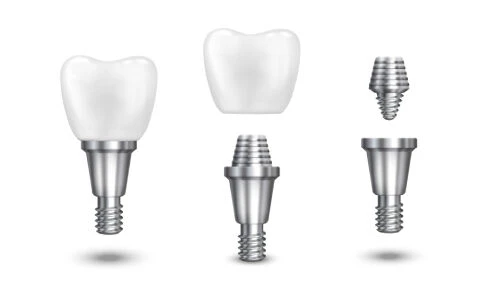
How a dental implant is placed
Almost every dental clinic in Kyiv and Ukraine can easily compile its own top list of topics that interest patients who have decided to get an implant. At Osadchyi Dental Clinic, we answer all questions in detail and provide consultations. However, many people want to receive information even before their consultation, so we decided to briefly go through the key points that are in the focus of patients’ attention.
The answer to the innocent question “How is a dental implant placed?” can take a long time if answered in general terms. The fact is that how a dental implant is installed depends on the individual clinical situation and the technique chosen by the doctor.
We often tell our patients about three possible techniques, and they are also described in detail on our website, but it does not hurt to repeat them.
First, let us outline the following aspect: how a dental implant is placed largely depends on the reasons and circumstances under which the extraction (removal) of that particular tooth was performed. Implantation is necessary to replace a patient’s lost tooth with an artificial one. Therefore, the extraction (removal) of the tooth must take place. However, some patients come to implantation some time after losing a tooth, while others understand that implantation is inevitable even before extraction.
If a patient comes to implantation some time after extraction, two techniques are possible: single-stage and two-stage implantation. If extraction is still upcoming, then immediate implantation is also an option. Interestingly, the latter can also be single-stage and two-stage. Let us examine them in more detail.
Suppose a patient has indications for tooth extraction and would like to replace it with an artificial one. In this case, the doctor, after conducting the appropriate analysis and research, may offer to simultaneously extract the tooth and place an implant.
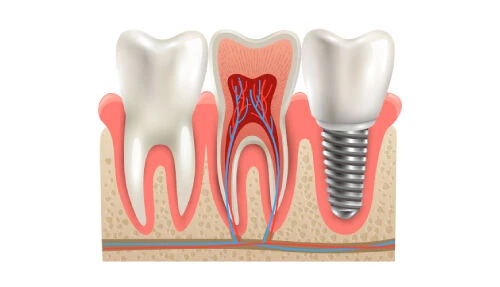
The process will look like this: in one appointment, the doctor will extract the tooth and place an artificial root (implant) into the resulting socket. The advantage of this technology is that it can reduce trauma. Both tooth extraction and implant placement involve controlled trauma to the bone and soft tissues. However, immediate implantation allows overlapping trauma upon trauma, sparing the patient from going through the recovery process twice.
At the same time, as already mentioned, there are options: immediate implantation can be single-stage or two-stage. In the first case, the tooth will be extracted, the artificial root, abutment, and temporary crown will be placed in one appointment. In the second case, the tooth is extracted, the artificial root is placed, and the wound is sutured until osseointegration (stabilization of the implant in the healed bone).
Regardless of when the patient’s own tooth was lost, two implantation options are possible: with one or two surgical interventions.
How a dental implant is placed during single-stage implantation
| Stages | Advantages | Disadvantages |
| 1. Consultation and planning:
Examination and treatment plan development. 2. Surgical procedure: Implant placement with abutment in one stage. 3. Temporary crown placement: A temporary crown is placed immediately or shortly after. 4. Healing: Healing and osseointegration process. 5. Permanent crown placement: After healing, a permanent crown is placed |
Reduced treatment time.
Fewer surgical interventions.
A temporary crown appears immediately, improving aesthetics |
High load on the implant in the early period.
Requires sufficient bone volume and density |
How a dental implant is placed during two-stage implantation
| Stages | Advantages | Disadvantages |
| 1. Consultation and planning:
Examination and treatment plan development. 2. First surgical procedure: Implant placement into the bone and mucosal suturing. 3. Healing: Osseointegration period (3-6 months). 4. Second surgical procedure: Implant exposure and healing abutment placement. 5. Impressions: Taking impressions and transferring information to the dental laboratory. 6. Abutment and crown placement: After mucosal healing, a permanent crown is placed |
Less load on the implant during osseointegration.
Higher probability of successful implant integration |
Long treatment time.
Two surgical interventions |
Patients are often interested in speed, but the question of how quickly an implant can be placed is not quite correct. Experienced specialists, such as Dr. Osadchyi, can integrate an artificial tooth root in 45-50 seconds. Thus, the procedure itself can happen as quickly as the patient wishes. However, the goal is not speed, but quality. All patients want a tooth that looks natural, feels natural, and performs all necessary functions. This brings us to the topic of loading.
Single-stage implantation allows immediate loading of the implant. That is, in literally one appointment, the patient receives an artificial tooth that can already be used for chewing. This is especially popular among those who need to replace teeth in the visible smile zone. However, the risks of rejection, loss of the structure, and complications when using this technique with immediate loading are very high. We strongly advise against it for our patients. Aesthetics during the healing of the artificial root can be maintained by taking the crown out of occlusion, using a butterfly prosthesis, a temporary adhesive bridge, etc.
Placing implants in the visible smile zone is associated with increased requirements for aesthetics and speed. For this reason, some dental clinics in Kyiv recommend single-stage implantation for front teeth. However, everything depends on the clinical situation: sometimes the risks of rejection and complications outweigh considerations of external attractiveness.
This does not mean that the patient will be doomed to experience difficulties. There are alternatives that we have already mentioned. If the implant needs time for osseointegration and it is better to resort to two-stage implantation on front teeth, then instead of a temporary crown, a butterfly prosthesis or a temporary adhesive bridge can be placed. Externally, such prosthetics are virtually indistinguishable from the patient’s own teeth, do not restrict smiling, speech, kissing, or social life, and have limitations only regarding very hard food (nuts, brittles, etc.). Thus, the artificial root can heal peacefully, and the patient can smile without embarrassment.
As for which implants are best for front teeth, there is a general recommendation to use implants with a zirconia abutment.
Placing implants on back teeth does not have high aesthetic requirements, although at our clinic we believe that all implants should look perfect. Chewing teeth are subject to heavy loads, so it is better to perform two-stage implantation, which has a better prognosis and a higher probability of successful artificial root integration.
It is also believed that bone grafting is more often required for replacing back teeth due to insufficient bone tissue volume. At our clinic, we use plateau-system implants that can be placed with minimal bone availability. That is why, when asked “Which implants are best for chewing teeth?”, we answer: “Ours”.
Bone deficiency is a common problem during implantation, especially in the lateral areas of the upper jaw. At our clinic, we use plateau-system implants (I-system, Bicon), which can be used with as little as 2 mm of bone available.
No. During the surgical procedure, the mucosa and interdental papillae are damaged. A permanent crown can only be placed after healing.
It all depends on the individual clinical situation. For example, if there is an inflammatory process, implantation may be postponed for up to two months. However, if there are no contraindications, implantation can be performed immediately after extraction.

Igor Osadchiy
Surgeon
MD, physician with the highest skill accreditation level, member of EACMS (European Association of Cranio-Maxillofacial Surgeons), member of the Association of Implantologists of Ukraine. Alma mater: O.O. Bogomolets National Medical University. Year of graduation: 1984. Experience: Work experience: 38 years. For 13 years (1985-1998), taught dental surgery and maxillofacial surgery…
Igor Osadchiy
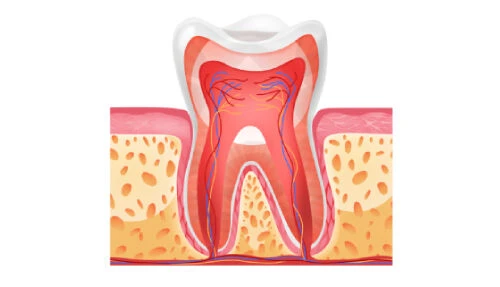
Treatment of tooth nerve inflammation
04.02.2025
Despite the fact that dental procedures have become significantly less painful over the past few decades, not all patients visit the dentist on time. Often fears prevail over health needs. This is confirmed by the statistics of cases of such a disease as pulpitis, especially irreversible. In Kyiv, two out of ten patients come to the dentist complaining that their tooth nerves have become inflamed due to long-untreated caries.
Igor Osadchiy
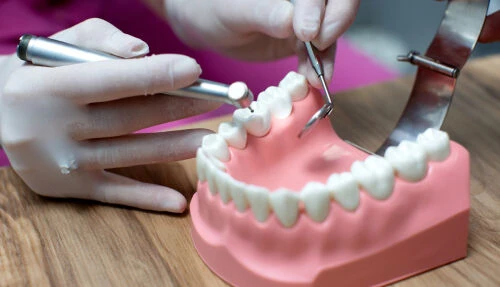
Installation of a dental crown
03.02.2025
Installing dental crowns is an important dental procedure designed to restore the functionality and aesthetics of teeth. It may be necessary in cases of significant tooth damage, after caries treatment, due to trauma, or certain bite pathologies. There are many types of dental crowns that need to be carefully considered before making a decision.
Igor Osadchiy
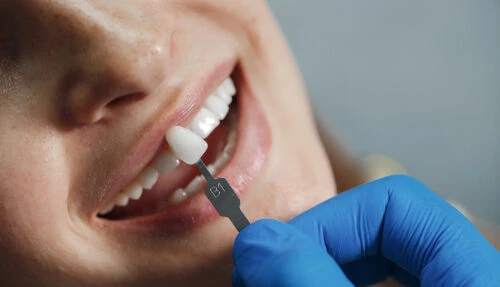
Installation of a crown on an implant
03.02.2025
No patient visits a dental clinic for an implant, and they are not even interested in implantation as a service. Patients mostly need to restore a lost tooth, which means they need not only an artificial tooth root but also prosthetics — most often with a crown. The range of variations here is quite wide, which in turn affects both the price of the implant crown and the cost of the procedure.
Igor Osadchiy
Gingivitis
23.01.2025
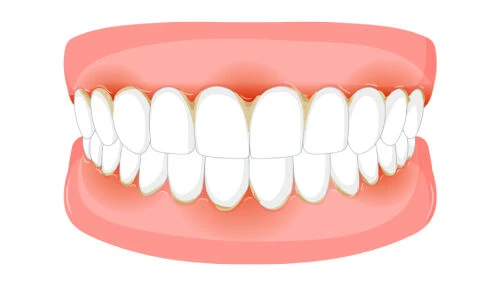
Gum disease (gingivitis) is a common problem faced by many dental clinics in Kyiv and Ukraine. Patients sometimes think that sensitivity and redness of the mucous membrane is a minor issue. However, one should remember about complications. Gingivitis has quite a few of them, so it is important to visit a clinic in time to eliminate the inflammatory process at an early stage.
Igor Osadchiy
Treatment of dental canals
23.01.2025
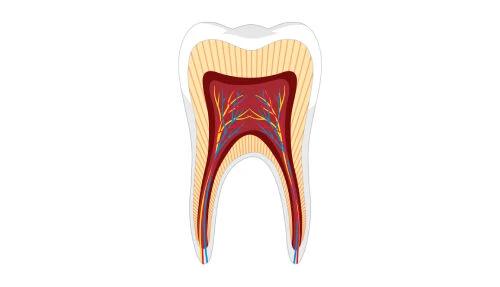
The vast majority of clinics in Ukraine provide endodontic services, and almost every adult patient has faced the need for nerve removal and root canal filling. Endodontic treatment is a fairly large field with a number of important nuances that patients should be aware of.

Igor Osadchiy
Jaw fracture
23.01.2025
Accidents, falls, and other situations that lead to injuries unfortunately do happen. Sometimes their consequence is a jaw fracture. It is important to note that patients cannot always understand that they have sustained a fracture, while successful rehabilitation directly depends on the speed of seeking medical help.
Igor Osadchiy
Teeth splinting
22.01.2025
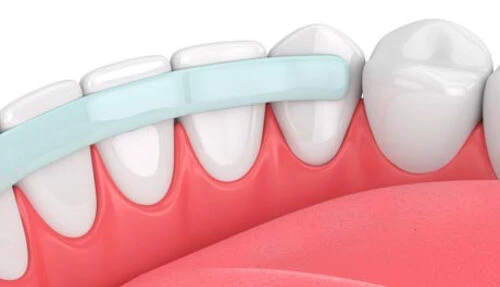
Many clinics in Kyiv offer teeth splinting as a treatment method, including for periodontal teeth. The danger of such manipulations is extremely high. We believe that patients should weigh the risks, and for this, they need to better understand the essence and purpose of such a medical procedure as teeth splinting.
Igor Osadchiy
Depulped tooth
20.01.2025
Endodontic treatment involving tooth devitalization has gained great popularity. It is now difficult to find an adult who has not had a nerve removed in at least one tooth. At the same time, many patients have doubts and do not always decide on depulpation, thereby condemning themselves to tooth extraction. So what is a depulped tooth and how does endodontic treatment work?
Igor Osadchiy
How does tooth implantation occur
20.01.2025
Dental implantation is one of the most popular procedures in modern dentistry. Since many patients come to the need of restoring a lost tooth, many questions arise about the procedure itself. In various forms, the following questions are heard: “How does the dental implantation process work?”, “How is a dental implant placed?”, “How is dental implantation performed?” We answer everything in detail and clearly.

Igor Osadchiy
White coating after tooth extraction
16.01.2025
Almost every dentist has encountered queries like: gums turned white after tooth extraction, pulled a tooth and there is a white pouch on the gums, something white and soft in the socket after tooth extraction, or white spots on the gums after tooth extraction. We want to reassure all patients: everything is fine, there is no cause for concern.
Igor Osadchiy
Is it painful to remove stitches after a tooth extraction
16.01.2025
21st-century dentistry allows performing very complex manipulations and operations absolutely painlessly for the patient. However, many people still experience fears associated with visiting a dental clinic. In particular, there is a whole cluster of questions related to sutures: Does it hurt to remove sutures after tooth extraction? Does it hurt to remove sutures from the gums after wisdom tooth extraction? How long after tooth extraction are sutures removed? What happens if sutures are not removed after wisdom tooth extraction?