Didn’t find the necessary information? Make an appointment for a consultation with oral surgeon Ihor Oleksandrovych Osadchy.

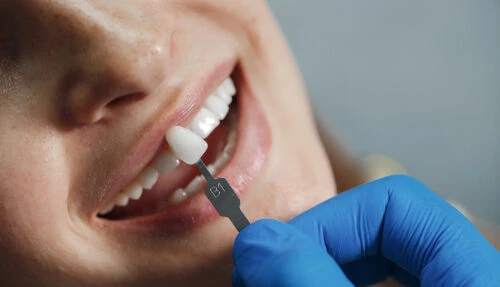
Installation of a crown on an implant
No patient visits a dental clinic for an implant, and they are not even interested in implantation as a service. Patients mostly need to restore a lost tooth, which means they need not only an artificial tooth root but also prosthetics — most often with a crown. The range of variations here is quite wide, which in turn affects both the price of the implant crown and the cost of the procedure.
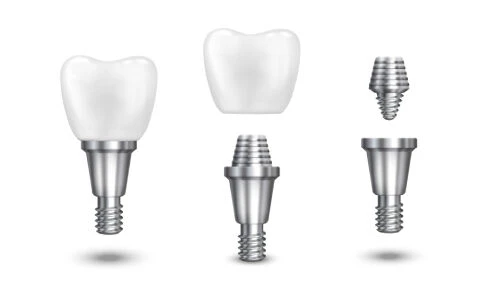
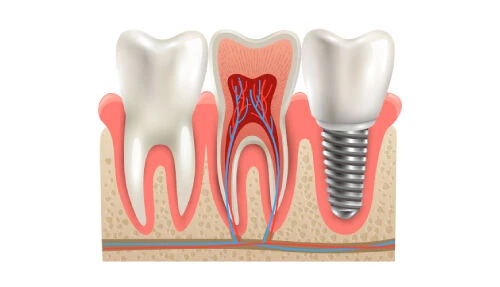
The implantation process involves installing an artificial tooth root and a connecting element (abutment), followed by the prosthetic stage. Depending on the clinical picture and patient preferences, the following prosthetic options on implants are available:
- Bridge installation on implants.
In cases where a patient is missing several teeth in a row, instead of an implant for each lost tooth, only a few implants can be placed at support points. A bridge prosthesis is then fixed on them.
- All-on-4, All-on-6 prosthetics.
In case of complete edentulism (absence of all teeth on the jaw), prosthetics with installation of 4 or 6 implants on which a fixed dental prosthesis will be secured is possible.
- Removable dental prosthesis installation.
In some cases, patients choose removable prosthetics, where the prosthesis is fixed on implants using special locks or hinges.
- Crown installation on implant.
Involves installing artificial crowns on the principle: one implant — one crown.
Crown installation on an implant is not accidentally recommended by the vast majority of doctors if such a step does not contradict the clinical picture. The technology has a number of significant advantages and allows achieving an effect where the implant feels and looks like the patient’s lost tooth.
| Advantage | Description |
| Durability | With proper care, crowns can last for decades, and implants — throughout life |
| Aesthetics | Crowns are matched to the color and shape of teeth, making them indistinguishable from natural teeth |
| Strength | The implant fixes the crown like a natural root, providing full chewing function without displacement |
| Preservation of adjacent teeth | An alternative to installing an implant with a crown is installing a bridge prosthesis on the patient’s own teeth adjacent to the lost one. However, this technology involves not only tooth preparation but also heavy loads, which in the long run leads to tooth loss |
| Prevention of bone atrophy | The implant stimulates bone tissue, preventing its thinning and changes in facial shape |
| Cost-effectiveness | The durability of the construction makes it beneficial in the long term |
There are several different implantation techniques. These include single-stage implantation with immediate loading. In this case, the implant, abutment, and permanent crown are installed in one visit. This technology has a long list of limitations, and we do not recommend it to our patients due to the increased risk of rejection and complications.
In most cases, we recommend two-stage implantation, which involves installing a temporary crown for the period of structure integration — usually 3–6 months. Temporary crowns on implants are placed immediately after implantation or within a few days for the purpose of:
- Socialization and aesthetic support (the temporary crown is taken out of occlusion, it does not perform chewing function, but looks quite aesthetic and is almost indistinguishable from other teeth).
- Mucosa formation (the temporary crown forms soft tissues around the implant and prepares the mucosa for permanent crown installation).
A temporary crown can also be installed on an already integrated implant instead of a permanent one if the patient is planning total prosthetics and implantation is just a stage in the full rehabilitation. When a patient plans to install many crowns to increase bite height and eliminate joint dysfunction, this process takes a long time, so a temporary crown is installed for diagnostic purposes and cost reduction, and after a certain period, this crown is replaced with a permanent one.
When choosing a crown for an implant, it is important to consider not only aesthetic qualities but also strength, durability, and installation features. There are several main types of crowns used on implants:
- Zirconia crowns on implants.
Made from zirconium dioxide — a material distinguished by high strength and complete biocompatibility. The main advantage of zirconia crowns is wear resistance with good aesthetic indicators.
- Ceramic crowns on implants.
Are an ideal solution for patients who value aesthetics and natural tooth appearance. Pressed ceramics have excellent aesthetic properties: they are easy to match to the color of adjacent teeth, look natural, and do not cause allergic reactions. This is the best choice for front teeth.
- Metal-ceramic crowns on implants.
Combine strength and aesthetic qualities. The base of such crowns is a metal frame that gives the structure strength, and externally it is covered with ceramics for a natural appearance. This type of crown is especially popular for chewing teeth where increased strength is required. Metal-ceramic crowns have high load resistance, but sometimes the metal frame may slightly show through the ceramics, which can reduce aesthetics in the smile zone.
- Bridge prostheses from ceramic composite or graphene.
These high-quality polymers combine lightness, strength, and aesthetics, making them an ideal solution for complex clinical cases. Indicated for significant dystrophy of jaw bone tissue, the need for lightweight constructions (e.g., in All-on-4 prosthetics). They have advantages such as lightness and strength, biocompatibility, and aesthetic appearance ensuring a natural result.
After installing the implant and its integration (in case of two-stage implantation), the need arises to install a crown on the implant.
| Stage | Description |
| Taking impressions | At this stage, jaw impressions are taken to precisely determine the size, shape, and position of the crown |
| Crown manufacturing | Artificial crowns are manufactured in a laboratory, the process takes from several days to weeks |
| Crown installation on implant | Involves trying on the crown; if all parameters match and there are no deficiencies, the crown is finally fixed |
Technically, a patient can install an implant in one clinic and get prosthetics in another. However, implantation with turnkey crown installation allows receiving a full range of services under the supervision of a specialist who knows the patient’s history.
Please note that “Osadchyi Dental Clinic” provides a warranty on implantation only if dental crowns on implants were also installed at our clinic. This is an important and mandatory condition, driven by our desire to be responsible for the quality of services. We cannot be held responsible for incorrect prosthetics at other clinics, but we are ready to take on all concerns about your comfort and the result of prosthetics on implants at our clinic.
Even the strongest crowns sometimes require replacement, especially when it comes to the frontal group of teeth. The crown replacement process begins with examination and diagnostics by a dentist. The doctor evaluates the condition of the implant and crown to make sure that replacement is truly necessary.
Then the crown is carefully removed, and if necessary, additional treatment of the implant or mucosa is performed. After that, a new crown is manufactured that perfectly matches the color and shape of adjacent teeth.
The price of a crown on an implant is one of the most important factors that patients consider when choosing a dental clinic. In Kyiv, the cost of installing a crown on an implant varies depending on the material, complexity of work, and clinic reputation.
The price of a crown on an implant in Kyiv averages 20 thousand hryvnias. The most budget-friendly options are metal-ceramic; zirconia and ceramic crowns are usually somewhat more expensive.
If we consider the cost of an implant with a turnkey crown in Kyiv and Ukrainian clinics, the price range will be quite large. In the most general terms, we can talk about a price of an implant with a turnkey crown of 60 thousand hryvnias, but the number of factors affecting pricing is very large. That is why we recommend scheduling a free consultation to clarify all details.
Temporary crowns during implant prosthetics are usually made from medical polymer or composite materials. If the crown is not taken out of occlusion, you can chew with it, but you should be careful and avoid excessive loads to avoid damaging the crown or implant.
Installing a permanent crown on an implant usually does not cause pain. After completion, there may be minor discomfort or sensitivity, but this passes within a few days.
There are no strict recommendations. When choosing a crown, the patient can be guided by their preferences. Zirconia crowns are the strongest and are well suited for installation on implants replacing lost chewing teeth. Metal-ceramic crowns are also quite strong, but the metal contour may be visible, which limits their installation in the front area. Ceramic crowns are also quite strong and reliable, while having the highest aesthetic indicators.
No, there are no additional hygiene requirements. However, you should regularly brush your teeth and visit your dentist for scheduled check-ups.

Igor Osadchiy
Surgeon
MD, physician with the highest skill accreditation level, member of EACMS (European Association of Cranio-Maxillofacial Surgeons), member of the Association of Implantologists of Ukraine. Alma mater: O.O. Bogomolets National Medical University. Year of graduation: 1984. Experience: Work experience: 38 years. For 13 years (1985-1998), taught dental surgery and maxillofacial surgery…
Igor Osadchiy
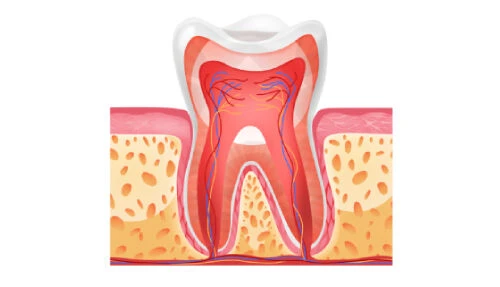
Treatment of tooth nerve inflammation
04.02.2025
Despite the fact that dental procedures have become significantly less painful over the past few decades, not all patients visit the dentist on time. Often fears prevail over health needs. This is confirmed by the statistics of cases of such a disease as pulpitis, especially irreversible. In Kyiv, two out of ten patients come to the dentist complaining that their tooth nerves have become inflamed due to long-untreated caries.
Igor Osadchiy
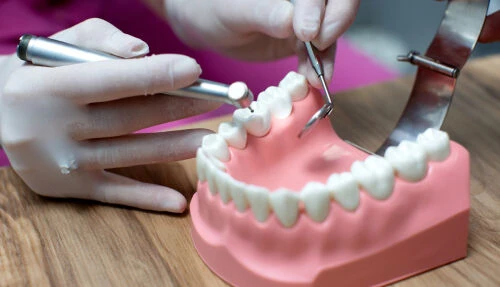
Installation of a dental crown
03.02.2025
Installing dental crowns is an important dental procedure designed to restore the functionality and aesthetics of teeth. It may be necessary in cases of significant tooth damage, after caries treatment, due to trauma, or certain bite pathologies. There are many types of dental crowns that need to be carefully considered before making a decision.
Igor Osadchiy
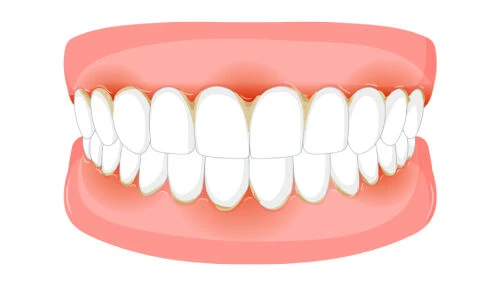
Gingivitis
23.01.2025
Gum disease (gingivitis) is a common problem faced by many dental clinics in Kyiv and Ukraine. Patients sometimes think that sensitivity and redness of the mucous membrane is a minor issue. However, one should remember about complications. Gingivitis has quite a few of them, so it is important to visit a clinic in time to eliminate the inflammatory process at an early stage.
Igor Osadchiy
Treatment of dental canals
23.01.2025
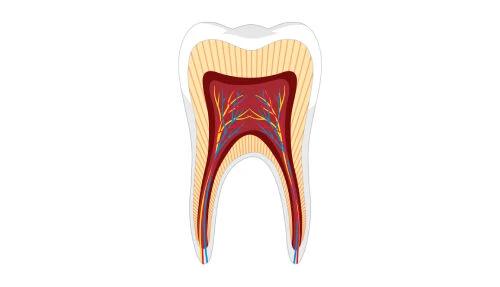
The vast majority of clinics in Ukraine provide endodontic services, and almost every adult patient has faced the need for nerve removal and root canal filling. Endodontic treatment is a fairly large field with a number of important nuances that patients should be aware of.

Igor Osadchiy
Jaw fracture
23.01.2025
Accidents, falls, and other situations that lead to injuries unfortunately do happen. Sometimes their consequence is a jaw fracture. It is important to note that patients cannot always understand that they have sustained a fracture, while successful rehabilitation directly depends on the speed of seeking medical help.
Igor Osadchiy
Teeth splinting
22.01.2025
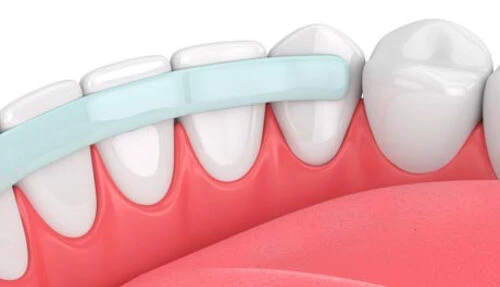
Many clinics in Kyiv offer teeth splinting as a treatment method, including for periodontal teeth. The danger of such manipulations is extremely high. We believe that patients should weigh the risks, and for this, they need to better understand the essence and purpose of such a medical procedure as teeth splinting.
Igor Osadchiy
Depulped tooth
20.01.2025
Endodontic treatment involving tooth devitalization has gained great popularity. It is now difficult to find an adult who has not had a nerve removed in at least one tooth. At the same time, many patients have doubts and do not always decide on depulpation, thereby condemning themselves to tooth extraction. So what is a depulped tooth and how does endodontic treatment work?
Igor Osadchiy
How a dental implant is placed
20.01.2025
Almost every dental clinic in Kyiv and Ukraine can easily compile its own top list of topics that interest patients who have decided to get an implant. At Osadchyi Dental Clinic, we answer all questions in detail and provide consultations. However, many people want to receive information even before their consultation, so we decided to briefly go through the key points that are in the focus of patients’ attention.
Igor Osadchiy
How does tooth implantation occur
20.01.2025
Dental implantation is one of the most popular procedures in modern dentistry. Since many patients come to the need of restoring a lost tooth, many questions arise about the procedure itself. In various forms, the following questions are heard: “How does the dental implantation process work?”, “How is a dental implant placed?”, “How is dental implantation performed?” We answer everything in detail and clearly.

Igor Osadchiy
White coating after tooth extraction
16.01.2025
Almost every dentist has encountered queries like: gums turned white after tooth extraction, pulled a tooth and there is a white pouch on the gums, something white and soft in the socket after tooth extraction, or white spots on the gums after tooth extraction. We want to reassure all patients: everything is fine, there is no cause for concern.
Igor Osadchiy
Is it painful to remove stitches after a tooth extraction
16.01.2025
21st-century dentistry allows performing very complex manipulations and operations absolutely painlessly for the patient. However, many people still experience fears associated with visiting a dental clinic. In particular, there is a whole cluster of questions related to sutures: Does it hurt to remove sutures after tooth extraction? Does it hurt to remove sutures from the gums after wisdom tooth extraction? How long after tooth extraction are sutures removed? What happens if sutures are not removed after wisdom tooth extraction?