Didn’t find the necessary information? Make an appointment for a consultation with oral surgeon Ihor Oleksandrovych Osadchy.

Treatment of dental canals
The vast majority of clinics in Ukraine provide endodontic services, and almost every adult patient has faced the need for nerve removal and root canal filling. Endodontic treatment is a fairly large field with a number of important nuances that patients should be aware of.
Dentistry is a broad field divided into subdivisions. One such subdivision is endodontics, which covers the diagnosis and treatment of diseases of the internal part of the tooth (pulp) and periapical tissues. Endodontics is always aimed at preserving the patient’s own tooth.
The impetus for the emergence of endodontics was the creation at the turn of the 19th–20th centuries of instruments that allow treating tooth roots (canals). In modern dentistry, endodontic treatment holds a leading position, driven by technological development: improved filling materials, the ability to use CT, microscope, rubber dam, ultrasonic instruments, etc.
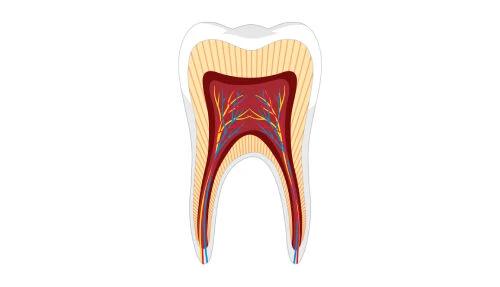
| Layer | Description | Functions |
| External parts of the tooth | ||
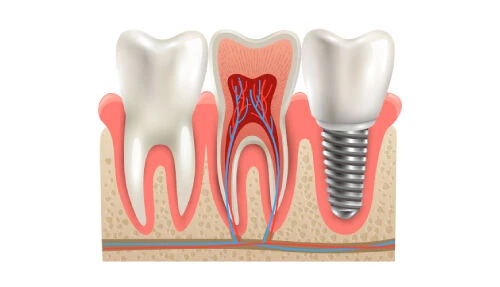
| Enamel | The outer layer of the tooth, represented by the hardest tissue in the human body | Protects the internal structures of the tooth from mechanical damage, caries, and temperature effects. Enamel does not contain nerve endings, so it is not sensitive on its own |
| Dentin | Located under the enamel and makes up the main mass of the tooth. It is less dense and hard than enamel but still quite strong | Supports the enamel and transmits pressure arising during chewing to the internal structures of the tooth. Unlike enamel, dentin contains microscopic canals that can transmit pain sensations when the enamel is damaged |
| Internal parts of the tooth | ||
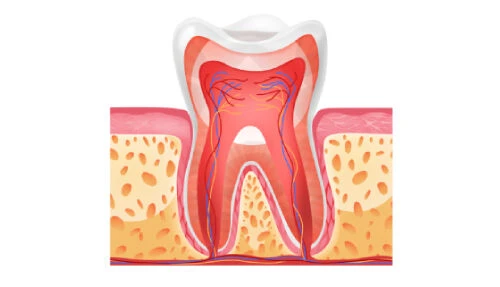
| Pulp | Soft tissue located in the central part of the tooth, in the pulp chamber and root canals. The pulp consists of nerves, blood and lymphatic vessels, and connective tissue | Ensures the vital activity of the tooth by supplying it with nutrients and oxygen. It also plays a role in dentin formation and contains nerve endings that respond to pain and other stimuli |

The dental nerve is located in the pulp and performs several important functions:
- nerve function.
Nerve endings in the pulp allow the tooth to feel pain, which is an important protective mechanism. Pain signals tooth damage, caries, or infection that require attention;
- nutritive function.
Blood vessels in the pulp supply the tooth with necessary nutrients and maintain its viability;
- reparative function.
The pulp participates in the formation of secondary and tertiary dentin, which protects the tooth from damage and caries.
Endodontic treatment, which involves removing the nerve (pulp) from the tooth, is necessary in various cases.
| Causes | Symptoms |
| Pulpitis — inflammation of the tooth pulp | |
| – caries reaching the pulp; – tooth injuries; – multiple dental procedures on one tooth |
– acute or constant toothache; – sensitivity to hot and cold; – pain when biting |
| Periodontitis — inflammation of tissues surrounding the tooth root | |
| – untreated pulpitis; – spread of infection from the pulp |
– pain when biting; – gum swelling; – pus discharge; – tooth mobility |
| Abscess — purulent inflammation resulting from bacterial infection in the pulp or periodontal tissues | |
| – infected pulpitis or periodontitis | – severe pain; – swelling; – gum sensitivity; – unpleasant smell or taste in the mouth; – pus discharge |
| Pulp necrosis — death of pulp tissues | |
| – untreated pulpitis; – severe tooth injuries |
– lack of tooth sensitivity; – tooth discoloration; – pain and inflammation in surrounding tissues |
| Root resorption — pathological destruction of hard root tissues | |
| – injuries; – chronic inflammatory processes; – orthodontic treatment |
– may be asymptomatic; – pain and inflammation in some cases |
| Internal and external resorption — processes of dental tissue destruction | |
| – injuries; – infections; – pathological processes |
– pain; – changes in tooth shape and structure |
| Root cysts — pathological formations | |
| – chronic infections; – untreated periodontitis |
– pain; – swelling; – gum volume increase |
| Tooth injuries include root fractures, dislocations, cracks, etc. | |
| – mechanical injuries; – impacts; – falls |
– pain; – tooth mobility; – tooth discoloration; – swelling |
In the above diseases, endodontic treatment of the tooth root canals is necessary. Note that in cases where there is pulp infection, endodontic treatment must be performed in two visits (stages): with integration of a medicinal dressing and temporary canal filling. However, in some cases (for example, injuries), root treatment can be performed without the temporary filling stage.
- Diagnostics.
Involves examination and radiography. In some cases, the doctor may prescribe a CT scan, which provides more detailed information about the tooth structure and surrounding tissues.
- Anesthesia.
Many patients are anxious about dental canal treatment as they associate nerve removal with possible pain, but modern anesthetics make the procedure painless.
- Working field isolation.
Effective canal treatment without complications can be performed while maintaining complete cleanliness and dryness in the manipulation area. A special device — rubber dam — is used for this purpose, preventing saliva and blood from entering the working area.
- Accessing the root canals.
The doctor makes an opening in the tooth crown to access the root canals and pulp.
- Pulpectomy (pulp removal).
- Canal cleaning.
Mechanical and chemical treatment during which root canals are thoroughly cleaned and disinfected using antiseptic solutions.
- Canal shaping.
Involves widening the canals for subsequent filling.
- Temporary canal filling (if necessary).
In some cases, canal cleaning requires placing a temporary filling with a medicinal dressing. It is a material that helps restore and protect the tooth after nerve removal. There are several options for the dressing composition:
- calcium hydroxide (has antiseptic properties and promotes dentin demineralization);
- eugenol-based pastes (have antimicrobial properties and can provide additional protection against bacteria);
- antibiotic mixtures (kanamycin or metronidazole — to fight infection and prevent inflammatory processes);
- composite materials (prevent reinfection);
- combined materials (combinations of different materials for optimal results, for example, a mixture of calcium hydroxide with eugenol or antibiotic).
- Canal filling.
After cleaning and shaping, the canals are filled with a special material (gutta-percha) and sealed with an endodontic sealer to prevent reinfection.
- Crown restoration.
Tooth treatment (canal cleaning) does not end with filling, as chewing function needs to be restored. In some cases, filling the crown part of the tooth is sufficient (if it is less than 30% destroyed). In case of significant crown destruction, the tooth root is reinforced with a post, and the tooth neck is filled using a stump tab, on which an artificial crown is placed.
Advantages:
- Ability to save the tooth.
- Pain elimination.
- Prevention of infection spread.
- Improved aesthetics.
Disadvantages:
- Time and cost.
- Risk of complications (in some cases, endodontic treatment may cause complications such as root perforation, crown delamination, or reinfection).
- Loss of tooth structure (after pulp removal, the tooth becomes more brittle and prone to damage).
Front tooth root canal treatment has its own features:
- root anatomy (front teeth usually have one root, which significantly simplifies the procedure);
- canal size (the front tooth root canal is usually straighter and wider, making access and treatment easier);
- aesthetic requirements (teeth located in the visible smile zone require more aesthetically careful treatment).
Overall, front tooth canal treatment can be more predictable and less complex but still requires careful attention to diagnostics, planning, and procedure execution, especially considering aesthetics.
Many Kyiv clinics widely advertise dental canal treatment under a microscope. Our clinic also has a microscope. However, we draw patients’ attention to the fact that using a microscope does not affect the quality of treatment but only facilitates the doctor’s work. For endodontic treatment, it is important to find the canal entrance, which is usually very small and can be difficult to see. At this stage, the microscope is used as a magnifying glass. It allows the doctor to strain their eyes less but does not improve the quality of the treatment itself.
The price of endodontic tooth treatment directly depends on the number of canals — one tooth can have from one to six. The number of treatment stages also affects the cost of canal treatment. In case of infectious processes, temporary canal filling is required, which also affects the cost. In Kyiv, the cost of treating one canal starts from 3 thousand hryvnias.
The list of possible complications is enormous: from abscess and tooth loss to heart complications. Every patient should understand that an unresolved problem does not disappear but generates a number of other, more complex ones. Therefore, delaying endodontic treatment will not only prevent saving the patient’s own tooth but may also make implantation impossible after extraction.
Theoretically, such a practice exists, for example, if the carious process has affected only one root. However, in practice, such procedures have proven to be unreliable. Even if there are no signs of infection in the adjacent root yet, it does not mean the infection has not spread. At our clinic, we recommend removing nerves from all roots of the tooth.
It all depends on the individual clinical picture. On average, treatment requires 1 to 3 dental visits.

Igor Osadchiy
Surgeon
MD, physician with the highest skill accreditation level, member of EACMS (European Association of Cranio-Maxillofacial Surgeons), member of the Association of Implantologists of Ukraine. Alma mater: O.O. Bogomolets National Medical University. Year of graduation: 1984. Experience: Work experience: 38 years. For 13 years (1985-1998), taught dental surgery and maxillofacial surgery…
Igor Osadchiy
Treatment of tooth nerve inflammation
04.02.2025
Despite the fact that dental procedures have become significantly less painful over the past few decades, not all patients visit the dentist on time. Often fears prevail over health needs. This is confirmed by the statistics of cases of such a disease as pulpitis, especially irreversible. In Kyiv, two out of ten patients come to the dentist complaining that their tooth nerves have become inflamed due to long-untreated caries.
Igor Osadchiy
Installation of a dental crown
03.02.2025
Installing dental crowns is an important dental procedure designed to restore the functionality and aesthetics of teeth. It may be necessary in cases of significant tooth damage, after caries treatment, due to trauma, or certain bite pathologies. There are many types of dental crowns that need to be carefully considered before making a decision.
Igor Osadchiy
Installation of a crown on an implant
03.02.2025
No patient visits a dental clinic for an implant, and they are not even interested in implantation as a service. Patients mostly need to restore a lost tooth, which means they need not only an artificial tooth root but also prosthetics — most often with a crown. The range of variations here is quite wide, which in turn affects both the price of the implant crown and the cost of the procedure.
Igor Osadchiy
Gingivitis
23.01.2025
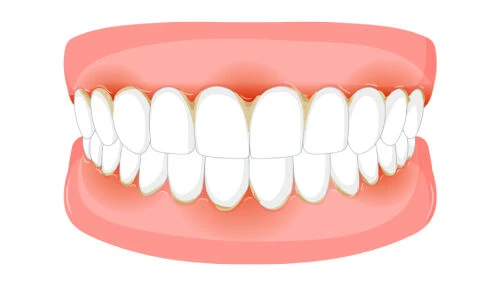
Gum disease (gingivitis) is a common problem faced by many dental clinics in Kyiv and Ukraine. Patients sometimes think that sensitivity and redness of the mucous membrane is a minor issue. However, one should remember about complications. Gingivitis has quite a few of them, so it is important to visit a clinic in time to eliminate the inflammatory process at an early stage.

Igor Osadchiy
Jaw fracture
23.01.2025
Accidents, falls, and other situations that lead to injuries unfortunately do happen. Sometimes their consequence is a jaw fracture. It is important to note that patients cannot always understand that they have sustained a fracture, while successful rehabilitation directly depends on the speed of seeking medical help.
Igor Osadchiy
Teeth splinting
22.01.2025
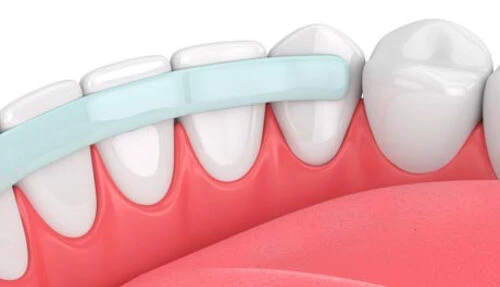
Many clinics in Kyiv offer teeth splinting as a treatment method, including for periodontal teeth. The danger of such manipulations is extremely high. We believe that patients should weigh the risks, and for this, they need to better understand the essence and purpose of such a medical procedure as teeth splinting.
Igor Osadchiy
Depulped tooth
20.01.2025
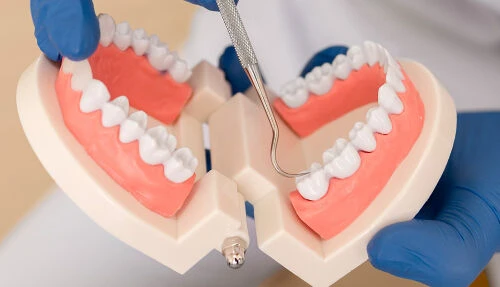
Endodontic treatment involving tooth devitalization has gained great popularity. It is now difficult to find an adult who has not had a nerve removed in at least one tooth. At the same time, many patients have doubts and do not always decide on depulpation, thereby condemning themselves to tooth extraction. So what is a depulped tooth and how does endodontic treatment work?
Igor Osadchiy
How a dental implant is placed
20.01.2025
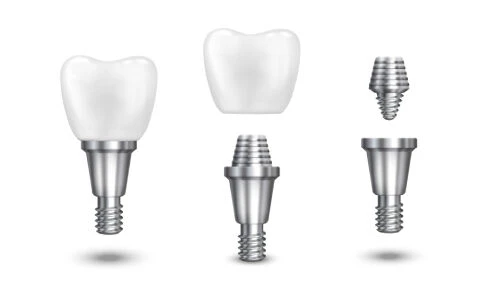
Almost every dental clinic in Kyiv and Ukraine can easily compile its own top list of topics that interest patients who have decided to get an implant. At Osadchyi Dental Clinic, we answer all questions in detail and provide consultations. However, many people want to receive information even before their consultation, so we decided to briefly go through the key points that are in the focus of patients’ attention.
Igor Osadchiy
How does tooth implantation occur
20.01.2025
Dental implantation is one of the most popular procedures in modern dentistry. Since many patients come to the need of restoring a lost tooth, many questions arise about the procedure itself. In various forms, the following questions are heard: “How does the dental implantation process work?”, “How is a dental implant placed?”, “How is dental implantation performed?” We answer everything in detail and clearly.

Igor Osadchiy
White coating after tooth extraction
16.01.2025
Almost every dentist has encountered queries like: gums turned white after tooth extraction, pulled a tooth and there is a white pouch on the gums, something white and soft in the socket after tooth extraction, or white spots on the gums after tooth extraction. We want to reassure all patients: everything is fine, there is no cause for concern.
Igor Osadchiy
Is it painful to remove stitches after a tooth extraction
16.01.2025
21st-century dentistry allows performing very complex manipulations and operations absolutely painlessly for the patient. However, many people still experience fears associated with visiting a dental clinic. In particular, there is a whole cluster of questions related to sutures: Does it hurt to remove sutures after tooth extraction? Does it hurt to remove sutures from the gums after wisdom tooth extraction? How long after tooth extraction are sutures removed? What happens if sutures are not removed after wisdom tooth extraction?