Didn’t find the necessary information? Make an appointment for a consultation with oral surgeon Ihor Oleksandrovych Osadchy.

Treatment of tooth nerve inflammation
Despite the fact that dental procedures have become significantly less painful over the past few decades, not all patients visit the dentist on time. Often fears prevail over health needs. This is confirmed by the statistics of cases of such a disease as pulpitis, especially irreversible. In Kyiv, two out of ten patients come to the dentist complaining that their tooth nerves have become inflamed due to long-untreated caries.
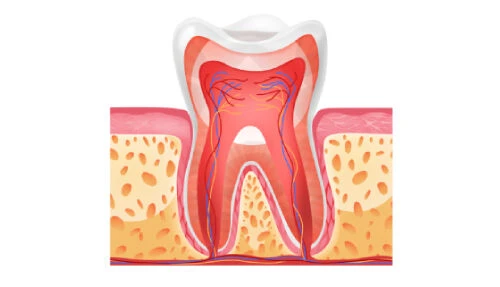
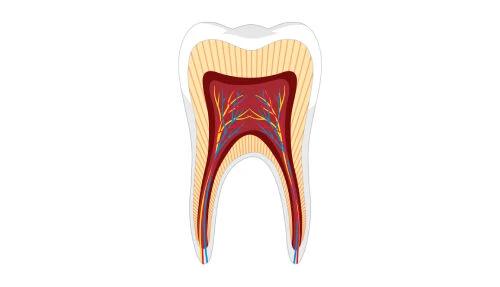
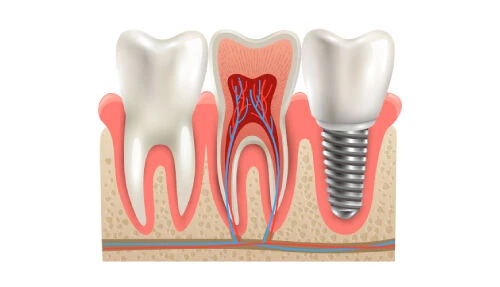
The tooth nerve is a neurovascular bundle consisting of nerve fibers, blood vessels, and connective tissue. The crown (visible part) of the tooth contains three main layers:
- enamel — the strongest and hardest tissue that has no nerve endings and serves to protect other tooth tissues from damage;
- dentin — a softer tissue compared to enamel that contains nerve canals and can be sensitive;
- pulp — the soft tissue that occupies the central cavity of the crown and fills the canals (roots); it is in the pulp where the tooth nerve is located.
Tooth nerves and the pulp as a whole perform a number of important functions:
- Sensitivity.
The main function of the tooth nerve is to provide sensitivity. Nerve endings in the pulp respond to stimuli such as cold, heat, or pressure. It is thanks to the nerve that we feel pain when a tooth is damaged (for example, with cavities). However, sensitivity is needed not only to signal the development of a disease. It is also thanks to sensitivity that overloading and damage to teeth during chewing do not occur. In addition, temperature regulation also occurs thanks to sensitivity.
- Trophism (nutrition).
Blood vessels located in the pulp supply the tooth with necessary nutrients and oxygen.
- Restoration.
The pulp plays an important role in the regeneration of tooth tissues, helping to restore dentin in case of minor damage.
- Protection.
The pulp participates in the immune defense of the tooth. When infection enters the tooth through carious cavities or microcracks, the nerve tissue can initiate an inflammatory process (pulpitis) to prevent further spread of infection.
Various diseases can develop in the area of the tooth nerve and surrounding tissues:
- Pulp gangrene — death of the tooth nerve.
- Periodontitis — inflammation of tissues around the tooth root that can affect the nerve.
- Pulp necrosis — complete death of the tooth nerve without the possibility of recovery.
- Pulp abscess — purulent inflammation of the pulp.
However, the most common disease is pulpitis — inflammation of the tooth nerve and surrounding tissues (pulp).
| Cause | Description |
| Deep cavities | The pathological process of destruction of hard tooth tissues (enamel and dentin) caused by bacteria can spread deeper — reaching the pulp and provoking inflammation of the tooth nerve |
| Mechanical damage |
Impacts, injuries, excessive loads, as well as improper dental treatment — all of this can provoke tooth nerve inflammation. Mechanical damage can immediately lead to acute pain if the pulp is exposed, or inflammation may develop gradually if the damage did not immediately affect the nerve |
| Infectious diseases | Tooth nerve inflammation can also be provoked by a number of infectious diseases, such as periodontitis and gingivitis. In this case, the infection reaches the nerve through carious cavities or the mucous membrane |
Tooth nerve inflammation cannot be asymptomatic, which is already clear from the morphology of nerve tissue. However, pain is not the only symptom. Moreover, with pulpitis, an inflamed tooth nerve can provoke various painful sensations:
- Intense, throbbing pain that suddenly appears and worsens at night.
- Pain reaction to temperature exposure: cold and hot drinks, food, and even air.
- Pain reaction when pressing or biting.
An inflamed tooth nerve can also provoke the following symptoms:
- sensitivity to stimuli (reaction to sweet or sour food);
- swelling of the mucosa;
- increased temperature;
- headache;
- bad breath.
There is a fairly large number of clinical methods that help determine whether a tooth nerve is inflamed or not. These include:
- clinical examination;
- cold/heat test;
- palpation test (checking soft tissues around the tooth);
- percussion test (checking the tooth’s reaction to tapping);
- pulp sensitivity test, or EPT (checking the tooth’s reaction to electrical impulse);
- radiography.
The variety of diagnostic tools and the experience of doctors allow for highly accurate detection of pulpitis — understanding whether the tooth nerve is inflamed or the cause of complaints lies in something else.
There are several methods of pulpitis treatment that are applied according to indications. When it comes to treating the tooth nerve itself, conservative methods that allow preserving the nerve are implied.
Their application is possible in the case of reversible pulpitis, in other words — inflammation of the pulp at the first stage, when the root canals of the tooth are not affected and there is no pulp necrosis.
Symptoms of reversible pulpitis:
- the tooth nerve hurts only during exposure (pressing);
- no purulent formations;
- the X-ray shows that the roots are not affected;
- the pulp has not lost its elasticity.
| Method | Essence |
| Conservative treatment (biological method) | Creating conditions for pulp tissue restoration. Used with minimal inflammation when changes are reversible |
| Partial pulp capping method (indification) | Applied if pulp exposure is minimal (as a result of trauma or carious cavity treatment) |
| Vital amputation method (partial pulpotomy) | Removal of only the inflamed coronal part of the pulp, preservation of the root part |
| Physiotherapy treatment | Accelerating pulp tissue healing processes using physical methods |
In most cases of pulpitis, removal of the tooth nerve becomes inevitable. This is due to the fact that patients often postpone their visit to the dentist in the early stages of the disease. Pulpitis progresses quite quickly from reversible to irreversible, when tooth nerve removal is indicated.
Symptoms of irreversible pulpitis:
- severe, prolonged pain;
- reaction to hot (increased pain);
- no relief after the stimulus stops;
- throbbing or sharp pain;
- pain when pressing or chewing;
- pain radiation (radiating to other teeth, ear, temple);
- swelling and redness of the mucosa.
Available treatment methods
| Method | Essence |
| Pulpectomy (devital or vital pulp extirpation) | Complete removal of all pulp, including nerve fibers and blood vessels, from root canals. After this, the canals are hermetically sealed |
| Pulp amputation method (vital amputation) | Removal of only the inflamed coronal pulp while preserving the viable root part |
The cost of tooth nerve inflammation treatment in Kyiv may vary depending on the chosen method, the degree of tooth damage, and the level of the clinic.
The use of biological methods in the early stages of the disease will cost patients 2–3 thousand hryvnias. The price of pulpotomy is slightly higher — 3–3 thousand hryvnias. And finally, the prices for pulpectomy and endodontic treatment reach 6–10 thousand hryvnias; the cost also depends on the number of root canals in the tooth. In other regions of Ukraine, prices for similar services are on average 10–15% lower.
Tooth nerve pain that worsens at night is often associated with a change in body position. In a horizontal position, blood flow in the head and neck area increases, which can increase pressure on inflamed pulp tissues. This intensifies the sensation of pain. In addition, at night the parasympathetic system (which includes the vagus nerve) becomes more active. This can lead to dilation of blood vessels in the area of inflammation, contributing to increased pulp swelling and pain syndrome.
The simplest and most obvious answer is to see a doctor. If an immediate visit to the dentist is not possible, you can call our clinic. After collecting initial information about your health condition, we will recommend appropriate painkillers. However, you will still need to see a doctor.
Extraction is far from always indicated. In most cases, the tooth, and sometimes even the nerve, can be saved. The main thing is to seek qualified help in a timely manner.
After nerve removal, the tooth loses its ability for natural nourishment and hydration, making it more prone to destruction and cracks. However, with proper treatment, a depulped tooth can last another 10–15 years or even longer.

Igor Osadchiy
Surgeon
MD, physician with the highest skill accreditation level, member of EACMS (European Association of Cranio-Maxillofacial Surgeons), member of the Association of Implantologists of Ukraine. Alma mater: O.O. Bogomolets National Medical University. Year of graduation: 1984. Experience: Work experience: 38 years. For 13 years (1985-1998), taught dental surgery and maxillofacial surgery…
Igor Osadchiy
Installation of a dental crown
03.02.2025
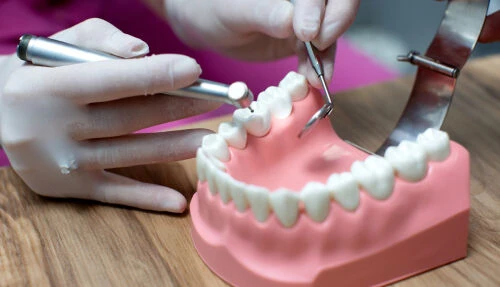
Installing dental crowns is an important dental procedure designed to restore the functionality and aesthetics of teeth. It may be necessary in cases of significant tooth damage, after caries treatment, due to trauma, or certain bite pathologies. There are many types of dental crowns that need to be carefully considered before making a decision.
Igor Osadchiy
Installation of a crown on an implant
03.02.2025
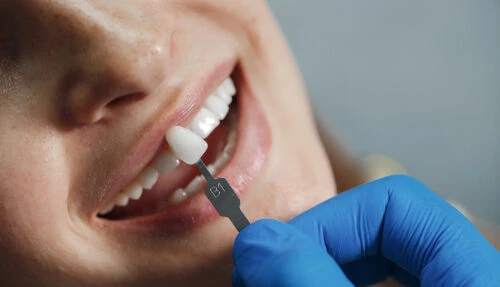
No patient visits a dental clinic for an implant, and they are not even interested in implantation as a service. Patients mostly need to restore a lost tooth, which means they need not only an artificial tooth root but also prosthetics — most often with a crown. The range of variations here is quite wide, which in turn affects both the price of the implant crown and the cost of the procedure.
Igor Osadchiy
Gingivitis
23.01.2025
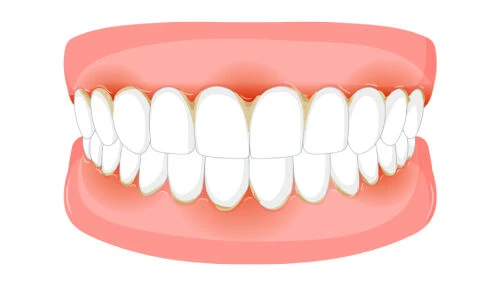
Gum disease (gingivitis) is a common problem faced by many dental clinics in Kyiv and Ukraine. Patients sometimes think that sensitivity and redness of the mucous membrane is a minor issue. However, one should remember about complications. Gingivitis has quite a few of them, so it is important to visit a clinic in time to eliminate the inflammatory process at an early stage.
Igor Osadchiy
Treatment of dental canals
23.01.2025
The vast majority of clinics in Ukraine provide endodontic services, and almost every adult patient has faced the need for nerve removal and root canal filling. Endodontic treatment is a fairly large field with a number of important nuances that patients should be aware of.

Igor Osadchiy
Jaw fracture
23.01.2025
Accidents, falls, and other situations that lead to injuries unfortunately do happen. Sometimes their consequence is a jaw fracture. It is important to note that patients cannot always understand that they have sustained a fracture, while successful rehabilitation directly depends on the speed of seeking medical help.
Igor Osadchiy
Teeth splinting
22.01.2025
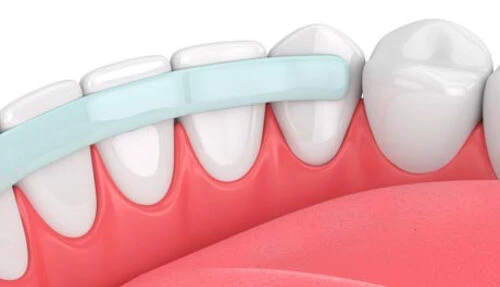
Many clinics in Kyiv offer teeth splinting as a treatment method, including for periodontal teeth. The danger of such manipulations is extremely high. We believe that patients should weigh the risks, and for this, they need to better understand the essence and purpose of such a medical procedure as teeth splinting.
Igor Osadchiy
Depulped tooth
20.01.2025
Endodontic treatment involving tooth devitalization has gained great popularity. It is now difficult to find an adult who has not had a nerve removed in at least one tooth. At the same time, many patients have doubts and do not always decide on depulpation, thereby condemning themselves to tooth extraction. So what is a depulped tooth and how does endodontic treatment work?
Igor Osadchiy
How a dental implant is placed
20.01.2025
Almost every dental clinic in Kyiv and Ukraine can easily compile its own top list of topics that interest patients who have decided to get an implant. At Osadchyi Dental Clinic, we answer all questions in detail and provide consultations. However, many people want to receive information even before their consultation, so we decided to briefly go through the key points that are in the focus of patients’ attention.
Igor Osadchiy
How does tooth implantation occur
20.01.2025
Dental implantation is one of the most popular procedures in modern dentistry. Since many patients come to the need of restoring a lost tooth, many questions arise about the procedure itself. In various forms, the following questions are heard: “How does the dental implantation process work?”, “How is a dental implant placed?”, “How is dental implantation performed?” We answer everything in detail and clearly.

Igor Osadchiy
White coating after tooth extraction
16.01.2025
Almost every dentist has encountered queries like: gums turned white after tooth extraction, pulled a tooth and there is a white pouch on the gums, something white and soft in the socket after tooth extraction, or white spots on the gums after tooth extraction. We want to reassure all patients: everything is fine, there is no cause for concern.
Igor Osadchiy
Is it painful to remove stitches after a tooth extraction
16.01.2025
21st-century dentistry allows performing very complex manipulations and operations absolutely painlessly for the patient. However, many people still experience fears associated with visiting a dental clinic. In particular, there is a whole cluster of questions related to sutures: Does it hurt to remove sutures after tooth extraction? Does it hurt to remove sutures from the gums after wisdom tooth extraction? How long after tooth extraction are sutures removed? What happens if sutures are not removed after wisdom tooth extraction?