Didn’t find the necessary information? Make an appointment for a consultation with oral surgeon Ihor Oleksandrovych Osadchy.

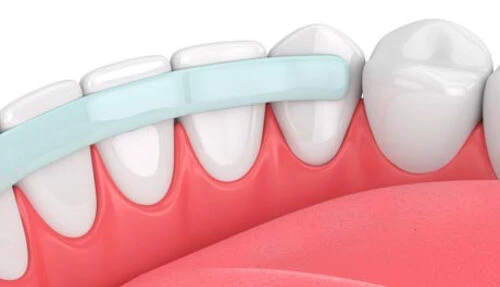
Teeth splinting
Many clinics in Kyiv offer teeth splinting as a treatment method, including for periodontal teeth. The danger of such manipulations is extremely high. We believe that patients should weigh the risks, and for this, they need to better understand the essence and purpose of such a medical procedure as teeth splinting.
Teeth splinting involves performing medical procedures aimed at stabilizing teeth to prevent their movement and displacement. The first thing to understand: teeth splinting is always a temporary measure.
In dentistry, teeth splinting may be used in the following cases:
- after injury.
Most often, teeth splinting is performed for immobilization of teeth in case of injuries. The list of injuries can be quite long: fractures of the crown part of teeth, tooth dislocations, jaw fractures, various facial injuries, etc.;
- after surgical intervention.
In some cases, splinting is used after surgical intervention (tooth extraction, implantation) to stabilize adjacent teeth or temporarily fix them before prosthetic installation;
- before treatment.
Teeth splinting is sometimes used at a preliminary treatment stage when it is necessary to stabilize teeth that have become mobile due to periodontal diseases.
| Before | After |
| teeth have become mobile or damaged (cracks, crown fractures, dislocations) | teeth are stabilized and fixed in the correct position |
In the most general form, the teeth splinting process can be described as follows:
- Preparation (the doctor examines the teeth and studies the X-ray).
- Method and material selection (determined by the nature of injuries and individual clinical picture).
- Surface preparation (involves cleaning, and in some cases, removal of damaged tissues).
- Installation of the fixing structure or application of materials.
- Fixation (may include polymerization, use of fasteners or adhesive).
- Verification.
- Further treatment (teeth splinting is a temporary measure and may be supplemented by further treatment: tooth restoration, prosthetics, or surgical intervention).
| By materials | By construction |
| metal; acrylic; composite; fiberglass |
single-jaw splinting; intermaxillary splinting (for jaw fractures) |
| By fixation degree | By splint application method |
| full; partial |
direct; indirect; combined |
Direct splinting involves applying special splinting materials (such as adhesive tapes and composite resins) directly to the damaged teeth. This method is used for various tooth injuries (e.g., dislocation) when temporary fixation is needed to stabilize the tooth in the bone.
| + | – |
| speed; simplicity; minimal invasiveness |
may require replacement due to material wear |
The following techniques belong to direct splinting:
- Lukashevich technique.
Involves using metal wire attached to immobile healthy patient teeth, forming a frame. Then composite material is applied to stabilize the damaged tooth;
- Bondel technique.
Involves using adhesive materials first to ensure tissue bonding with composite material from which the stabilization splint is modeled;
- Mett technique.
Based on using special metal or fiberglass splints fixed to damaged teeth with composite material or adhesive;
- Rowen technique.
This method involves using a metal or acrylic splint fixed to adjacent teeth on both sides of the damaged tooth for stability;
- Ivy splinting technique.
The essence of this technique is using metal wire bent into a loop shape (“ivy”). The wire is attached to teeth on both sides of the damaged tooth.
Indirect splinting involves using special structures installed on teeth adjacent to the damaged one. Used for complex injuries when additional support is needed.
| + | – |
| strong fixation; usability in complex cases |
requires time for structure fabrication; greater invasiveness |
Indirect splinting can be performed using the Taylor technique, which involves laboratory fabrication of a metal or acrylic splint based on individual impressions and subsequent fixation on teeth adjacent to the damaged one.
Combined or mixed splinting involves simultaneous use of both structures and splinting material. Used for complex combined injuries involving, for example, crown fracture and tooth displacement. The combined approach allows the doctor to use advantages of both direct and indirect splinting depending on the individual clinical picture.
Combined splinting is often performed using the composite splint technique (can also be applied in other types of splinting). When using this technique, splints for tooth stabilization are created directly from composite material and have a high degree of individualization and adaptation to the anatomical features of each tooth.
In some cases, teeth splinting can be used as one of the stages of treating arthritis or arthrosis of the temporomandibular joint. In such cases, splinting is necessary to relieve joint stress and reduce pain. However, teeth splinting alone will not be a comprehensive treatment measure and can only be one of the stages followed by orthodontic treatment or dental prosthetics.
A number of dental clinics in Kyiv offer teeth splinting as one of the methods for treating periodontitis. The logic is to immobilize teeth that have become mobile due to periodontal diseases. At “Osadchyi Dental Clinic,” periodontal teeth splinting is not performed.
“If we are talking about splinting teeth that are mobile due to periodontal disease and bone destruction, we do not use such splinting and strongly do not recommend it. The fact is that in such cases, splinting can only be a method of fixation, not treatment. Immobilizing teeth for further treatment makes sense, but stabilizing teeth with periodontal damage instead of treatment is not only useless but dangerous. The harm of such teeth splinting is hard to overestimate, as it can lead to complete tooth loss,” insists the chief doctor of “Osadchyi Dental Clinic,” Igor Oleksandrovych.
Since splinting is always part of comprehensive treatment, the cost of teeth splinting is usually included in the total cost. However, in some Kyiv clinics, the price of teeth splinting is specified and, depending on the technique and scope, can range from 1.5 to 3.5–4 thousand hryvnias. The average price of teeth splinting across Ukraine is 200 to 1,000 hryvnias per tooth. It should also be noted that indirect splinting usually has a higher price as it involves fabrication of individual splints.
Splinting is a temporary measure necessary for tooth stabilization that lasts for the treatment and recovery period after injury. Typically, the splinting period is 1 to 3 weeks.
Modern dentistry strives to provide patients with maximum comfort, and this applies to splinting procedures as well. There may be minor sensitivity or discomfort, but intense pain is not expected.
In many cases, with proper care, teeth can be restored to their natural appearance after splint removal. In other cases, crowns or implants may be placed after completion of comprehensive treatment.
Unfortunately, no. Splinting imposes a number of dietary restrictions: you should avoid hard and sticky foods. You also need to follow your doctor’s recommendations regarding oral hygiene and not skip scheduled check-ups.

Igor Osadchiy
Surgeon
MD, physician with the highest skill accreditation level, member of EACMS (European Association of Cranio-Maxillofacial Surgeons), member of the Association of Implantologists of Ukraine. Alma mater: O.O. Bogomolets National Medical University. Year of graduation: 1984. Experience: Work experience: 38 years. For 13 years (1985-1998), taught dental surgery and maxillofacial surgery…
Igor Osadchiy
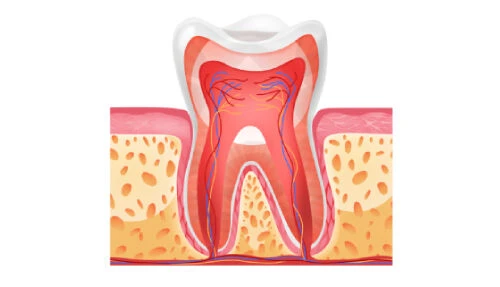
Treatment of tooth nerve inflammation
04.02.2025
Despite the fact that dental procedures have become significantly less painful over the past few decades, not all patients visit the dentist on time. Often fears prevail over health needs. This is confirmed by the statistics of cases of such a disease as pulpitis, especially irreversible. In Kyiv, two out of ten patients come to the dentist complaining that their tooth nerves have become inflamed due to long-untreated caries.
Igor Osadchiy
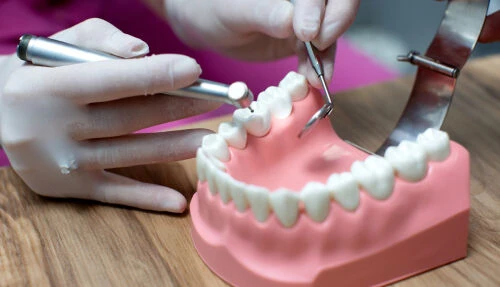
Installation of a dental crown
03.02.2025
Installing dental crowns is an important dental procedure designed to restore the functionality and aesthetics of teeth. It may be necessary in cases of significant tooth damage, after caries treatment, due to trauma, or certain bite pathologies. There are many types of dental crowns that need to be carefully considered before making a decision.
Igor Osadchiy
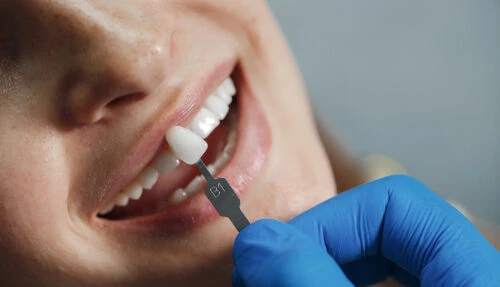
Installation of a crown on an implant
03.02.2025
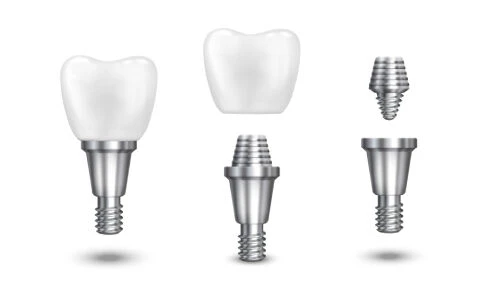
No patient visits a dental clinic for an implant, and they are not even interested in implantation as a service. Patients mostly need to restore a lost tooth, which means they need not only an artificial tooth root but also prosthetics — most often with a crown. The range of variations here is quite wide, which in turn affects both the price of the implant crown and the cost of the procedure.
Igor Osadchiy
Gingivitis
23.01.2025
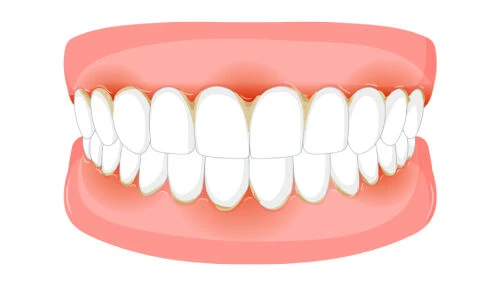
Gum disease (gingivitis) is a common problem faced by many dental clinics in Kyiv and Ukraine. Patients sometimes think that sensitivity and redness of the mucous membrane is a minor issue. However, one should remember about complications. Gingivitis has quite a few of them, so it is important to visit a clinic in time to eliminate the inflammatory process at an early stage.
Igor Osadchiy
Treatment of dental canals
23.01.2025
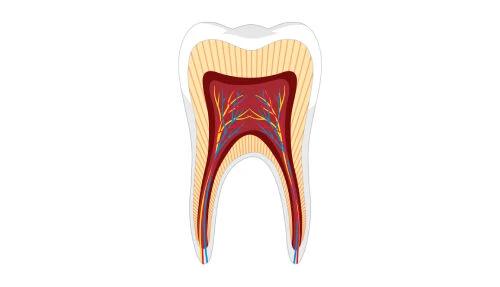
The vast majority of clinics in Ukraine provide endodontic services, and almost every adult patient has faced the need for nerve removal and root canal filling. Endodontic treatment is a fairly large field with a number of important nuances that patients should be aware of.

Igor Osadchiy
Jaw fracture
23.01.2025
Accidents, falls, and other situations that lead to injuries unfortunately do happen. Sometimes their consequence is a jaw fracture. It is important to note that patients cannot always understand that they have sustained a fracture, while successful rehabilitation directly depends on the speed of seeking medical help.
Igor Osadchiy
Depulped tooth
20.01.2025
Endodontic treatment involving tooth devitalization has gained great popularity. It is now difficult to find an adult who has not had a nerve removed in at least one tooth. At the same time, many patients have doubts and do not always decide on depulpation, thereby condemning themselves to tooth extraction. So what is a depulped tooth and how does endodontic treatment work?
Igor Osadchiy
How a dental implant is placed
20.01.2025
Almost every dental clinic in Kyiv and Ukraine can easily compile its own top list of topics that interest patients who have decided to get an implant. At Osadchyi Dental Clinic, we answer all questions in detail and provide consultations. However, many people want to receive information even before their consultation, so we decided to briefly go through the key points that are in the focus of patients’ attention.
Igor Osadchiy
How does tooth implantation occur
20.01.2025
Dental implantation is one of the most popular procedures in modern dentistry. Since many patients come to the need of restoring a lost tooth, many questions arise about the procedure itself. In various forms, the following questions are heard: “How does the dental implantation process work?”, “How is a dental implant placed?”, “How is dental implantation performed?” We answer everything in detail and clearly.

Igor Osadchiy
White coating after tooth extraction
16.01.2025
Almost every dentist has encountered queries like: gums turned white after tooth extraction, pulled a tooth and there is a white pouch on the gums, something white and soft in the socket after tooth extraction, or white spots on the gums after tooth extraction. We want to reassure all patients: everything is fine, there is no cause for concern.
Igor Osadchiy
Is it painful to remove stitches after a tooth extraction
16.01.2025
21st-century dentistry allows performing very complex manipulations and operations absolutely painlessly for the patient. However, many people still experience fears associated with visiting a dental clinic. In particular, there is a whole cluster of questions related to sutures: Does it hurt to remove sutures after tooth extraction? Does it hurt to remove sutures from the gums after wisdom tooth extraction? How long after tooth extraction are sutures removed? What happens if sutures are not removed after wisdom tooth extraction?