Didn’t find the necessary information? Make an appointment for a consultation with oral surgeon Ihor Oleksandrovych Osadchy.


Jaw fracture
Accidents, falls, and other situations that lead to injuries unfortunately do happen. Sometimes their consequence is a jaw fracture. It is important to note that patients cannot always understand that they have sustained a fracture, while successful rehabilitation directly depends on the speed of seeking medical help.
Jaw fractures can be quite diverse, and there are many different variations.
First of all, all jaw fractures can be divided into upper and lower jaw fractures:
- upper jaw (maxilla) fracture.
Occurs less frequently and is usually the result of car accidents, falls from great heights, and other serious facial injuries;
- lower jaw (mandible) fracture.
Occurs more often due to anatomical features and is characterized by a large number of different types.
| Fracture type | Description |
| Mandibular body fracture | Related to damage of the horizontal part of the mandible to which the crown part is attached |
| Mandibular process fractures | Related to damage of the coronoid and/or condylar processes extending from the sides of the mandible. Process fractures can be caused by blows to the side of the face and chin. The condylar process of the mandible is an important anatomical structure forming the temporomandibular joint |
| Alveolar (coronal) part fracture | Alveolar processes are the part of the mandible containing dental alveoli (tooth sockets). Anterior alveolar process fractures can occur in the front part, and lateral alveolar process fractures in the lateral part of the mandible |
| Mandibular angle fracture | The jaw angles are located in the posterior part of the mandible. Their fractures can be both vertical and horizontal |
| Ramus fracture | Fractures can involve both the coronal part of the ramus and its body |
| Condylar process fracture | Mandibular head fractures can be related to joint or upper face trauma, and chin fractures to blows to the chin |
| Hyoid bone fracture | The hyoid bone is located under the mandible and serves for muscle attachment. Fractures in this area can result from blows to the chin or lower face |
All fractures can be divided into six types:
- closed jaw fracture (the bone breaks but there is no soft tissue damage);
- open jaw fracture (the bone breaks with simultaneous soft tissue destruction);
- non-displaced fractures (bone fragments remain in the correct position);
- displaced fractures (bone fragments shift from their normal position);
- fracture with cracks (cracks form in the bone while cortical plate integrity is maintained);
- comminuted fracture (the bone breaks into several pieces).
Practice shows that closed mandibular fractures occur in approximately 10% of cases; open mandibular fractures are much more common.
Note that doctors do not always deal with one type of fracture; combined injuries are common: open fractures with displacement, comminuted fractures with cracks, etc.
All jaw fractures can also be divided into three groups by severity:
- minor fractures (without displacement, without skin and mucosal integrity violation);
- moderately severe (with slight displacement, with mild skin and mucosal damage);
- severe (with pronounced displacement, with open wounds, bleeding, and other complications).
The following jaw fracture symptoms are distinguished:
- pain (usually occurs in the fracture area and can be both sharp and dull);
- swelling (forms around the fracture site, becomes large over time);
- hematoma (develops as a result of hemorrhage into tissues around the fracture, may occur immediately or appear several hours after injury);
- deformity (visual distortion of jaw shape or structure, especially noticeable if the fracture is accompanied by bone displacement);
- functional impairment (inability to close and open the mouth, difficulties with chewing, swallowing, speaking, and bite changes);
- pressure sensitivity (pain or sensitivity in the fracture area may occur when touching or pressing);
- open wound (open jaw fracture is accompanied by bleeding, bone fragments may be visible);
- clicking or grinding (displaced jaw fracture can cause clicking during movement);
- tooth loss (fractures in the dental alveoli area may result in loss of one or several teeth).
Jaw fracture symptoms partially overlap with dislocation or contusion symptoms, so we recommend consulting specialists in case of injuries and suspected jaw fractures. Only an X-ray can confirm or deny the diagnosis, while early diagnosis and proper treatment affect not only the result but also the ease of achieving it. In case of jaw fractures, a doctor should be consulted within the first 24 hours.
At the slightest suspicion of a jaw fracture, you should immediately call emergency services. If you are in Kyiv, “Osadchyi Dental Clinic” provides emergency care: we work 24/7, so feel free to call us.
Before visiting the clinic, the following measures should be taken:
- if there is bleeding, use sterile bandages, but without applying force, without direct pressure on the fracture area;
- find a comfortable head position and try to ensure jaw immobility;
- for some injuries and fractures, it is also not recommended to move the neck;
- most importantly: do not try to set the fracture yourself!
A jaw fracture, strictly speaking, can only be treated by two methods: conservative or surgical. This does not mean that the patient or doctor can choose the treatment method at will — everything is determined by indications. For jaw fractures without displacement, conservative methods may be applied. If there is a complex jaw fracture, surgery is inevitable.
Surgical treatment may be necessary in cases of:
- displaced fractures;
- fractures with soft tissue, vascular, or nerve damage;
- fractures that may lead to bite disorders;
- practically all cases of upper jaw fractures.
| Method | Description |
| Jaw fracture: conservative treatment | |
| Fixation | If the fracture is without displacement, external fixators such as intermaxillary splints or fixation devices are used |
| Support | The patient may be prescribed special supportive bandages |
| Diet | Necessary to minimize the load on the jaw and fracture zone |
| Jaw fracture: surgery (surgical treatment) | |
| Reduction | For displaced fractures, special plates and screws are used to place bone fragments in the correct position |
| Open fracture repair | In some cases, the surgeon needs to open soft tissues to access bone fragments for proper alignment and fixation |
| Osteosynthesis | A complex jaw fracture may involve the use of metal fixators, plates, and screws for better stabilization and effective bone healing |
| Tooth extraction | In cases where the fracture affects dental alveoli, teeth need to be extracted |
| Mucosal repositioning | Mucosal repositioning surgeries are used to restore anatomical position and aesthetics |
| Joint reconstruction | When the fracture affects the joint, joint reconstruction is needed to restore its functions |
| Orthodontic treatment | When the fracture affects the bite, orthodontic treatment is needed to restore normal occlusion |
| Abscess drainage | Used when the fracture is accompanied by abscess development |
| Complication treatment | In case of complications such as infection or nerve damage, additional surgical treatment may be needed |
A number of medical institutions in Ukraine and Kyiv have recently been abandoning tooth splinting for jaw fractures if osteosynthesis surgery was performed. However, the leading surgeon of our clinic, Igor Oleksandrovych, is adamant: “I consider splinting necessary in 100% of jaw fracture cases. Immobilization is the key to salvation and recovery.”
A splint for a jaw fracture is applied for 21 days, during which time the patient eats soft food.
The cost of jaw fracture treatment always depends on the complexity of the case and includes material costs plus the doctor’s fee. In case of surgical intervention, the cost of medical support for the operation is also added. In Kyiv, the price of jaw fracture treatment starts from 6 thousand hryvnias but can reach 50 thousand hryvnias.
Teeth located on the fracture line, especially in the area of the mandibular angle, are almost always removed as they can contribute to the development of infectious complications.
If we are talking about a simple mandibular fracture, treatment gives a good prognosis. This means a fracture in one place without displacement or other complications. The prognosis for other types of fractures is difficult to predict — everything depends on the clinical picture.
The surgeon can access the fracture site from either the external side or from the mucosal side. Everything depends on the clinical picture and the methodology chosen by the doctor.
Recovery after a bilateral mandibular fracture may take a longer period, due to the severity of the injury. While in some cases of a unilateral fracture conservative treatment may suffice, a bilateral fracture almost always requires surgical intervention.

Igor Osadchiy
Surgeon
MD, physician with the highest skill accreditation level, member of EACMS (European Association of Cranio-Maxillofacial Surgeons), member of the Association of Implantologists of Ukraine. Alma mater: O.O. Bogomolets National Medical University. Year of graduation: 1984. Experience: Work experience: 38 years. For 13 years (1985-1998), taught dental surgery and maxillofacial surgery…
Igor Osadchiy
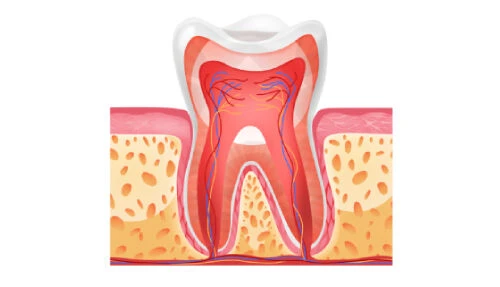
Treatment of tooth nerve inflammation
04.02.2025
Despite the fact that dental procedures have become significantly less painful over the past few decades, not all patients visit the dentist on time. Often fears prevail over health needs. This is confirmed by the statistics of cases of such a disease as pulpitis, especially irreversible. In Kyiv, two out of ten patients come to the dentist complaining that their tooth nerves have become inflamed due to long-untreated caries.
Igor Osadchiy
Installation of a dental crown
03.02.2025
Installing dental crowns is an important dental procedure designed to restore the functionality and aesthetics of teeth. It may be necessary in cases of significant tooth damage, after caries treatment, due to trauma, or certain bite pathologies. There are many types of dental crowns that need to be carefully considered before making a decision.
Igor Osadchiy
Installation of a crown on an implant
03.02.2025
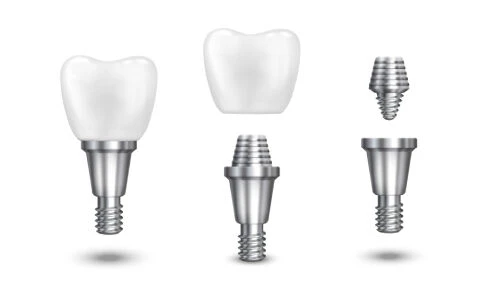
No patient visits a dental clinic for an implant, and they are not even interested in implantation as a service. Patients mostly need to restore a lost tooth, which means they need not only an artificial tooth root but also prosthetics — most often with a crown. The range of variations here is quite wide, which in turn affects both the price of the implant crown and the cost of the procedure.
Igor Osadchiy
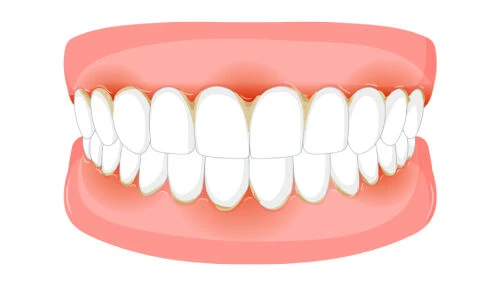
Gingivitis
23.01.2025
Gum disease (gingivitis) is a common problem faced by many dental clinics in Kyiv and Ukraine. Patients sometimes think that sensitivity and redness of the mucous membrane is a minor issue. However, one should remember about complications. Gingivitis has quite a few of them, so it is important to visit a clinic in time to eliminate the inflammatory process at an early stage.
Igor Osadchiy
Treatment of dental canals
23.01.2025
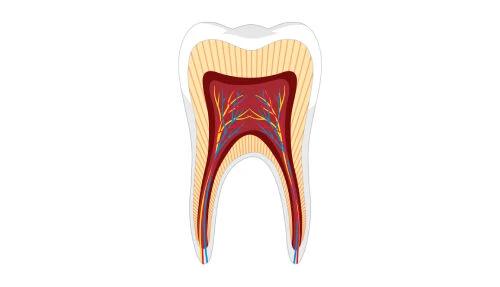
The vast majority of clinics in Ukraine provide endodontic services, and almost every adult patient has faced the need for nerve removal and root canal filling. Endodontic treatment is a fairly large field with a number of important nuances that patients should be aware of.
Igor Osadchiy
Teeth splinting
22.01.2025
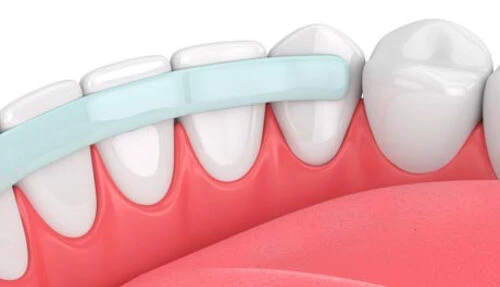
Many clinics in Kyiv offer teeth splinting as a treatment method, including for periodontal teeth. The danger of such manipulations is extremely high. We believe that patients should weigh the risks, and for this, they need to better understand the essence and purpose of such a medical procedure as teeth splinting.
Igor Osadchiy
Depulped tooth
20.01.2025
Endodontic treatment involving tooth devitalization has gained great popularity. It is now difficult to find an adult who has not had a nerve removed in at least one tooth. At the same time, many patients have doubts and do not always decide on depulpation, thereby condemning themselves to tooth extraction. So what is a depulped tooth and how does endodontic treatment work?
Igor Osadchiy
How a dental implant is placed
20.01.2025
Almost every dental clinic in Kyiv and Ukraine can easily compile its own top list of topics that interest patients who have decided to get an implant. At Osadchyi Dental Clinic, we answer all questions in detail and provide consultations. However, many people want to receive information even before their consultation, so we decided to briefly go through the key points that are in the focus of patients’ attention.
Igor Osadchiy
How does tooth implantation occur
20.01.2025
Dental implantation is one of the most popular procedures in modern dentistry. Since many patients come to the need of restoring a lost tooth, many questions arise about the procedure itself. In various forms, the following questions are heard: “How does the dental implantation process work?”, “How is a dental implant placed?”, “How is dental implantation performed?” We answer everything in detail and clearly.

Igor Osadchiy
White coating after tooth extraction
16.01.2025
Almost every dentist has encountered queries like: gums turned white after tooth extraction, pulled a tooth and there is a white pouch on the gums, something white and soft in the socket after tooth extraction, or white spots on the gums after tooth extraction. We want to reassure all patients: everything is fine, there is no cause for concern.
Igor Osadchiy
Is it painful to remove stitches after a tooth extraction
16.01.2025
21st-century dentistry allows performing very complex manipulations and operations absolutely painlessly for the patient. However, many people still experience fears associated with visiting a dental clinic. In particular, there is a whole cluster of questions related to sutures: Does it hurt to remove sutures after tooth extraction? Does it hurt to remove sutures from the gums after wisdom tooth extraction? How long after tooth extraction are sutures removed? What happens if sutures are not removed after wisdom tooth extraction?