Didn’t find the necessary information? Make an appointment for a consultation with oral surgeon Ihor Oleksandrovych Osadchy.


Dental implants. What kinds of dental implant systems exist?
The history of dental implants is quite long. But we will talk about modern systems. Everything started 45 years ago, when Swedish orthopedic traumatologist Per-Ingvar Branemark noticed dense healing of bone tissue around metal screw elements he used to fix limb fractures. For that reason, it was sometimes extremely difficult to extract such constructions. He called this phenomenon osseointegration. Upon studying the biological processes leading to this result, Per-Ingvar Branemark suggested restoring missing tooth roots with similar metal elements, which later became known as dental implants.
What types of dental implants exist? Conventionally, all dental implants can be classified into one-stage or two-stage. The difference is that a crown is cemented into one-step implants directly, while two-step implant systems have a connecting element-abutment between the implant and the crown.

Screw implants. First of all, 98% of implants used in dentistry are screw implants. They have a root-like or cylindrical shape and can be either one or two-stage, where an abutment and implant are connected by a screw. Such implants are placed in the jaw by screwing them in.
Plateau-system implants. Plateau-type implants are two-stage, consisting of horizontal plates connected to form a kind of cylinder. The connection between the implant and the abutment is tapered, without using a screw. Such implants are placed by the method of indentation.
Custom implants. This is when an impression is made of the exposed bone, and a metal structure is made to cover the bone, which is then sutured. These are subperiosteal implants.
Zygomatic implants. These implants are not placed in the jawbone, but are attached to the inside of the zygomatic bone. When a person does not have suitable conditions for dental implants, this implant type is used.
Dental implants are most commonly made of medical titanium or zirconium dioxide.
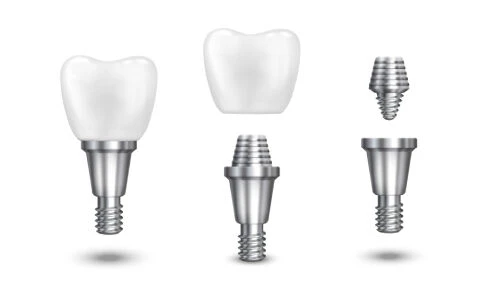
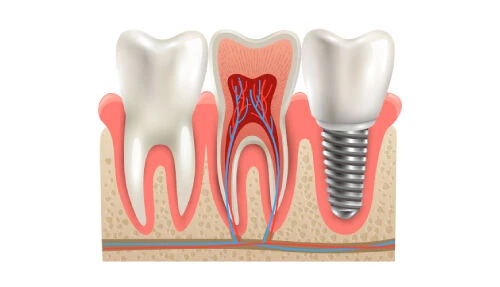
A dental implant consists of the implant itself, an abutment, and a dental crown.
The implant body (simply put, a screw or artificial root) is placed into the bone. After the bone has healed, the abutment is placed in the implant. This is a supragingival part, on which the dental crown is then installed. There is a working part in the mouth, and there is a working part in the bone; so, the connection of the abutment to the implant can be:
- hexagonal
- octahedron
- Morse taper
- combined hexagon-taper
- Mickey Mouse connection (first used in Nobel implants)

In one-stage implant systems, the abutment and implant are one inseparable structure. At the same time, the probability of failure of such implants is quite high. Global statistics show a 63% success rate with their use. This is due to the traumatic effect of these implants and immediate jawbone loading.
What is important to know about the connection of an implant to an abutment? The tighter the connection is and the less micromobility it has, the longer the implant will last.
When a screw implant is placed, the surgeon makes a cavity for it and then screws the implant in. The hole for the implant is always made smaller so that we can screw in (tighten) the implant. What happens to the bone? The bone is compressed by the implant screwed into it and then necrotizes (dies), and the healing process begins only after a few days.

When we place a plateau-type implant, there is no bone compression because the cavity is the same size as the implant. And the implant is tightly inserted rather than screwed in – this implant minimizes trauma to the bone, and the healing process begins immediately.
An implant fails to integrate when there is no healthy bone around the implant, and it is mobile. You cannot put a crown on the implant, and it must be removed. Sometimes, the implant will fall out on its own. The process of implant rejection can be painful or asymptomatic.
Among the causes of implant failure are insufficient diagnosis in the planning of surgery, the patient’s bone structure, chronic bone and blood diseases (hepatitis, insulin-dependent diabetes, leukemia, osteoporosis, and others), and the quality of the implant being placed.
In our practice, we use plateau-type implants more often. This is because the experience of placing these implants shows a good and long-lasting clinical result.
Firstly, the installation of such implants is minimally traumatic, bone healing is fast, complications are rare, and the recovery period does not last more than three days on average.
Secondly, the implant design and the screwless tapered connection of the implant and the abutment do not put pressure on the bone around the implant; so, it is not destroyed.
It is proven that any screw connection of implant-abutment produces micromobility, which destroys the jawbone at the implant neck and causes peri-implantitis.
Third, short (less than 6 mm) plateau-type implants can withstand four times the load of a screw implant of any length due to their design.
Fourthly, the use of short implants eliminates the need for additional bone grafting surgeries (sinus-lift, bone splitting, augmentation), which reduces treatment time dramatically, decreases the risk of complications (sinusitis, osteomyelitis, bone graft rejection) after such surgeries, and significantly lowers the treatment cost.
It is easier to place a screw implant. In contrast, a short plateau-type implant requires a great deal of precision — pinpoint precision in the truest sense. Not all doctors want to learn how to do this. It is also worth noting that if a screw implant is placed incorrectly, it can be unscrewed and immediately replaced with a larger implant, but this cannot be done in the case of a short implant. When placing a short implant, the doctor has no room for mistakes.
Once, there was the “gentle implants” slogan applied to Bicon short implants. It sounds a little weird. One would think, how can surgery be gentle? But what the people who created this slogan wanted to say is that this implant is the least traumatic when placed. Smaller trauma results in faster rehabilitation.
Physiologically, healing occurs in 20 to 30 days. The rest of the time is taken up by remodeling (improving the quality of the healed bone). Therefore, it is believed in dentistry that quality healing should take from two months to six months.
This is a very delicate question, and it is difficult to give an objective and comprehensive answer to it. We evaluate implants by the production practices of their manufacturers. Production standards determine how accurately manufacturers make them, what tolerances and inaccuracies are allowed in production, and whether the implant oxidizes after some time after placement.
When choosing an implant, we pay close attention to how quickly and painlessly it “takes root” in the patient and how long it will last.

Igor Osadchiy
Surgeon
MD, physician with the highest skill accreditation level, member of EACMS (European Association of Cranio-Maxillofacial Surgeons), member of the Association of Implantologists of Ukraine. Alma mater: O.O. Bogomolets National Medical University. Year of graduation: 1984. Experience: Work experience: 38 years. For 13 years (1985-1998), taught dental surgery and maxillofacial surgery…
Igor Osadchiy
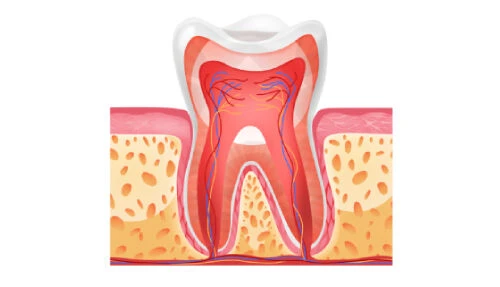
Treatment of tooth nerve inflammation
04.02.2025
Despite the fact that dental procedures have become significantly less painful over the past few decades, not all patients visit the dentist on time. Often fears prevail over health needs. This is confirmed by the statistics of cases of such a disease as pulpitis, especially irreversible. In Kyiv, two out of ten patients come to the dentist complaining that their tooth nerves have become inflamed due to long-untreated caries.
Igor Osadchiy
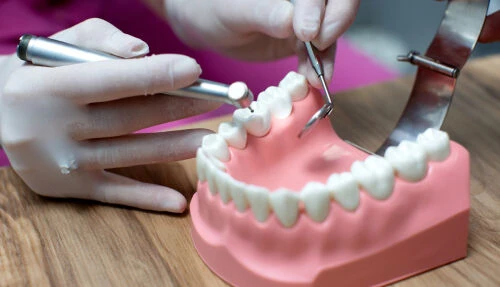
Installation of a dental crown
03.02.2025
Installing dental crowns is an important dental procedure designed to restore the functionality and aesthetics of teeth. It may be necessary in cases of significant tooth damage, after caries treatment, due to trauma, or certain bite pathologies. There are many types of dental crowns that need to be carefully considered before making a decision.
Igor Osadchiy
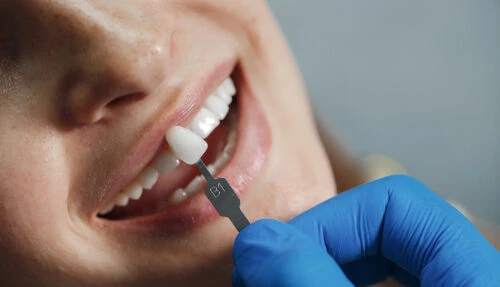
Installation of a crown on an implant
03.02.2025
No patient visits a dental clinic for an implant, and they are not even interested in implantation as a service. Patients mostly need to restore a lost tooth, which means they need not only an artificial tooth root but also prosthetics — most often with a crown. The range of variations here is quite wide, which in turn affects both the price of the implant crown and the cost of the procedure.
Igor Osadchiy
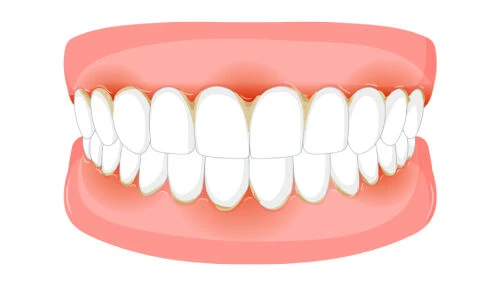
Gingivitis
23.01.2025
Gum disease (gingivitis) is a common problem faced by many dental clinics in Kyiv and Ukraine. Patients sometimes think that sensitivity and redness of the mucous membrane is a minor issue. However, one should remember about complications. Gingivitis has quite a few of them, so it is important to visit a clinic in time to eliminate the inflammatory process at an early stage.
Igor Osadchiy
Treatment of dental canals
23.01.2025
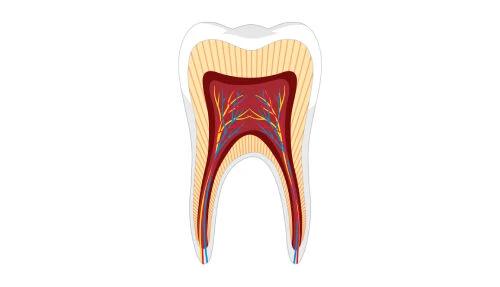
The vast majority of clinics in Ukraine provide endodontic services, and almost every adult patient has faced the need for nerve removal and root canal filling. Endodontic treatment is a fairly large field with a number of important nuances that patients should be aware of.

Igor Osadchiy
Jaw fracture
23.01.2025
Accidents, falls, and other situations that lead to injuries unfortunately do happen. Sometimes their consequence is a jaw fracture. It is important to note that patients cannot always understand that they have sustained a fracture, while successful rehabilitation directly depends on the speed of seeking medical help.
Igor Osadchiy
Teeth splinting
22.01.2025
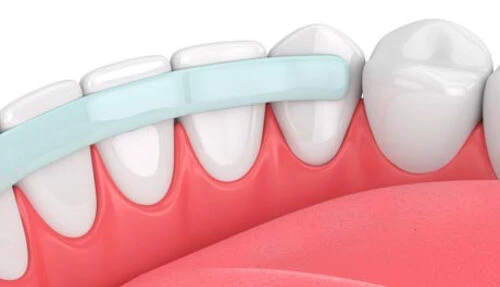
Many clinics in Kyiv offer teeth splinting as a treatment method, including for periodontal teeth. The danger of such manipulations is extremely high. We believe that patients should weigh the risks, and for this, they need to better understand the essence and purpose of such a medical procedure as teeth splinting.
Igor Osadchiy
Depulped tooth
20.01.2025
Endodontic treatment involving tooth devitalization has gained great popularity. It is now difficult to find an adult who has not had a nerve removed in at least one tooth. At the same time, many patients have doubts and do not always decide on depulpation, thereby condemning themselves to tooth extraction. So what is a depulped tooth and how does endodontic treatment work?
Igor Osadchiy
How a dental implant is placed
20.01.2025
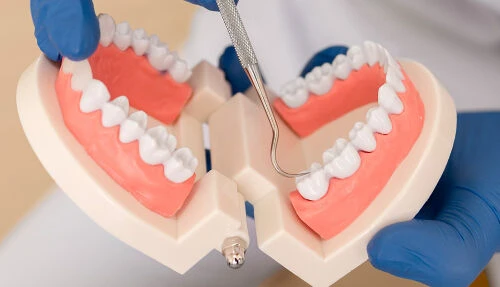
Almost every dental clinic in Kyiv and Ukraine can easily compile its own top list of topics that interest patients who have decided to get an implant. At Osadchyi Dental Clinic, we answer all questions in detail and provide consultations. However, many people want to receive information even before their consultation, so we decided to briefly go through the key points that are in the focus of patients’ attention.
Igor Osadchiy
How does tooth implantation occur
20.01.2025
Dental implantation is one of the most popular procedures in modern dentistry. Since many patients come to the need of restoring a lost tooth, many questions arise about the procedure itself. In various forms, the following questions are heard: “How does the dental implantation process work?”, “How is a dental implant placed?”, “How is dental implantation performed?” We answer everything in detail and clearly.

Igor Osadchiy
White coating after tooth extraction
16.01.2025
Almost every dentist has encountered queries like: gums turned white after tooth extraction, pulled a tooth and there is a white pouch on the gums, something white and soft in the socket after tooth extraction, or white spots on the gums after tooth extraction. We want to reassure all patients: everything is fine, there is no cause for concern.