Didn’t find the necessary information? Make an appointment for a consultation with oral surgeon Ihor Oleksandrovych Osadchy.

Photopolymer filling
Tooth filling is a fairly standard and popular procedure. Recently, photopolymers are almost always used to restore the crown part of a tooth. A photopolymer filling can be placed at virtually any clinic in Kyiv. But it is not worth thinking that all photopolymer fillings are the same.
Various materials can be used for tooth filling:
- amalgams;
- cements;
- composites;
- compomers;
- photopolymers of various fractions, etc.
However, the most modern and popular today are photopolymer materials.
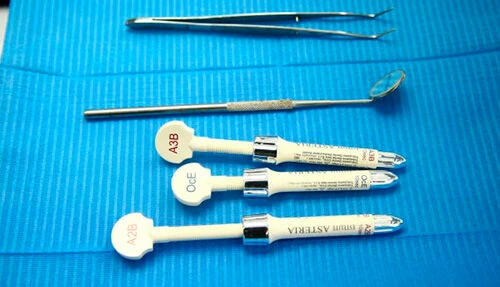
A photopolymer filling is a filling made from a composite material whose distinctive feature is the ability to change its properties under the influence of light. Some photopolymer materials used in dentistry cannot be applied under artificial lighting. In such cases, the dentist places the filling under natural light and only then uses the lamp. Under the lamp’s influence, the material polymerizes, and such a photopolymer filling becomes virtually indistinguishable from the patient’s own tooth.
Thanks to their unique properties, photopolymer materials have become very popular in dentistry. While previously, depending on the location of carious destruction, various filling materials were used, today virtually all clinics in Ukraine use only photopolymer materials.
Photopolymers in dentistry have not accidentally become so popular. Among the large number of materials available for tooth filling, only photopolymers have so many advantages:
- good fixation;
- resistance to temperature effects;
- resistance to food effects;
- sufficient plasticity;
- high strength;
- good aesthetic properties;
- high drying speed.
Photopolymer filling placement is performed quite quickly, while the patient can eat and drink immediately after the dental appointment. A good photopolymer filling is practically invisible in the mouth: even the dentist cannot always see the edges of a photopolymer filling.
A photopolymer is a composite material (consisting of two or more components). In dentistry, materials consisting of the following are used:
- filler;
- light-reflecting polymer.
Thus, photopolymer fillings can be of various types depending on what specific filler is included in their composition.
| Filler material | Features |
| Macrofillers | This filler is characterized by high strength with relatively low aesthetic indicators. This determines its use for restoring the crown parts of molars |
| Microfillers | This material has properties opposite to macrofillers. It is characterized by high aesthetic qualities with low strength. Therefore, photopolymer fillings for front teeth are usually made based on this material |
| Minifillers | A middle option between macro- and microfillers. Suitable for eliminating minor defects |
| Nanohybrid | The newest and most popular type of filler that provides both high aesthetics and good strength. It can be used for restoring the crown part of any tooth |
- Destruction of the tooth crown due to caries;
- Destruction of the tooth crown due to trauma;
- Minor defects (chips, cracks);
- Color change.
There are practically no contraindications to placing specifically a photopolymer filling, as the material is hypoallergenic and harmless to the body. However, there are general contraindications for tooth filling:
- destruction of the tooth crown by more than 30%;
- tooth mobility and inflammation of the tooth root(s).
The only contraindication to using photopolymer material is the treatment of baby teeth. A photopolymer filling on a baby tooth is not always placed due to insufficient enamel mineralization.
Examination and X-ray
Filling a tooth with photopolymer requires taking an X-ray. This procedure is not performed to increase the cost of services – it has a clear medical rationale. The dentist must assess how deeply the carious destruction has spread and whether there is a need for endodontic treatment.
Filling
If the tooth pulp is not damaged, the dentist can proceed to filling. Sometimes the procedure is performed without anesthesia if the damage is not too extensive.
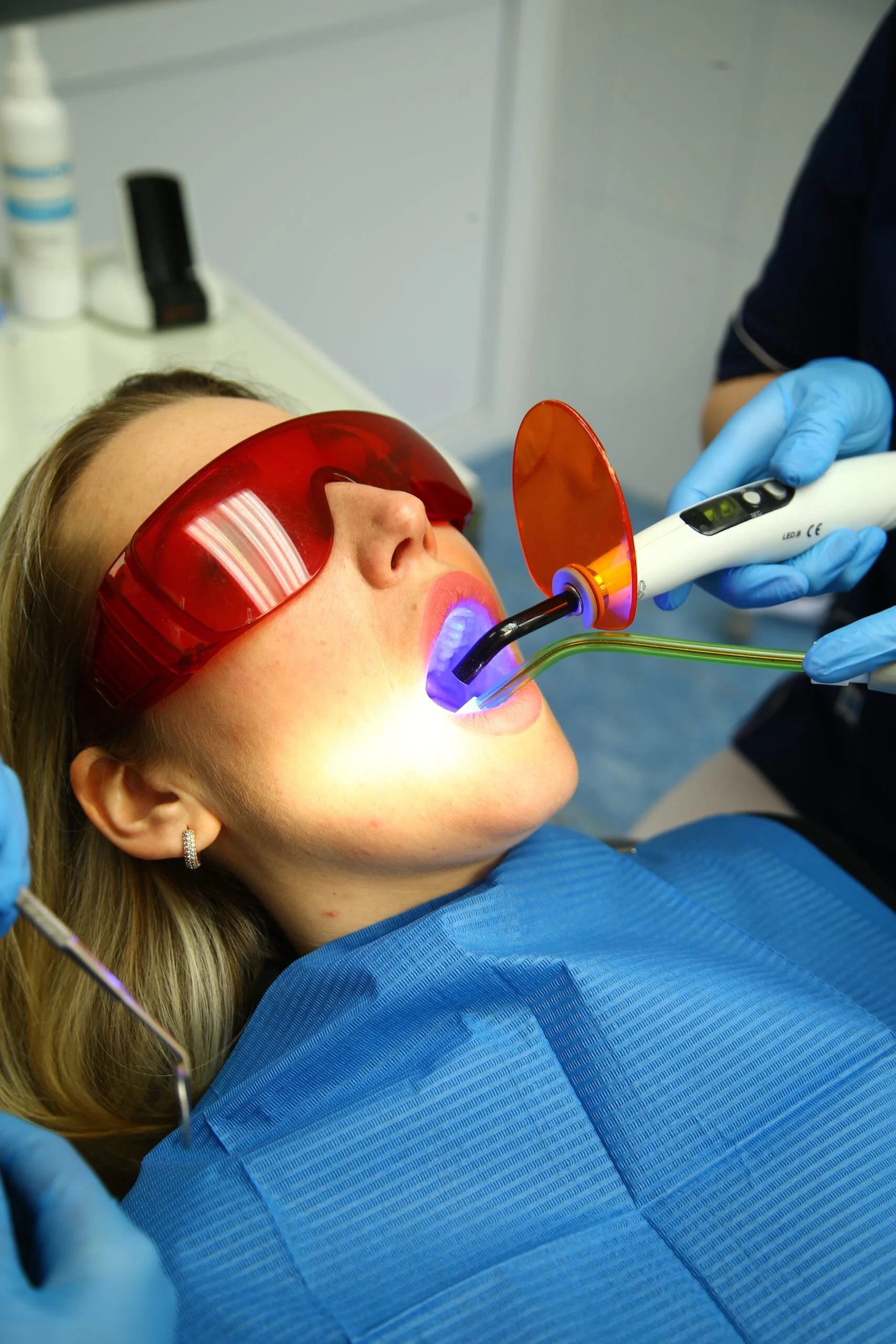
During the filling process, the dentist removes damaged tissues, applies various compounds (dentin conditioner, adhesive agent) and forms the lost crown part from photopolymer.
It is important to note that before curing the filling under the lamp, the tooth must be isolated from moisture. Therefore, a special isolation system – a rubber dam – is used.
Just a few minutes after placing a photopolymer filling, the patient can eat and drink. Care for a photopolymer filling is no different from caring for the patient’s own teeth.
Photopolymer fillings are characterized by a fairly long service life. On average, photopolymer fillings last 5-7 years, but in some cases can serve up to 15 years.
However, in some cases filling replacement is necessary:
- If a border is visible under the filling, this may indicate the formation of secondary caries. In this case, the filling must be removed, the cavity cleaned, and re-filled.
- The filling may also wear down during use. Especially in patients who suffer from pathological tooth abrasion.
- If a photopolymer filling has fallen out, which may be a result of chemical or physical factors, it can be replaced with a new one.
Cost of photopolymer filling
Prices for photopolymer fillings vary depending on the complexity of the case and the materials used by the dentist. Fillings on front teeth may also be more expensive. In Kyiv, prices for photopolymer fillings range from 1 to 3-4 thousand hryvnias.
At Osadchyi Dental Clinic, we use only the best photopolymer materials, and we also track new products on the market, as materials appear quite frequently.
Discomfort immediately after tooth filling is possible. Unpleasant sensations should disappear within 1-2 days. If this does not happen and the pain intensity increases, you should immediately consult a dentist.
A filling falling out does not always indicate that the tooth should be extracted or covered with a crown. If the crown destruction does not exceed 30% and there are no other contraindications, the dentist can place a new photopolymer filling.
Yes. However, we recommend abstaining from nicotine, coffee, red wine, and other products containing dyes for the first few hours. This will help avoid unwanted staining of the filling.

Igor Osadchiy
Surgeon
MD, physician with the highest skill accreditation level, member of EACMS (European Association of Cranio-Maxillofacial Surgeons), member of the Association of Implantologists of Ukraine. Alma mater: O.O. Bogomolets National Medical University. Year of graduation: 1984. Experience: Work experience: 38 years. For 13 years (1985-1998), taught dental surgery and maxillofacial surgery…
Igor Osadchiy
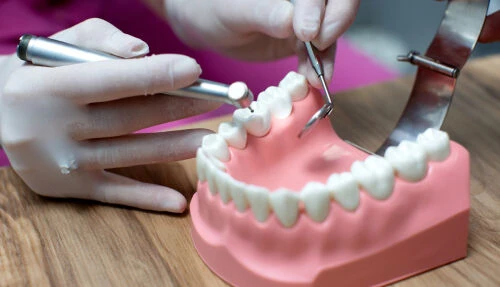
Treatment of tooth nerve inflammation
04.02.2025
Despite the fact that dental procedures have become significantly less painful over the past few decades, not all patients visit the dentist on time. Often fears prevail over health needs. This is confirmed by the statistics of cases of such a disease as pulpitis, especially irreversible. In Kyiv, two out of ten patients come to the dentist complaining that their tooth nerves have become inflamed due to long-untreated caries.
Igor Osadchiy
Installation of a dental crown
03.02.2025
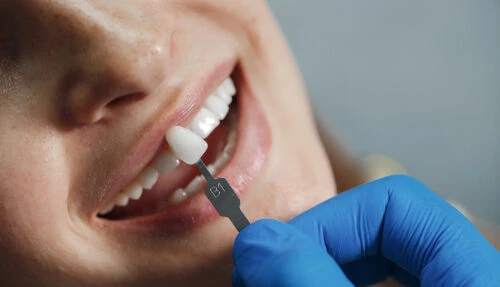
Installing dental crowns is an important dental procedure designed to restore the functionality and aesthetics of teeth. It may be necessary in cases of significant tooth damage, after caries treatment, due to trauma, or certain bite pathologies. There are many types of dental crowns that need to be carefully considered before making a decision.
Igor Osadchiy
Installation of a crown on an implant
03.02.2025
No patient visits a dental clinic for an implant, and they are not even interested in implantation as a service. Patients mostly need to restore a lost tooth, which means they need not only an artificial tooth root but also prosthetics — most often with a crown. The range of variations here is quite wide, which in turn affects both the price of the implant crown and the cost of the procedure.
Igor Osadchiy
Gingivitis
23.01.2025
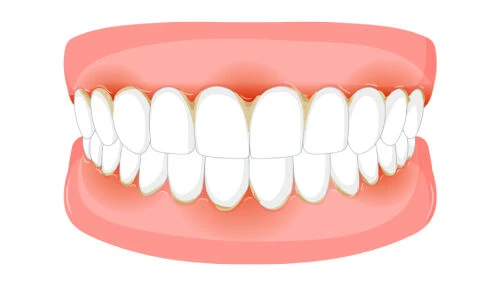
Gum disease (gingivitis) is a common problem faced by many dental clinics in Kyiv and Ukraine. Patients sometimes think that sensitivity and redness of the mucous membrane is a minor issue. However, one should remember about complications. Gingivitis has quite a few of them, so it is important to visit a clinic in time to eliminate the inflammatory process at an early stage.
Igor Osadchiy
Treatment of dental canals
23.01.2025
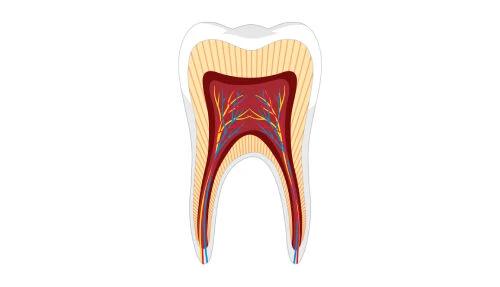
The vast majority of clinics in Ukraine provide endodontic services, and almost every adult patient has faced the need for nerve removal and root canal filling. Endodontic treatment is a fairly large field with a number of important nuances that patients should be aware of.

Igor Osadchiy
Jaw fracture
23.01.2025
Accidents, falls, and other situations that lead to injuries unfortunately do happen. Sometimes their consequence is a jaw fracture. It is important to note that patients cannot always understand that they have sustained a fracture, while successful rehabilitation directly depends on the speed of seeking medical help.
Igor Osadchiy
Teeth splinting
22.01.2025
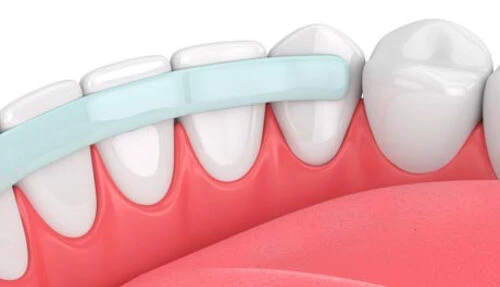
Many clinics in Kyiv offer teeth splinting as a treatment method, including for periodontal teeth. The danger of such manipulations is extremely high. We believe that patients should weigh the risks, and for this, they need to better understand the essence and purpose of such a medical procedure as teeth splinting.
Igor Osadchiy
Depulped tooth
20.01.2025
Endodontic treatment involving tooth devitalization has gained great popularity. It is now difficult to find an adult who has not had a nerve removed in at least one tooth. At the same time, many patients have doubts and do not always decide on depulpation, thereby condemning themselves to tooth extraction. So what is a depulped tooth and how does endodontic treatment work?
Igor Osadchiy
How a dental implant is placed
20.01.2025
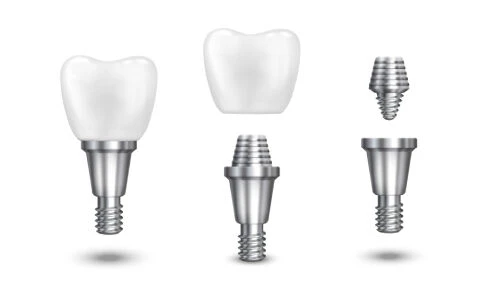
Almost every dental clinic in Kyiv and Ukraine can easily compile its own top list of topics that interest patients who have decided to get an implant. At Osadchyi Dental Clinic, we answer all questions in detail and provide consultations. However, many people want to receive information even before their consultation, so we decided to briefly go through the key points that are in the focus of patients’ attention.
Igor Osadchiy
How does tooth implantation occur
20.01.2025
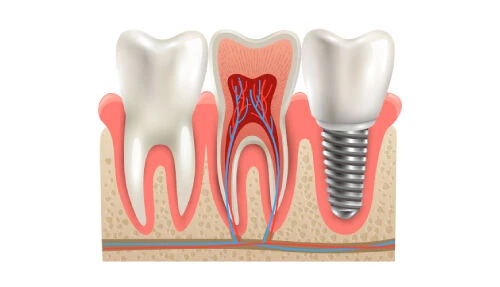
Dental implantation is one of the most popular procedures in modern dentistry. Since many patients come to the need of restoring a lost tooth, many questions arise about the procedure itself. In various forms, the following questions are heard: “How does the dental implantation process work?”, “How is a dental implant placed?”, “How is dental implantation performed?” We answer everything in detail and clearly.
Igor Osadchiy
White coating after tooth extraction
16.01.2025
Almost every dentist has encountered queries like: gums turned white after tooth extraction, pulled a tooth and there is a white pouch on the gums, something white and soft in the socket after tooth extraction, or white spots on the gums after tooth extraction. We want to reassure all patients: everything is fine, there is no cause for concern.