Didn’t find the necessary information? Make an appointment for a consultation with oral surgeon Ihor Oleksandrovych Osadchy.

Recommendations after professional teeth cleaning
The quality of hygiene largely determines oral health. Fortunately, more and more clinics in Kyiv and Ukraine have recently been offering patients professional teeth cleaning services. However, good hygiene cannot entirely depend on periodic cleaning at the clinic. It is also important for patients to know how to properly brush their teeth on their own, to know what not to do after professional teeth cleaning, and how to care for teeth after cleaning.
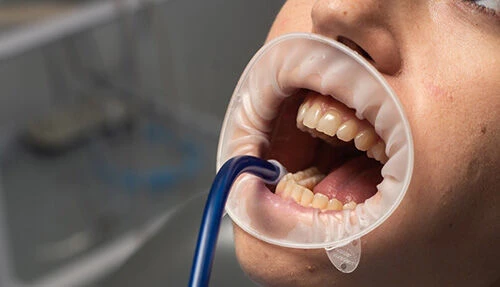
To the question “What should be understood by professional teeth cleaning?” one can answer briefly: it is cleaning performed by a doctor at a dental clinic. However, a more detailed answer can be given, as technological advances allow doctors to perform various types of professional cleaning:
- classic (removal of dental plaque and tartar using ultrasound);
- air polishing (removal of plaque and pigmentation, as well as polishing using a stream of water, air, and fine particles of abrasive material);
- gum curettage (removal of plaque and tartar beneath the mucosa (gums));
- enamel polishing with professional remineralizing paste.
Indications for professional cleaning:
- presence of tartar;
- presence of dental plaque;
- mucosal inflammation (gingivitis);
- tooth pigmentation;
- periodontitis;
- increased tooth sensitivity.
Advantages of professional cleaning:
- thorough removal of tartar;
- caries prevention;
- prevention of mucosal diseases;
- early-stage disease diagnosis;
- improved aesthetics.
At Osadchyi Dental Clinic, we recommend professional cleaning and a routine examination every six months. However, depending on the clinical situation (for example, during orthodontic treatment), the intervals may change: the time between cleanings may be shortened to 3-4 months. Regardless of whether we are talking about our patients or patients of other clinics, we advise always checking with your doctor about recommendations after professional oral hygiene and strictly following them.
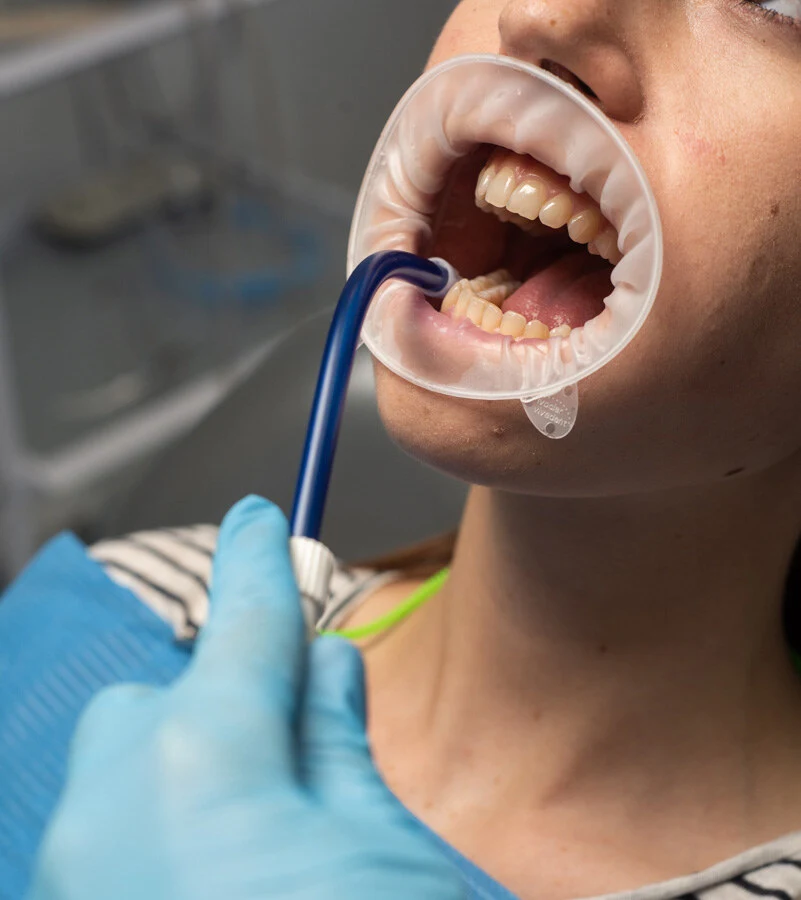
To preserve the results for a longer period and maintain oral health, it is necessary to follow simple restrictions and recommendations after professional teeth cleaning.
What to do after teeth cleaning:
- Maintain hygiene (brush your teeth twice a day and use dental floss to remove food particles between teeth).
- Use products recommended by your doctor (in some cases, the dentist may advise using fluoride rinses or gels, while in other clinical situations, they may recommend fluoride-free toothpastes).
- Limit sugar consumption (sugar-containing products increase the risk of caries development).
- Follow the schedule of routine examinations and cleanings.
What not to do after teeth cleaning
Recommendations regarding what not to do after tartar removal can be conditionally divided into temporary and permanent restrictions.
Temporary restrictions that should be observed in the first few hours (or days) after cleaning include:
- Eating food and drinks (you should refrain from eating and drinking for several hours to give the oral cavity time to recover after the procedure).
- Consuming very cold/hot food or drinks (extreme temperatures can provoke increased tooth sensitivity after cleaning).
- Consuming staining products (to preserve the polishing effect, you should refrain from consuming tea, coffee, red wine, etc. for at least a few hours, and preferably days, after cleaning).
- Active physical exercise (this restriction applies in cases involving mucosal treatment or gum curettage).
Among permanent restrictions, dentists worldwide include smoking, which not only provokes the development of various diseases, including mucosal conditions, but also leads to the appearance of pigment spots on teeth. Of course, patients are reluctant to give up this bad habit, but at least immediately after teeth cleaning, it is not worth smoking.
The question of how to care for teeth after cleaning should be approached individually. Yes, general recommendations and restrictions work for everyone, but there are patients who need additional products prescribed:
- for increased tooth sensitivity before and after cleaning, it is recommended to use specialized toothpaste and rinses;
- for increased risk of caries, it is recommended to use fluoride-containing gels and pastes;
- for increased tendency to plaque formation, it is recommended to use indicator tablets to monitor independent tooth brushing.
More precise recommendations after professional teeth cleaning are given by the treating doctor, as they may vary depending on the clinical situation. We also advise our patients not to use cleaning products without prior consultation. In dentistry, as in general medical practice, the principle applies: self-medication is harmful to your health.
It depends on the clinical situation. If your doctor recommended changing the brush shape or bristle firmness level, you should listen. In general, there is no need to change your toothbrush after professional cleaning. However, remember that you should change your toothbrush every three months.
Despite the many advantages of an irrigator, it does not eliminate the need to visit a specialist for at least two reasons. First: with an irrigator, you still cannot clean your teeth as thoroughly as during professional cleaning. Second: during cleaning, the doctor also conducts an examination and diagnosis, which helps prevent the development of diseases.
Bacteria accumulate and plaque forms on the surface of the tongue and cheeks, so they also need to be cleaned regularly. Various tools exist for this purpose, but most people prefer to use the back of their toothbrush.

Igor Osadchiy
Surgeon
MD, physician with the highest skill accreditation level, member of EACMS (European Association of Cranio-Maxillofacial Surgeons), member of the Association of Implantologists of Ukraine. Alma mater: O.O. Bogomolets National Medical University. Year of graduation: 1984. Experience: Work experience: 38 years. For 13 years (1985-1998), taught dental surgery and maxillofacial surgery…
Igor Osadchiy
Treatment of tooth nerve inflammation
04.02.2025
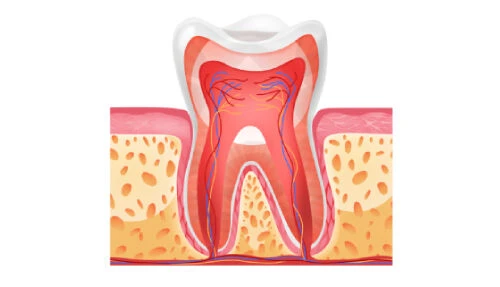
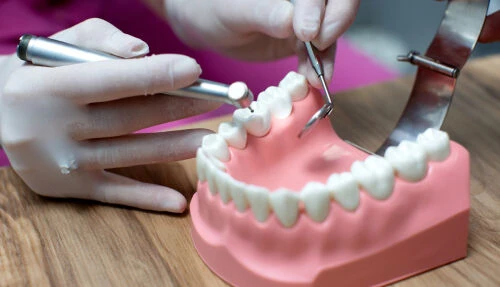
Despite the fact that dental procedures have become significantly less painful over the past few decades, not all patients visit the dentist on time. Often fears prevail over health needs. This is confirmed by the statistics of cases of such a disease as pulpitis, especially irreversible. In Kyiv, two out of ten patients come to the dentist complaining that their tooth nerves have become inflamed due to long-untreated caries.
Igor Osadchiy
Installation of a dental crown
03.02.2025
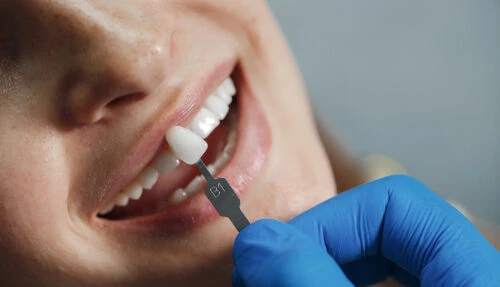
Installing dental crowns is an important dental procedure designed to restore the functionality and aesthetics of teeth. It may be necessary in cases of significant tooth damage, after caries treatment, due to trauma, or certain bite pathologies. There are many types of dental crowns that need to be carefully considered before making a decision.
Igor Osadchiy
Installation of a crown on an implant
03.02.2025
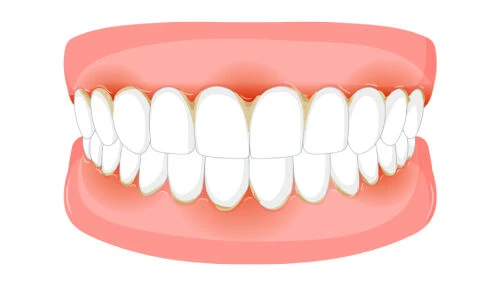
No patient visits a dental clinic for an implant, and they are not even interested in implantation as a service. Patients mostly need to restore a lost tooth, which means they need not only an artificial tooth root but also prosthetics — most often with a crown. The range of variations here is quite wide, which in turn affects both the price of the implant crown and the cost of the procedure.
Igor Osadchiy
Gingivitis
23.01.2025
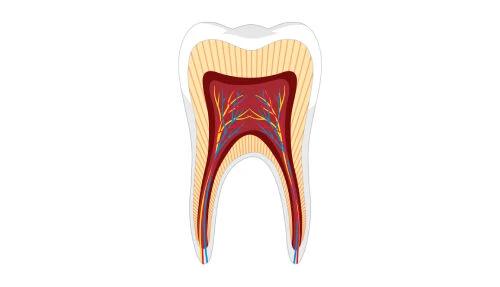
Gum disease (gingivitis) is a common problem faced by many dental clinics in Kyiv and Ukraine. Patients sometimes think that sensitivity and redness of the mucous membrane is a minor issue. However, one should remember about complications. Gingivitis has quite a few of them, so it is important to visit a clinic in time to eliminate the inflammatory process at an early stage.
Igor Osadchiy
Treatment of dental canals
23.01.2025
The vast majority of clinics in Ukraine provide endodontic services, and almost every adult patient has faced the need for nerve removal and root canal filling. Endodontic treatment is a fairly large field with a number of important nuances that patients should be aware of.

Igor Osadchiy
Jaw fracture
23.01.2025
Accidents, falls, and other situations that lead to injuries unfortunately do happen. Sometimes their consequence is a jaw fracture. It is important to note that patients cannot always understand that they have sustained a fracture, while successful rehabilitation directly depends on the speed of seeking medical help.
Igor Osadchiy
Teeth splinting
22.01.2025
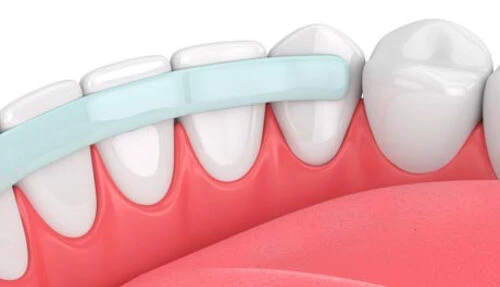
Many clinics in Kyiv offer teeth splinting as a treatment method, including for periodontal teeth. The danger of such manipulations is extremely high. We believe that patients should weigh the risks, and for this, they need to better understand the essence and purpose of such a medical procedure as teeth splinting.
Igor Osadchiy
Depulped tooth
20.01.2025
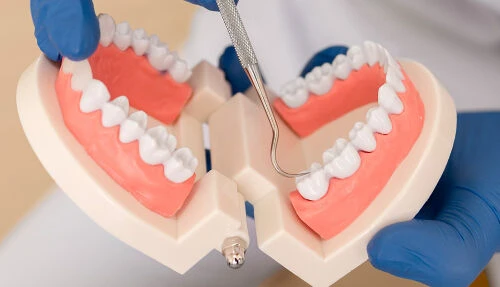
Endodontic treatment involving tooth devitalization has gained great popularity. It is now difficult to find an adult who has not had a nerve removed in at least one tooth. At the same time, many patients have doubts and do not always decide on depulpation, thereby condemning themselves to tooth extraction. So what is a depulped tooth and how does endodontic treatment work?
Igor Osadchiy
How a dental implant is placed
20.01.2025
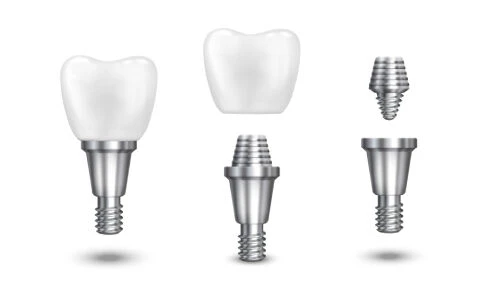
Almost every dental clinic in Kyiv and Ukraine can easily compile its own top list of topics that interest patients who have decided to get an implant. At Osadchyi Dental Clinic, we answer all questions in detail and provide consultations. However, many people want to receive information even before their consultation, so we decided to briefly go through the key points that are in the focus of patients’ attention.
Igor Osadchiy
How does tooth implantation occur
20.01.2025
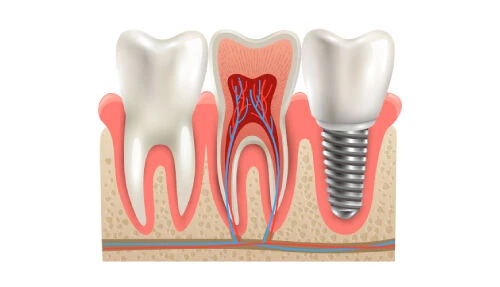
Dental implantation is one of the most popular procedures in modern dentistry. Since many patients come to the need of restoring a lost tooth, many questions arise about the procedure itself. In various forms, the following questions are heard: “How does the dental implantation process work?”, “How is a dental implant placed?”, “How is dental implantation performed?” We answer everything in detail and clearly.
Igor Osadchiy
White coating after tooth extraction
16.01.2025
Almost every dentist has encountered queries like: gums turned white after tooth extraction, pulled a tooth and there is a white pouch on the gums, something white and soft in the socket after tooth extraction, or white spots on the gums after tooth extraction. We want to reassure all patients: everything is fine, there is no cause for concern.