Didn’t find the necessary information? Make an appointment for a consultation with oral surgeon Ihor Oleksandrovych Osadchy.

Implant failure. Causes, symptoms, treatment
To correctly answer the question “why a dental implant fails,” you need to understand why healing happens and what healing is. First of all, from a biological point of view, the implant is not rejected. To place an implant, you need to create a hole in the jaw bone where a missing tooth was located and then insert the implant in that hole. Natural healing of the bone around the inserted implant equals implant integration. In case the bone heals with complications, the dental implant surgery cannot be considered successful!
Neither a doctor nor a patient can control the process of bone tissue healing. Only the body itself can control it. Since it is an uncontrolled process, it can be disturbed or disrupted. The reasons for these disorders and malfunctions may be different:
- specific features of the bone
- specific features of the anatomical structure around the bone
- incorrect (more traumatic than necessary) placement of the implant
That is, there can be many reasons for the disruption of biological healing, all of which cause the rejection of implants.
There is also such a concept as “implant over-tightening.”
It is possible to “overtighten” an implant (apply more torque to a key than you should) and then loosen it back. This leads to excessive compression of the bone by the implant. There are many technical ways to place implants without excessive compression.
It is believed that when screwed into the bone, an implant should be placed with a torque of no more than 35-40Ncm. It is the compression that allows for normal healing so that the implant can remain in the bone and heal without complications.
An over-tightened implant creates more compression, thereby leading to necrosis in the bone around the implant, which also results in implant loss.
We are opposed to screw-type implants because of the bone compression. Whether it’s 35 Ncm or 10 Ncm, it is still a pressure applied to the bone.
There is such a definition as a Haversian bone. That is, the bone is made up of beams, channels, connections, and cavities with vessels – it is like a sponge. These are cavities filled with blood vessels, lymphatic cells, and so on. If the Haversian bone is compressed during healing, it loses its structure completely, and the fact that the bone is compressed almost always leads to necrosis!
When we place a plateau-type implant, we already have a hole for the implant, and we don’t do anything else with the bone and don’t compress it; we just place the implant, and it heals.
It all boils down to biology, and we don’t know exactly how the body will react or what will happen during the healing process. Will we observe the formation of bone cells or will epithelial cells be produced, which is unacceptable in bone healing during implantation? To avoid this, the surgery itself must be minimally traumatic because the smaller the trauma to the bone, the less severe the symptoms of inflammation, and, therefore, the quicker and easier the healing.
It’s hard to say for sure. There are a lot of theories and multiple coatings that supposedly facilitate bone wound healing. I think that an implant should come in its pure form — a titanium implant not covered with anything, which does not affect the healing in any way. There are many serious clinical studies regarding implant coating materials, but the effectiveness of implant coatings has not been proven. Some articles claim that the healing was more efficient and the denser bone was formed around the implant, but they do not prove the effectiveness of any particular implant coating.
According to global statistics on implant healing, the implant survival rate ranges from 63 to 75%. We have different statistics since we don’t consider failed implants unsuccessful cases. We include cases where an implant failed to heal to negative statistics only when it’s no longer possible to place the implant at all. Our statistics show 98% positive cases when people left us with implants that healed successfully. The remaining 2% are those cases when the patient has a critical bone condition and I take a risk discussed with the patient in advance and say that I can place an implant in that bone, but the situation is complicated.
Going back to the question of “why the implant fails” (not taking into account the dentist’s probable lack of expertise), the primary reason is the structure of the bone in which we place the implant. Sometimes, the bone may not be biologically appropriate for an artificial tooth root placement.
The dentist’s experience and the implant chosen, its system and configuration, also matter. Implants are all different, and a wrong choice can lead to its loss.
Again, it’s worth referring to biology. There is a biological process behind any wound healing. It takes three to five days for the bone to heal. During these 5 days, healing processes take place according to certain rules. If the patient feels no pain on days 3 to 5, it is the first sign that the bone around the implant is healing, and the implant will probably remain intact.
We mostly use two-step implants that are sutured under the mucosa. If the mucosa is not swollen, the patient feels no pain, and there is no facial swelling or fever after suture removal in 7 days, this also indicates that the implant is likely to stay in the bone.
Besides, X-rays or CT scans can show us whether the implant will heal or not.
If the patient “forgets” about the implants and has no complaints (such as pain) during the recovery time, which lasts from 2 to 4 months, we can say that implant integration is successful. If the patient feels pain in the area where the implant is placed, the implant may fail shortly. In such cases, we don’t wait, but simply remove the implant.
When we believe that implant integration has already occurred, we begin the prosthetic stage. This is when we can know for sure that everything is fine by performing percussion diagnostics (by tapping on the implant). If we get a corresponding crystal sound, we can be 95% sure that the implant is integrated into the bone, the bone has healed, and osseointegration is successful. The clearly ringing sound indicates that the implant is firmly placed in the bone. But we don’t encourage patients to tap the implant with a spoon and check it out themselves.
To sum up, we can say that if the patient feels pain 2 weeks after the dental implant surgery, it is a clear indication that the implant is likely to fail. After the implant is placed, we supervise the patient for 1 week. The patient will feel pain during this time, which is normal (there is inflammation, which should be over in a week). But if the pain remains for over 2 weeks, something has obviously gone wrong, and the implant should be removed.
After the implant is removed, we clean the hole in the bone thoroughly. The bone then heals for another month, and after that, we repeat implant surgery. The second surgery is almost always successful because the bone quality “improves.” Reimplantation should be considered a treatment stage rather than a negative result.
There is even such a term as “implantation tests.” In this case, an implant of a smaller diameter is placed, and it undergoes all stages of healing. Then, this implant is removed and replaced by another (larger) implant that will heal.
The main causes of implant failure are:
- anatomical and biological features of the bone
- the wrong implant type for a particular clinical case
- mistakes made during implant placement, which cannot always be avoided even by an experienced doctor.

Igor Osadchiy
Surgeon
MD, physician with the highest skill accreditation level, member of EACMS (European Association of Cranio-Maxillofacial Surgeons), member of the Association of Implantologists of Ukraine. Alma mater: O.O. Bogomolets National Medical University. Year of graduation: 1984. Experience: Work experience: 38 years. For 13 years (1985-1998), taught dental surgery and maxillofacial surgery…
Igor Osadchiy
Treatment of tooth nerve inflammation
04.02.2025
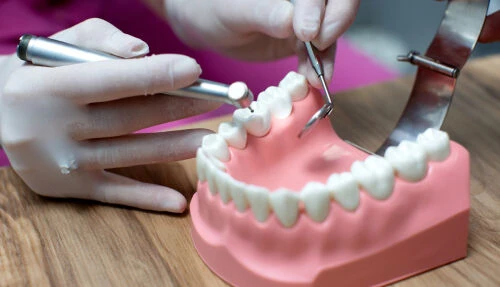
Despite the fact that dental procedures have become significantly less painful over the past few decades, not all patients visit the dentist on time. Often fears prevail over health needs. This is confirmed by the statistics of cases of such a disease as pulpitis, especially irreversible. In Kyiv, two out of ten patients come to the dentist complaining that their tooth nerves have become inflamed due to long-untreated caries.
Igor Osadchiy
Installation of a dental crown
03.02.2025
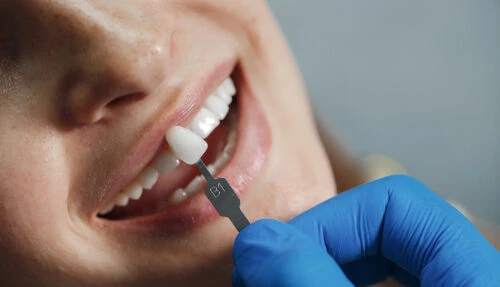
Installing dental crowns is an important dental procedure designed to restore the functionality and aesthetics of teeth. It may be necessary in cases of significant tooth damage, after caries treatment, due to trauma, or certain bite pathologies. There are many types of dental crowns that need to be carefully considered before making a decision.
Igor Osadchiy
Installation of a crown on an implant
03.02.2025
No patient visits a dental clinic for an implant, and they are not even interested in implantation as a service. Patients mostly need to restore a lost tooth, which means they need not only an artificial tooth root but also prosthetics — most often with a crown. The range of variations here is quite wide, which in turn affects both the price of the implant crown and the cost of the procedure.
Igor Osadchiy
Gingivitis
23.01.2025
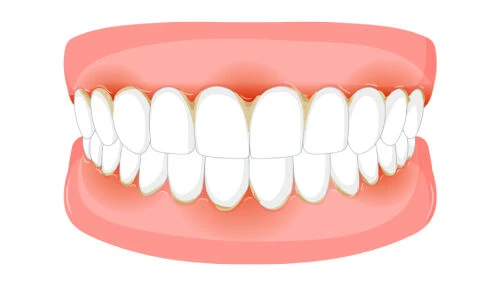
Gum disease (gingivitis) is a common problem faced by many dental clinics in Kyiv and Ukraine. Patients sometimes think that sensitivity and redness of the mucous membrane is a minor issue. However, one should remember about complications. Gingivitis has quite a few of them, so it is important to visit a clinic in time to eliminate the inflammatory process at an early stage.
Igor Osadchiy
Treatment of dental canals
23.01.2025
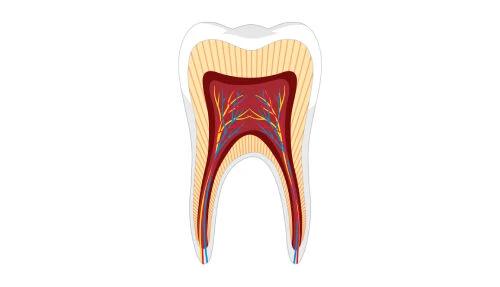
The vast majority of clinics in Ukraine provide endodontic services, and almost every adult patient has faced the need for nerve removal and root canal filling. Endodontic treatment is a fairly large field with a number of important nuances that patients should be aware of.

Igor Osadchiy
Jaw fracture
23.01.2025
Accidents, falls, and other situations that lead to injuries unfortunately do happen. Sometimes their consequence is a jaw fracture. It is important to note that patients cannot always understand that they have sustained a fracture, while successful rehabilitation directly depends on the speed of seeking medical help.
Igor Osadchiy
Teeth splinting
22.01.2025
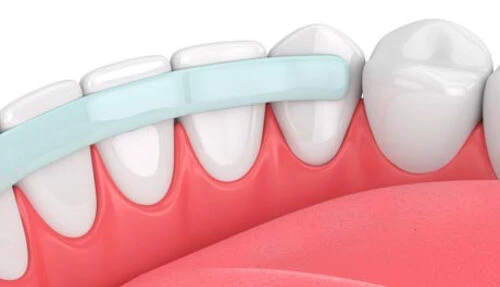
Many clinics in Kyiv offer teeth splinting as a treatment method, including for periodontal teeth. The danger of such manipulations is extremely high. We believe that patients should weigh the risks, and for this, they need to better understand the essence and purpose of such a medical procedure as teeth splinting.
Igor Osadchiy
Depulped tooth
20.01.2025
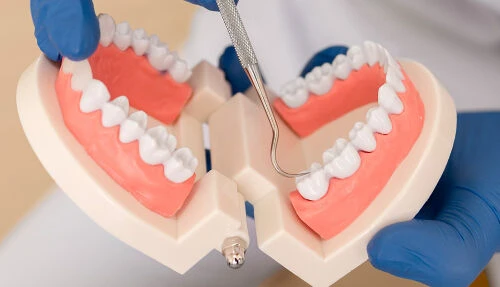
Endodontic treatment involving tooth devitalization has gained great popularity. It is now difficult to find an adult who has not had a nerve removed in at least one tooth. At the same time, many patients have doubts and do not always decide on depulpation, thereby condemning themselves to tooth extraction. So what is a depulped tooth and how does endodontic treatment work?
Igor Osadchiy
How a dental implant is placed
20.01.2025
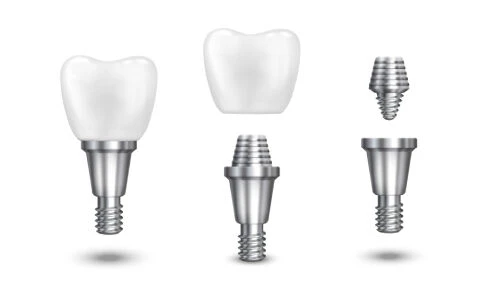
Almost every dental clinic in Kyiv and Ukraine can easily compile its own top list of topics that interest patients who have decided to get an implant. At Osadchyi Dental Clinic, we answer all questions in detail and provide consultations. However, many people want to receive information even before their consultation, so we decided to briefly go through the key points that are in the focus of patients’ attention.
Igor Osadchiy
How does tooth implantation occur
20.01.2025
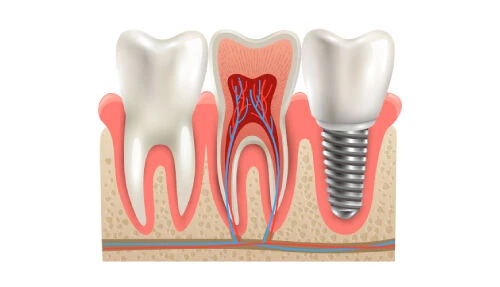
Dental implantation is one of the most popular procedures in modern dentistry. Since many patients come to the need of restoring a lost tooth, many questions arise about the procedure itself. In various forms, the following questions are heard: “How does the dental implantation process work?”, “How is a dental implant placed?”, “How is dental implantation performed?” We answer everything in detail and clearly.

Igor Osadchiy
White coating after tooth extraction
16.01.2025
Almost every dentist has encountered queries like: gums turned white after tooth extraction, pulled a tooth and there is a white pouch on the gums, something white and soft in the socket after tooth extraction, or white spots on the gums after tooth extraction. We want to reassure all patients: everything is fine, there is no cause for concern.