Didn’t find the necessary information? Make an appointment for a consultation with oral surgeon Ihor Oleksandrovych Osadchy.

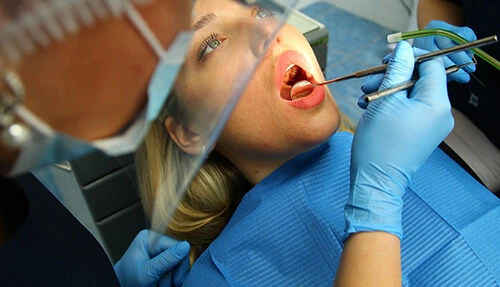
Is it painful to treat cavities
The most common questions asked of a dentist begin with the words “is it painful.” And the most frequent reason for visiting a dentist is caries. Thus, dentists quite often have to answer questions: “Is it painful to treat caries?”, “Is it painful to remove caries?” and even in a simpler formulation – “Is it painful to treat a tooth with a hole?” Naturally, all patients want to hear a simple answer: “No.” And in most cases, doctors manage to make the caries treatment procedure painless. However, there are a number of important points that the patient should be prepared for.
To correctly answer the question “Is it painful to treat cavities?”, one should understand which type of cavity is being discussed. A cavity (caries) is a disease that occurs as a result of the destruction of hard tooth tissues under the influence of acids.
Types of caries
| Name | Description |
| Enamel caries | Destruction of tooth enamel |
| Dentin caries | Destruction of dentin (softer tissue located beneath the enamel) |
| Cement (root) caries | Destruction of cement that covers the tooth root. Located beneath the mucosa |
| Cervical caries | Destruction in the neck area of the tooth: between the crown and root |
Stages of caries development
| Stage | Description |
| 1st Superficial caries |
This caries affects only the enamel and has a small area of damage |
| 2nd Moderate caries |
Spreads beyond the enamel and also affects the dentin |
| 3rd Deep caries |
Affects deeper layers of dentin, behind which nerve endings are located |
Depending on the type and stage of caries development, the likelihood of pain varies. There is a direct correlation: the greater the depth of tooth tissue damage from caries, the higher the probability and intensity of pain.
This is precisely why all doctors recommend seeking help at the first symptoms and not ignoring routine check-ups. In most cases, treating caries is painless when it is at the initial stage – there is no need even for anesthesia.
The absence of pain with superficial caries prevents patients from detecting it on their own. However, during a routine examination, the doctor can easily diagnose the onset of the disease and quickly eliminate it.
The second stage of the disease – moderate caries – is associated with partial damage to the dentin. Dentin is a softer tissue compared to enamel that contains nerve endings. The patient begins to experience pain and discomfort, which forces them to see a doctor.
The question “Is it painful to treat moderate caries?” is no longer so easy to answer definitively. Some patients experience only slight discomfort during treatment, while others face pain sensations, and the need for anesthesia arises.
At the third stage, when deep caries is involved, anesthesia is always used. An additional danger of deep caries development is that dentin damage can reach the nerve, leading to a condition called pulpitis. Its treatment will be more complex and involves tooth devitalization (nerve removal and canal filling).
We recommend that patients stop tormenting themselves with the question “Is deep caries painful to treat?” and not waste time on doubts. The sooner you see a doctor, the faster and cheaper they will relieve you of pain.
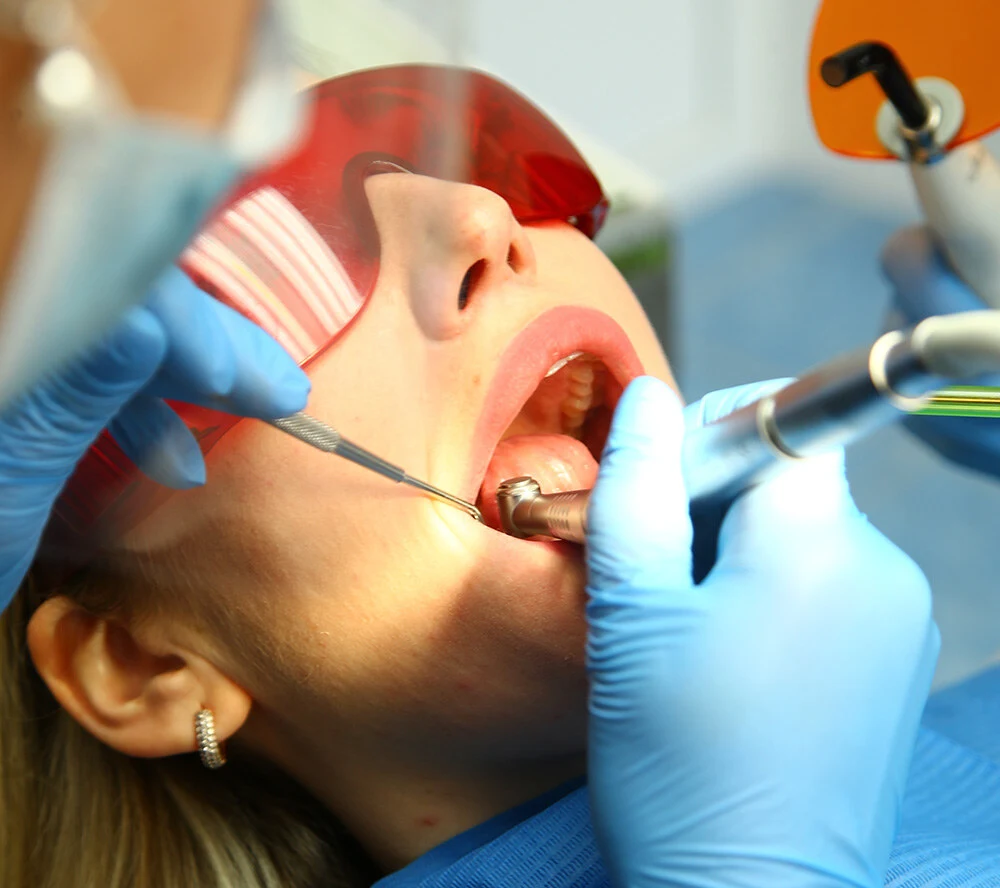
Treating caries between teeth (on approximal surfaces) has its own peculiarity: the doctor needs to place an isolation system (rubber dam). Installing such a system may cause the patient discomfort. Using wedges, matrices, and other instruments during treatment can also provoke unpleasant sensations.
However, this is not actually about pain, and the question “Is it painful to remove caries from approximal surfaces?” can be answered as follows: “No, but slight discomfort is possible.”
Cervical caries is associated with the destruction of the part of the tooth located between the crown and root (at the gum line). Both enamel and cement near the tooth root can be affected. Meanwhile, with cement caries, only the cement surface of the tooth root is destroyed.
Cervical caries can be of both moderate and deep degree, therefore it requires the use of good anesthesia. Cervical caries is painful to treat only in cases where additional factors influence the occurrence of pain.
Discomfort and pain that occur during caries treatment may be associated with:
- nerve irritation.
During the removal of damaged tissues, a nerve may be affected, which in turn provokes intense pain. Nerve irritation is possible during the treatment of deep caries;
- dentin sensitivity.
Removal of damaged tissues can provoke dentin sensitivity due to exposure of open tubules;
- tissue overheating.
During treatment of the affected area with a bur, tissue overheating is possible, which provokes pain;
- patient anxiety and stress.
Psychological factors can also influence the intensity of pain and its perception.
It should be noted that the presence of pain is not related to the location of the tooth. Therefore, all clarifying questions such as: “Is it painful to treat caries on front teeth?”, “Is it painful to treat caries on back teeth?”, “Is it painful to treat caries under a filling?” can be answered: “It depends on the degree of carious destruction.”
Modern dentistry uses the best anesthesia that guarantees good pain relief, does not cause allergic reactions, and is suitable even for pregnant women, as it does not penetrate the hematoplacental barrier. However, human physiology is quite complex, and there are things that even modern anesthetics cannot overcome.
In the coronal part of the tooth, beneath odontoblasts (cells involved in tooth formation), lies the Weil zone. It contains blood capillaries and nerve fibers (Raschkow plexus). It is impossible to anesthetize the Raschkow plexus with any type of anesthesia, so minor periodic pain sensations at the enamel-dentin border may occur in patients during tooth treatment with a bur, even with a fully anesthetized tooth.
Partly, it is the impossibility of affecting the Raschkow plexus that generates patients’ fears and numerous questions about whether it is painful to remove caries from teeth. However, there is no need to worry, as experienced doctors know how to minimize pain even in cases when the Raschkow plexus reacts.
How pain is minimized at our clinic:
- using the best anesthetics;
- using the sharpest burs;
- applying water irrigation to prevent tissue overheating.
Modern dentistry operates on the principle that the patient in the chair should not only be free from pain, but also feel comfortable. Overcoming patients’ fears of “white coats” is not easy, but one should understand: experienced specialists possess a large set of tools and deep knowledge. Even in complex clinical cases, our doctors will do everything possible to ensure the patient does not experience pain. On the other hand, patients themselves can protect themselves from unnecessary worries and stress: it is enough not to ignore routine check-ups and prevent the development of diseases. Treating caries at the first stage is simpler, faster, and cheaper.
Hygiene is of great importance, but one should not think that caries develops only in those who do not brush their teeth or brush insufficiently thoroughly. There is a genetic predisposition to the development of this disease.
Yes. Caries under a filling can develop as a result of unsuccessful filling, filling wear, or marginal defects when the filling does not fit tightly against the tooth at the edge. Bacteria accumulate in such places and provoke carious processes.
This is a misconception. In the initial stages, caries affects the enamel, and only upon reaching the dentin, which contains nerve endings, does the disease begin to provoke pain. Only a dentist can detect enamel caries on the back surfaces of teeth during an examination. Therefore, it is very important to visit the dentist regularly.

Igor Osadchiy
Surgeon
MD, physician with the highest skill accreditation level, member of EACMS (European Association of Cranio-Maxillofacial Surgeons), member of the Association of Implantologists of Ukraine. Alma mater: O.O. Bogomolets National Medical University. Year of graduation: 1984. Experience: Work experience: 38 years. For 13 years (1985-1998), taught dental surgery and maxillofacial surgery…
Igor Osadchiy
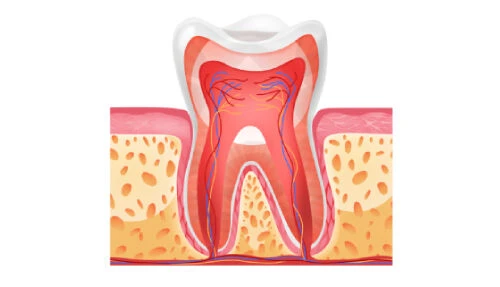
Treatment of tooth nerve inflammation
04.02.2025
Despite the fact that dental procedures have become significantly less painful over the past few decades, not all patients visit the dentist on time. Often fears prevail over health needs. This is confirmed by the statistics of cases of such a disease as pulpitis, especially irreversible. In Kyiv, two out of ten patients come to the dentist complaining that their tooth nerves have become inflamed due to long-untreated caries.
Igor Osadchiy
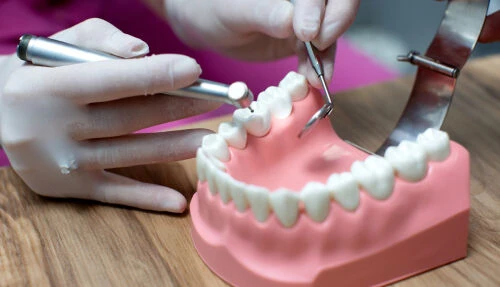
Installation of a dental crown
03.02.2025
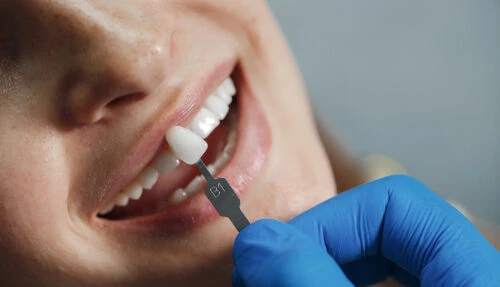
Installing dental crowns is an important dental procedure designed to restore the functionality and aesthetics of teeth. It may be necessary in cases of significant tooth damage, after caries treatment, due to trauma, or certain bite pathologies. There are many types of dental crowns that need to be carefully considered before making a decision.
Igor Osadchiy
Installation of a crown on an implant
03.02.2025
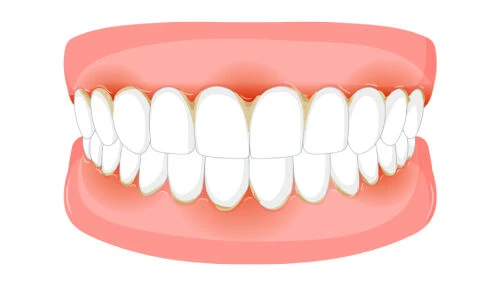
No patient visits a dental clinic for an implant, and they are not even interested in implantation as a service. Patients mostly need to restore a lost tooth, which means they need not only an artificial tooth root but also prosthetics — most often with a crown. The range of variations here is quite wide, which in turn affects both the price of the implant crown and the cost of the procedure.
Igor Osadchiy
Gingivitis
23.01.2025
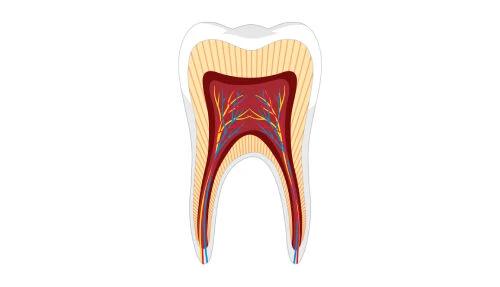
Gum disease (gingivitis) is a common problem faced by many dental clinics in Kyiv and Ukraine. Patients sometimes think that sensitivity and redness of the mucous membrane is a minor issue. However, one should remember about complications. Gingivitis has quite a few of them, so it is important to visit a clinic in time to eliminate the inflammatory process at an early stage.
Igor Osadchiy
Treatment of dental canals
23.01.2025
The vast majority of clinics in Ukraine provide endodontic services, and almost every adult patient has faced the need for nerve removal and root canal filling. Endodontic treatment is a fairly large field with a number of important nuances that patients should be aware of.

Igor Osadchiy
Jaw fracture
23.01.2025
Accidents, falls, and other situations that lead to injuries unfortunately do happen. Sometimes their consequence is a jaw fracture. It is important to note that patients cannot always understand that they have sustained a fracture, while successful rehabilitation directly depends on the speed of seeking medical help.
Igor Osadchiy
Teeth splinting
22.01.2025
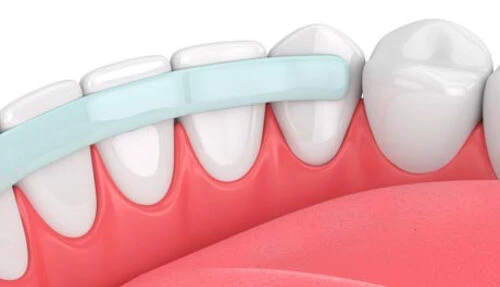
Many clinics in Kyiv offer teeth splinting as a treatment method, including for periodontal teeth. The danger of such manipulations is extremely high. We believe that patients should weigh the risks, and for this, they need to better understand the essence and purpose of such a medical procedure as teeth splinting.
Igor Osadchiy
Depulped tooth
20.01.2025
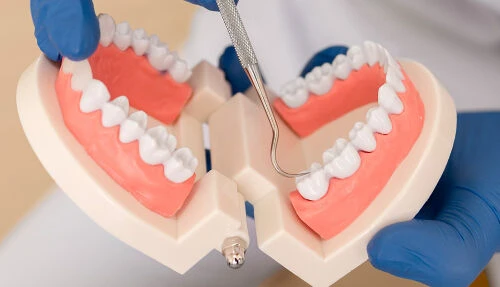
Endodontic treatment involving tooth devitalization has gained great popularity. It is now difficult to find an adult who has not had a nerve removed in at least one tooth. At the same time, many patients have doubts and do not always decide on depulpation, thereby condemning themselves to tooth extraction. So what is a depulped tooth and how does endodontic treatment work?
Igor Osadchiy
How a dental implant is placed
20.01.2025
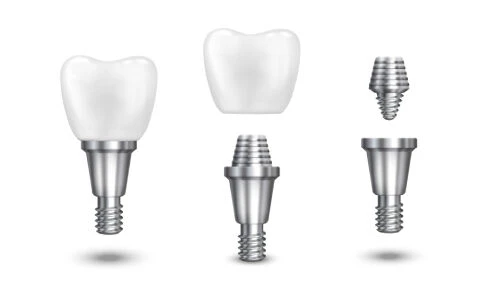
Almost every dental clinic in Kyiv and Ukraine can easily compile its own top list of topics that interest patients who have decided to get an implant. At Osadchyi Dental Clinic, we answer all questions in detail and provide consultations. However, many people want to receive information even before their consultation, so we decided to briefly go through the key points that are in the focus of patients’ attention.
Igor Osadchiy
How does tooth implantation occur
20.01.2025
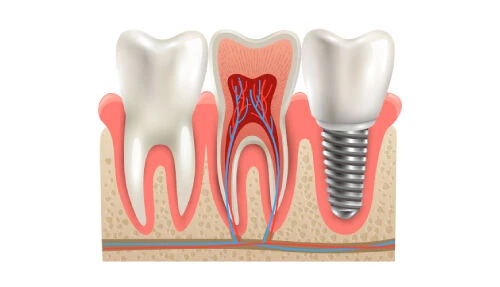
Dental implantation is one of the most popular procedures in modern dentistry. Since many patients come to the need of restoring a lost tooth, many questions arise about the procedure itself. In various forms, the following questions are heard: “How does the dental implantation process work?”, “How is a dental implant placed?”, “How is dental implantation performed?” We answer everything in detail and clearly.

Igor Osadchiy
White coating after tooth extraction
16.01.2025
Almost every dentist has encountered queries like: gums turned white after tooth extraction, pulled a tooth and there is a white pouch on the gums, something white and soft in the socket after tooth extraction, or white spots on the gums after tooth extraction. We want to reassure all patients: everything is fine, there is no cause for concern.