Didn’t find the necessary information? Make an appointment for a consultation with oral surgeon Ihor Oleksandrovych Osadchy.


Odontogenic maxillary sinusitis
Probably every adult has heard of such a disease as maxillary sinusitis. Many people have not only heard about it but also experienced unpleasant feelings associated with the inflammation of maxillary sinuses or sinuses of the upper jaw. But not everyone knows that maxillary sinuses may be of odontogenic origin, and this is what we will talk about in this article.
Maxillary sinusitis can be caused by chronic inflammation in the nasal cavity and badly treated or untreated teeth anatomically connected to the lower sections of the maxillary sinus by their roots. Dental or odontogenic maxillary sinuses are most often unilateral. That is, inflammation in one of the maxillary sinuses results from dental disease or poor dental treatment in 95% of cases.
Maxillary sinusitis is an inflammation of the maxillary sinus.
The inside of this sinus (cavity) is covered by a mucous membrane (epithelium). Inflammation of the nasal mucosa can be purulent or serous.
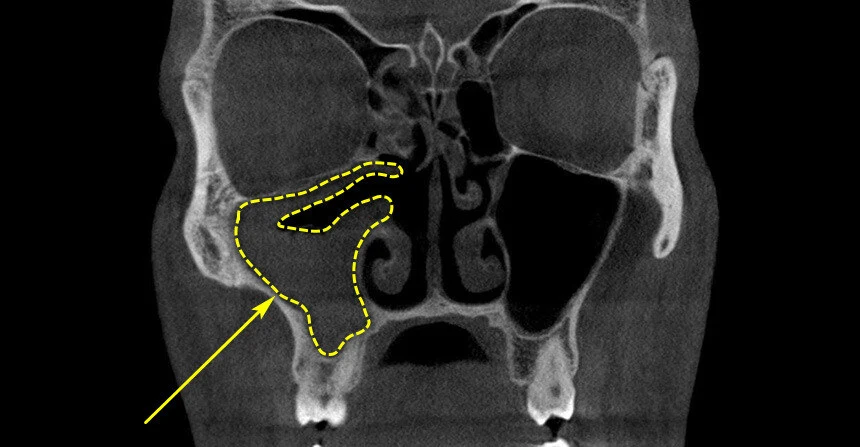
Sinusitis on X-ray. The right maxillary sinus is filled with fluid.
The inflamed epithelium behaves differently depending on the phase (acute or chronic). The chronic phase is when the mucosal epithelium overgrows and partially turns into polyps or cysts. Sometimes, during tooth extraction, the tooth root gets into the maxillary sinus, and if it is not extracted, it will cause infection of the maxillary sinus.
It can also be caused by filling material pulled behind the apex of the root during endodontic treatment (root canal filling).
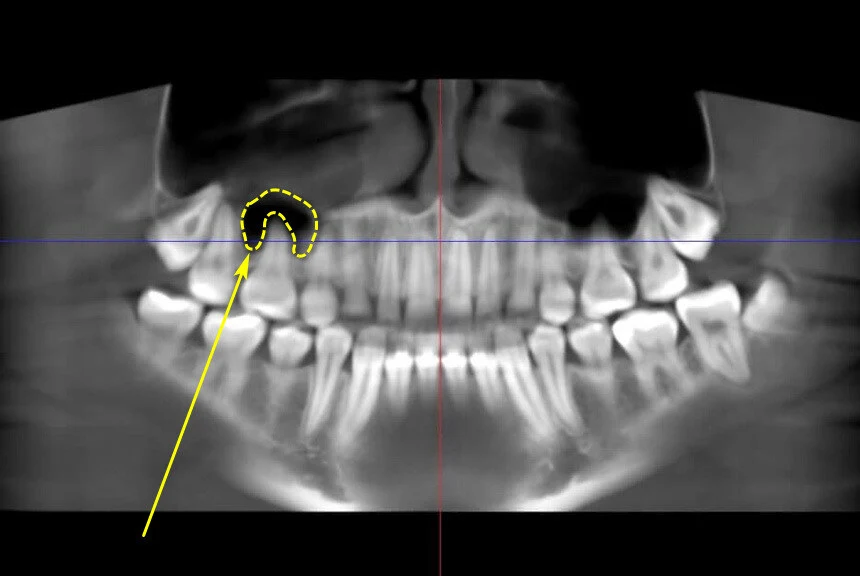
Radicular cyst that has grown into the maxillary sinus.
Does maxillary sinusitis hurt? Maxillary sinusitis is terribly unpleasant.
Chronic conditions provoke frequent rhinitis throughout the year. A person with chronic maxillary sinusitis always has difficulties in nasal breathing (on the side suffering from maxillary sinusitis). The condition can be accompanied by headaches, migraines, and neuralgia. Some people complain about unnatural night snoring. Often, after surgery, the patient says that nasal breathing and the ability to sleep normally restores and headaches disappear.
Odontogenic maxillary sinusitis most often occurs on one side and can be right or left-sided. Maxillary sinusitis is related to the fact that, anatomically, teeth are connected by their roots to the lower part of the maxillary sinus cavity. Inflammation of these teeth and subsequent treatment can lead to inflammation of the maxillary mucosa or maxillary sinusitis.
Maxillary sinusitis can be acute, purulent or serous, chronic, polypous, etc. In any case, maxillary sinusitis causes much unpleasant pain, while all the types are associated with diseases of the teeth on the upper jaw.
The main cause is dental diseases and dental treatment that provokes the development of maxillary sinusitis. This is how it happens: for example, after the teeth restoration (filling), the filling mass enters the maxillary cavity, which is an active component for inflammation of the nasal mucosa. This allows introducing infection to the maxillary sinus cavity, when the tooth is treated, but the infection in the maxillary cavity continues to live and develop.
Maxillary sinusitis can also develop as a result of improperly placed dental implants. For example, when a dental implant is 10 mm long, and the bone height is 7 mm, this means that 7 mm of the implant sits in the bone while the remaining 3 mm is in the maxillary sinus cavity. Such an implant hurts the mucous membrane, which leads to chronic inflammation of the maxillary sinus cavity.
It turns out that the implant and the dental crown on it work fine, but maxillary sinusitis occurs. By the way, this is yet another reason for the installation of short plateau-type implants. When placing them, the probability of a maxillary sinus cavity being punctured by the implant tends to zero.
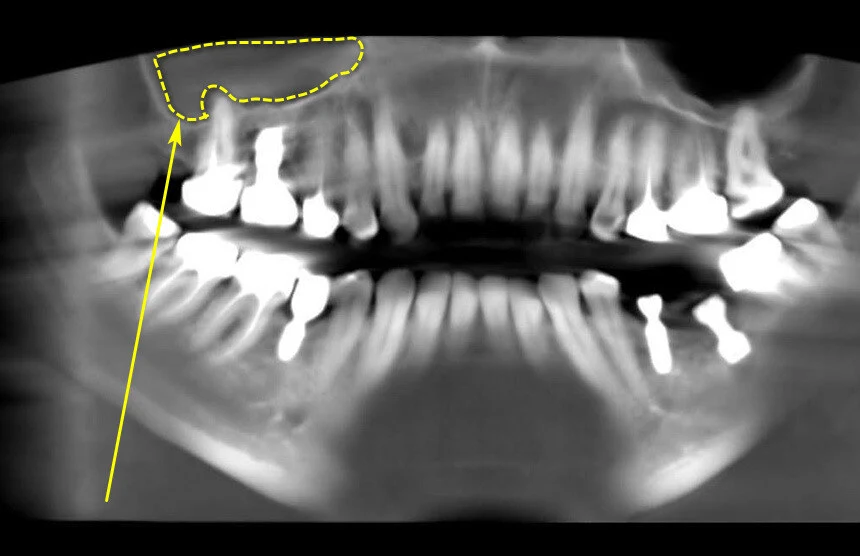
Sinusitis on X-ray.
The causes of maxillary sinusitis can also include sinus-lift surgery (augmentation of the jaw bone volume for a dental implant). The point is that there is Schneider’s membrane between the bone and the maxillary sinus mucosa, which belongs to epithelial layers. During bone augmentation, dentists tear it away from the bone base and put bone material between the maxillary sinus mucosa and the bone to place the implant there afterward, without damaging the Schneider’s membrane. So, at this point, a dome of bone mass is formed in the maxillary sinus, and it is very difficult for the maxillary sinus epithelium to work through the “bump” and evacuate biological fluid from the maxillary sinus, which always leads to hypertrophy of the mucosa. And this results in breathing trouble, rhinitis, etc.
There is also such a diagnosis as a radicular cyst grown into the maxillary sinus cavity. As a result of chronic inflammation, cystic granuloma develops on the tooth top, penetrates the maxillary sinus cavity, and transforms into a large cyst. The cyst enlarges and fills the cavity, causing a lot of discomfort to the patient.
Can a person understand that he/she has odontogenic maxillary sinusitis without attending a specialist? Most often, people visit an ENT physician when they have inflammation in the nose (sinusitis or maxillary sinusitis). That makes sense since a person has problems with the nose: difficulty with breathing, headaches associated with frequent rhinitis, and so on. At this point, the person hardly thinks of teeth, especially since maxillary sinusitis occurs after the tooth has already been treated.
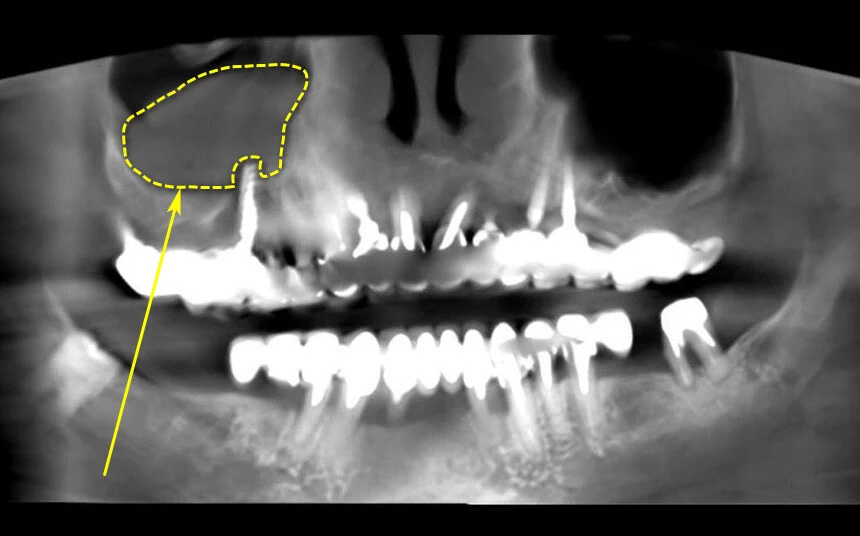
Sinusitis of the right maxillary sinus caused by perforation of the sinus by a dental implant.
Of course, if the doctor is competent, he/she will direct the patient to a maxillofacial surgeon because maxillary sinusitis can only be treated by such a specialist. Answering the question, we can say that a patient is rarely able to independently determine what type of maxillary sinusitis he/she has.
Often, a patient pays the initial visit to an ENT physician. The nose hurts, there is difficulty in breathing, and the ENT doctor says, “You have an allergy.” The specialist starts identifying an allergic component, but there is none. Next, the specialist suggests you have nasal septum deviation. So, you get the septum aligned, but the symptoms still don’t disappear. Headaches — well, let’s see a neurologist; maybe, it’s neuralgia. As the result, people come to a dentist in the last turn, when everything has been ruled out. And when the person comes to the dentist, it turns out that two teeth with missing nerves were treated incorrectly, a cyst has grown into the maxillary sinus cavity, and it is completely dental or maxillofacial history.
First and foremost, a diagnosis is an interview with a patient about his or her medical history. Typically, within the interview, the patient indicates that there has been dental treatment. There is always an underlying cause that precedes maxillary sinusitis.
Of course, we resort to CT or MRI studies when diagnosing maxillary sinusitis. With CT, we can study the condition of the teeth, the jaw, and the maxillary sinus, and we study the condition of the mucosa itself with MRI. This way, we can understand if it is a neoplasm, a cyst, or just a filled-up mucosa of the maxillary sinus. That’s the basic diagnostic routine.
Maxillary sinusitis is already a complication, but delaying treatment can lead to years of migraines, difficulty breathing (dizziness), and the development of a non-specific infection (anaerobic, viral, or fungal infections).
A very severe complication of maxillary sinusitis is pansinusitis, which causes inflammation of all nasal cavities, the lamina (middle nasal cavity), and frontal sinuses. Allergic reactions, allergic rhinitis, and bronchial asthma are aggravated.
First of all, it is necessary to determine the cause of maxillary sinusitis to understand what treatment to perform. Most often, if there are cysts grown into the maxillary cavity or visible/significant changes in the maxillary cavity, a surgical treatment called maxillary sinusotomy (removal of the altered mucosa) is necessary.
Maxillary sinusotomy is a surgical procedure. It is performed on an outpatient basis (in oral surgery). As a rule, if a tooth causes maxillary sinusitis, the surgeon extracts it, enters the maxillary cavity through the extraction pit, and gently removes excess mucosa.
If the tooth was extracted long ago, maxillary sinusotomy is performed with piezotome (ultrasonic scalpel) through the outer wall of the maxillary cavity, which is done in the patient’s mouth. An incision is made over the teeth, and the maxillary sinus cavity is cleaned through the outer wall.
The surgery is painless and minimally traumatic. It is performed under local anesthesia, and the patient does not feel any discomfort after the surgery. On the contrary, nasal breathing improves, headaches disappear (no swelling or bleeding after the surgery), and the patient feels better.

Igor Osadchiy
Surgeon
MD, physician with the highest skill accreditation level, member of EACMS (European Association of Cranio-Maxillofacial Surgeons), member of the Association of Implantologists of Ukraine. Alma mater: O.O. Bogomolets National Medical University. Year of graduation: 1984. Experience: Work experience: 38 years. For 13 years (1985-1998), taught dental surgery and maxillofacial surgery…
Igor Osadchiy
Treatment of tooth nerve inflammation
04.02.2025
Despite the fact that dental procedures have become significantly less painful over the past few decades, not all patients visit the dentist on time. Often fears prevail over health needs. This is confirmed by the statistics of cases of such a disease as pulpitis, especially irreversible. In Kyiv, two out of ten patients come to the dentist complaining that their tooth nerves have become inflamed due to long-untreated caries.
Igor Osadchiy
Installation of a dental crown
03.02.2025
Installing dental crowns is an important dental procedure designed to restore the functionality and aesthetics of teeth. It may be necessary in cases of significant tooth damage, after caries treatment, due to trauma, or certain bite pathologies. There are many types of dental crowns that need to be carefully considered before making a decision.
Igor Osadchiy
Installation of a crown on an implant
03.02.2025
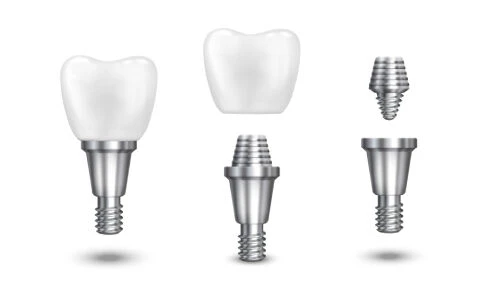
No patient visits a dental clinic for an implant, and they are not even interested in implantation as a service. Patients mostly need to restore a lost tooth, which means they need not only an artificial tooth root but also prosthetics — most often with a crown. The range of variations here is quite wide, which in turn affects both the price of the implant crown and the cost of the procedure.
Igor Osadchiy
Gingivitis
23.01.2025
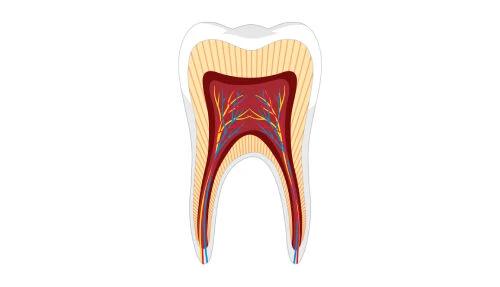
Gum disease (gingivitis) is a common problem faced by many dental clinics in Kyiv and Ukraine. Patients sometimes think that sensitivity and redness of the mucous membrane is a minor issue. However, one should remember about complications. Gingivitis has quite a few of them, so it is important to visit a clinic in time to eliminate the inflammatory process at an early stage.
Igor Osadchiy
Treatment of dental canals
23.01.2025
The vast majority of clinics in Ukraine provide endodontic services, and almost every adult patient has faced the need for nerve removal and root canal filling. Endodontic treatment is a fairly large field with a number of important nuances that patients should be aware of.

Igor Osadchiy
Jaw fracture
23.01.2025
Accidents, falls, and other situations that lead to injuries unfortunately do happen. Sometimes their consequence is a jaw fracture. It is important to note that patients cannot always understand that they have sustained a fracture, while successful rehabilitation directly depends on the speed of seeking medical help.
Igor Osadchiy
Teeth splinting
22.01.2025
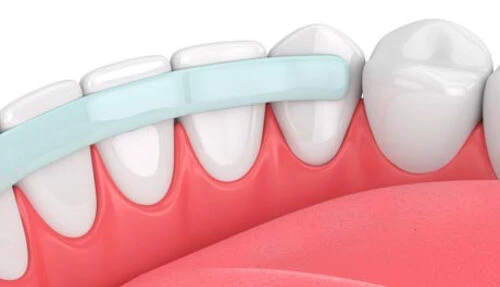
Many clinics in Kyiv offer teeth splinting as a treatment method, including for periodontal teeth. The danger of such manipulations is extremely high. We believe that patients should weigh the risks, and for this, they need to better understand the essence and purpose of such a medical procedure as teeth splinting.
Igor Osadchiy
Depulped tooth
20.01.2025
Endodontic treatment involving tooth devitalization has gained great popularity. It is now difficult to find an adult who has not had a nerve removed in at least one tooth. At the same time, many patients have doubts and do not always decide on depulpation, thereby condemning themselves to tooth extraction. So what is a depulped tooth and how does endodontic treatment work?
Igor Osadchiy
How a dental implant is placed
20.01.2025
Almost every dental clinic in Kyiv and Ukraine can easily compile its own top list of topics that interest patients who have decided to get an implant. At Osadchyi Dental Clinic, we answer all questions in detail and provide consultations. However, many people want to receive information even before their consultation, so we decided to briefly go through the key points that are in the focus of patients’ attention.
Igor Osadchiy
How does tooth implantation occur
20.01.2025
Dental implantation is one of the most popular procedures in modern dentistry. Since many patients come to the need of restoring a lost tooth, many questions arise about the procedure itself. In various forms, the following questions are heard: “How does the dental implantation process work?”, “How is a dental implant placed?”, “How is dental implantation performed?” We answer everything in detail and clearly.

Igor Osadchiy
White coating after tooth extraction
16.01.2025
Almost every dentist has encountered queries like: gums turned white after tooth extraction, pulled a tooth and there is a white pouch on the gums, something white and soft in the socket after tooth extraction, or white spots on the gums after tooth extraction. We want to reassure all patients: everything is fine, there is no cause for concern.