Didn’t find the necessary information? Make an appointment for a consultation with oral surgeon Ihor Oleksandrovych Osadchy.


Why is it better to avoid sinus lift surgery?
A sinus lift is an upper jaw surgery aimed at increasing the bone volume when it is not high enough for placing an ordinary screw-type implant with a length of 8 to 12 mm.
The essence of the surgery is to elevate the maxillary sinus mucosa, followed by the placement of osteoplastic material.
Osteoplastic material can be:
- Allogeneic — taken from a human donor
- Xenogenic — taken from an animal donor (cow, pig)
- Synthetic — chemical (calcium phosphate)
- Autogenous — taken from the patient during surgery.
All officially registered bone materials are cleaned, tested for diseases, such as hepatitis, HIV, and others, and subsequently sterilized in individual containers using gamma rays.
Anatomically, the tooth root is located in the alveolar process of the jaw. The bone deteriorates and changes its structure due to dental diseases: periodontitis (periodontal disease) and others. After tooth extraction, the bone changes both in volume and height. The bone eventually becomes thinner in the area with no teeth. Since there is no load on the bone, the blood supply decreases, and the bone diminishes in volume. For this reason, it makes sense to place dental implants immediately after a tooth extraction or as soon as possible.
Often, there are difficulties with the placement of implants in the lateral areas of the upper jaw, where the teeth roots are physiologically connected to the maxillary sinus cavity, because the bone tissue lacks the necessary volume (height). If an implant of standard length is installed in such a bone without any bone grafts, part of the implant may penetrate the maxillary sinus cavity located above. This phenomenon is extremely unpleasant and dangerous and can lead to chronic inflammation — maxillary sinusitis (a common complication observed after dental implants on the upper jaw).
To prevent this, the internal lining of the maxillary sinus cavity must be separated from the bone and filled with a bone substitute. This is the very essence and point of sinus lift surgery. That is, we lift the mucosa of the maxillary sinus cavity, put bone material, which will eventually (usually, in 3-6 months) become a stable bone modulating structure, and then install a dental implant.
The difference lies in the technique used by the surgeon to perform bone-plastic surgery. If we are talking about a closed sinus lift, we lift the mucosa of the maxillary sinus cavity through the hole we make for the future implant. Gently, using a tool (there are many of them), we lift the mucosa and insert the bone material there without opening the outer lateral wall of the sinus.
Open sinus lift surgery is when we open the lateral wall of the upper jaw bone, make a “window” in the maxillary sinus above the tooth roots, gently move the mucosa away from the inner wall of the bone, and put the bone material there. Then, this place is closed with a membrane, sutured, and healed. Only upon healing, we can place a dental implant without damaging the integrity of the maxillary sinus cavity.


During sinus lift surgery, we artificially increase the volume of the alveolar bone, but we decrease the anatomical volume of the maxillary sinus cavity, which is the nasal cavity and is very important for nasal breathing. Besides, such an intervention can lead to other complications, which we will discuss in a separate section. But several important points go beyond the teeth issue.
First. Suppose a patient has cardioneurosis (heart disease). Where to go and what to do? There is a very simple method: 15 deep inhalations through the nose and exhalations through the mouth, and the cardioneurosis noticeably decreases, making the person feel better. In other words, if nature has created us with a certain volume of maxillary cavities, through which the physiological volume of air circulates, we should not reduce it by any manipulations.
Second. There is a scientific opinion that a decrease in the volume of the maxillary cavities leads to bronchial asthma. Yes, we can install a tooth with the help of sinus lift surgery, but in turn, you have to be prepared for the risk of developing bronchial asthma.
Third. The bone material used during sinus lift surgery will never become your native bone, just like in the case of hair or nail extensions. The effectiveness of sinus lift surgery is not predictable enough. People are different, and each body reacts differently to foreign materials. Someone’s body will “eat” all the bone material used to augment the bone (it will simply be resorbed). A sinus lift isn’t effective in all cases, and it is not for everyone.
Fourth. Autoimmune reaction. We inject either non-native protein (if it is organic bone) or non-native material (if it is calcium phosphate) into the person’s body. As stated above, there are several types of bone materials used. They are allogeneic human bone material (bone material is taken from a donor bank), xenogenic bone material (bulls or pigs from which biological bone material is taken), and synthetic bone material (calcium phosphate). And a person can develop an autoimmune reaction, which is a severe disease, to all these materials.
The most suitable material for bone plastic surgeries, including a sinus lift, is a patient’s bone. But if we take a piece of bone from the human body in one place and transplant it to another place, the body can still perceive this as a problem and simply “destroy” it.
First. Sometimes, sinus lift surgery can be pointless because we don’t get the extra amount of bone that we intended to get. And this happens quite often.
Second. We break the integrity of the maxillary sinus. We’re interfering in a non-dental area.
Third. By performing sinus lift surgery for the subsequent placement of screw-type implants, we essentially agree to two surgeries: the first is “bone augmentation,” and the second is the placement of a dental implant.
Is there an option to place a dental implant without a sinus lift? In most cases, we can offer an alternative to sinus lift surgery – short plateau-type dental implants that can be placed in thin bone without the need for sinus lift surgery. Unlike regular screw-type implants, short plateau-type implants do not cause any problems thanks to their configuration and surface.
The advantages of short implants are that the placement result is more predictable and the recovery time is shorter (complete healing of the bone around the implant takes about 2 months).
You should also know that there are no medical indications for sinus lift surgery.


Igor Osadchiy
Surgeon
MD, physician with the highest skill accreditation level, member of EACMS (European Association of Cranio-Maxillofacial Surgeons), member of the Association of Implantologists of Ukraine. Alma mater: O.O. Bogomolets National Medical University. Year of graduation: 1984. Experience: Work experience: 38 years. For 13 years (1985-1998), taught dental surgery and maxillofacial surgery…
Igor Osadchiy
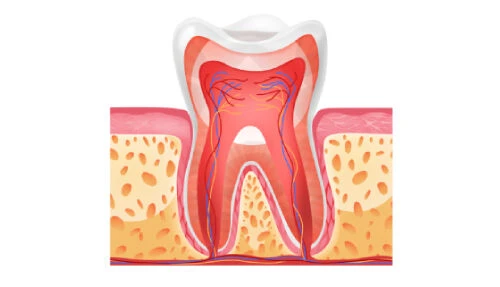
Treatment of tooth nerve inflammation
04.02.2025
Despite the fact that dental procedures have become significantly less painful over the past few decades, not all patients visit the dentist on time. Often fears prevail over health needs. This is confirmed by the statistics of cases of such a disease as pulpitis, especially irreversible. In Kyiv, two out of ten patients come to the dentist complaining that their tooth nerves have become inflamed due to long-untreated caries.
Igor Osadchiy
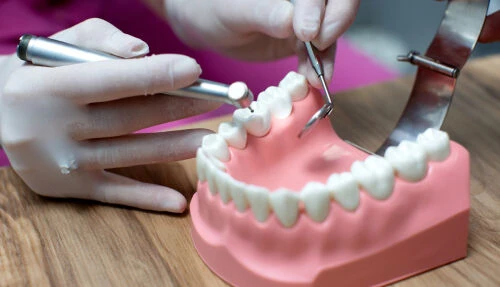
Installation of a dental crown
03.02.2025
Installing dental crowns is an important dental procedure designed to restore the functionality and aesthetics of teeth. It may be necessary in cases of significant tooth damage, after caries treatment, due to trauma, or certain bite pathologies. There are many types of dental crowns that need to be carefully considered before making a decision.
Igor Osadchiy
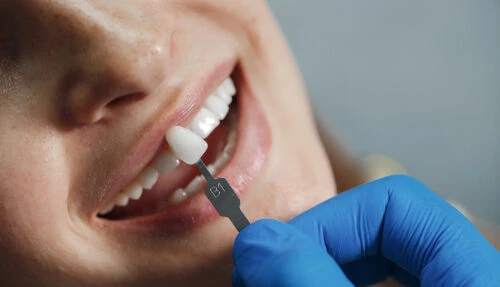
Installation of a crown on an implant
03.02.2025
No patient visits a dental clinic for an implant, and they are not even interested in implantation as a service. Patients mostly need to restore a lost tooth, which means they need not only an artificial tooth root but also prosthetics — most often with a crown. The range of variations here is quite wide, which in turn affects both the price of the implant crown and the cost of the procedure.
Igor Osadchiy
Gingivitis
23.01.2025
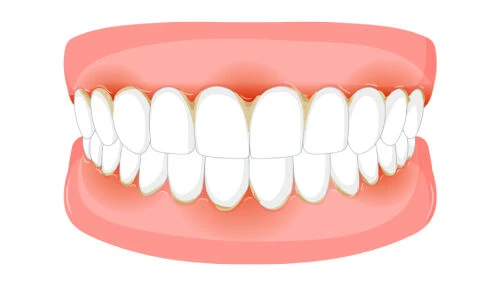
Gum disease (gingivitis) is a common problem faced by many dental clinics in Kyiv and Ukraine. Patients sometimes think that sensitivity and redness of the mucous membrane is a minor issue. However, one should remember about complications. Gingivitis has quite a few of them, so it is important to visit a clinic in time to eliminate the inflammatory process at an early stage.
Igor Osadchiy
Treatment of dental canals
23.01.2025
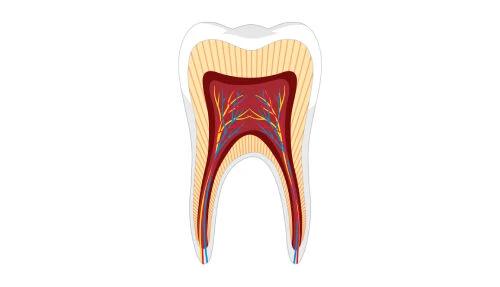
The vast majority of clinics in Ukraine provide endodontic services, and almost every adult patient has faced the need for nerve removal and root canal filling. Endodontic treatment is a fairly large field with a number of important nuances that patients should be aware of.

Igor Osadchiy
Jaw fracture
23.01.2025
Accidents, falls, and other situations that lead to injuries unfortunately do happen. Sometimes their consequence is a jaw fracture. It is important to note that patients cannot always understand that they have sustained a fracture, while successful rehabilitation directly depends on the speed of seeking medical help.
Igor Osadchiy
Teeth splinting
22.01.2025
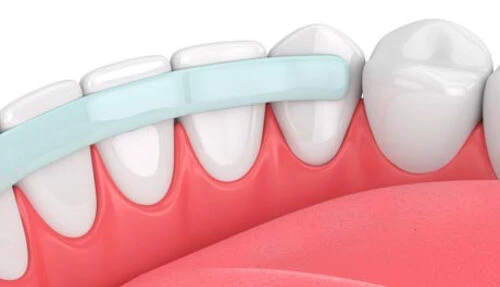
Many clinics in Kyiv offer teeth splinting as a treatment method, including for periodontal teeth. The danger of such manipulations is extremely high. We believe that patients should weigh the risks, and for this, they need to better understand the essence and purpose of such a medical procedure as teeth splinting.
Igor Osadchiy
Depulped tooth
20.01.2025
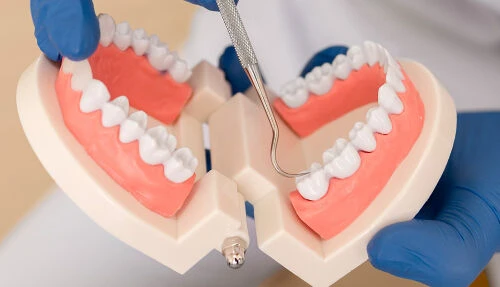
Endodontic treatment involving tooth devitalization has gained great popularity. It is now difficult to find an adult who has not had a nerve removed in at least one tooth. At the same time, many patients have doubts and do not always decide on depulpation, thereby condemning themselves to tooth extraction. So what is a depulped tooth and how does endodontic treatment work?
Igor Osadchiy
How a dental implant is placed
20.01.2025
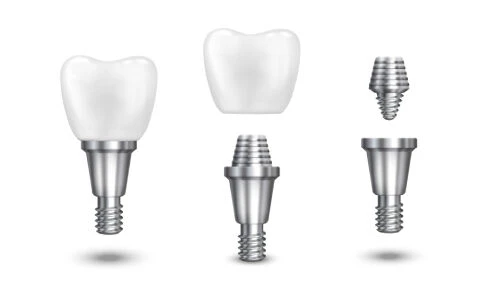
Almost every dental clinic in Kyiv and Ukraine can easily compile its own top list of topics that interest patients who have decided to get an implant. At Osadchyi Dental Clinic, we answer all questions in detail and provide consultations. However, many people want to receive information even before their consultation, so we decided to briefly go through the key points that are in the focus of patients’ attention.
Igor Osadchiy
How does tooth implantation occur
20.01.2025
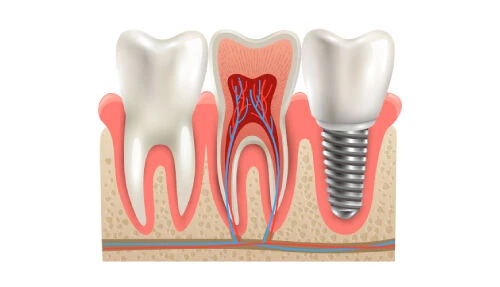
Dental implantation is one of the most popular procedures in modern dentistry. Since many patients come to the need of restoring a lost tooth, many questions arise about the procedure itself. In various forms, the following questions are heard: “How does the dental implantation process work?”, “How is a dental implant placed?”, “How is dental implantation performed?” We answer everything in detail and clearly.

Igor Osadchiy
White coating after tooth extraction
16.01.2025
Almost every dentist has encountered queries like: gums turned white after tooth extraction, pulled a tooth and there is a white pouch on the gums, something white and soft in the socket after tooth extraction, or white spots on the gums after tooth extraction. We want to reassure all patients: everything is fine, there is no cause for concern.